Friday 19 June, 2026
[email protected]
Resilience Media
  • News
    • Events
    • Interview
    • Startups
    • Venture
    • Weekly Digest
  • Resilience Conference
    • Resilience Conference Warsaw 2026
    • Resilience Conference Copenhagen 2026
    • Resilience Conference London 2026
  • About
  • Guest Posts
    • Author a Post
  • Subscribe
No Result
View All Result
  • News
    • Events
    • Interview
    • Startups
    • Venture
    • Weekly Digest
  • Resilience Conference
    • Resilience Conference Warsaw 2026
    • Resilience Conference Copenhagen 2026
    • Resilience Conference London 2026
  • About
  • Guest Posts
    • Author a Post
  • Subscribe
No Result
View All Result
Resilience Media
No Result
View All Result

Ukrainian MOD launches TrophyLab for partners to study captured Russian tech

The war effort gives a new meaning to the concept of "shared space"

Luke SmithbyLuke Smith
June 19, 2026
in News
Share on Linkedin

While Ukraine is expanding the reach of its home-produced UAVs, it is also learning from the enemy.

You Might Also Like

The war you don’t see

UK backs Ukraine’s drone industry with 150,000-drone order

The Next Defence Primes: Kela, Dominion Dynamics and Terra Leaders Join Resilience Conference London

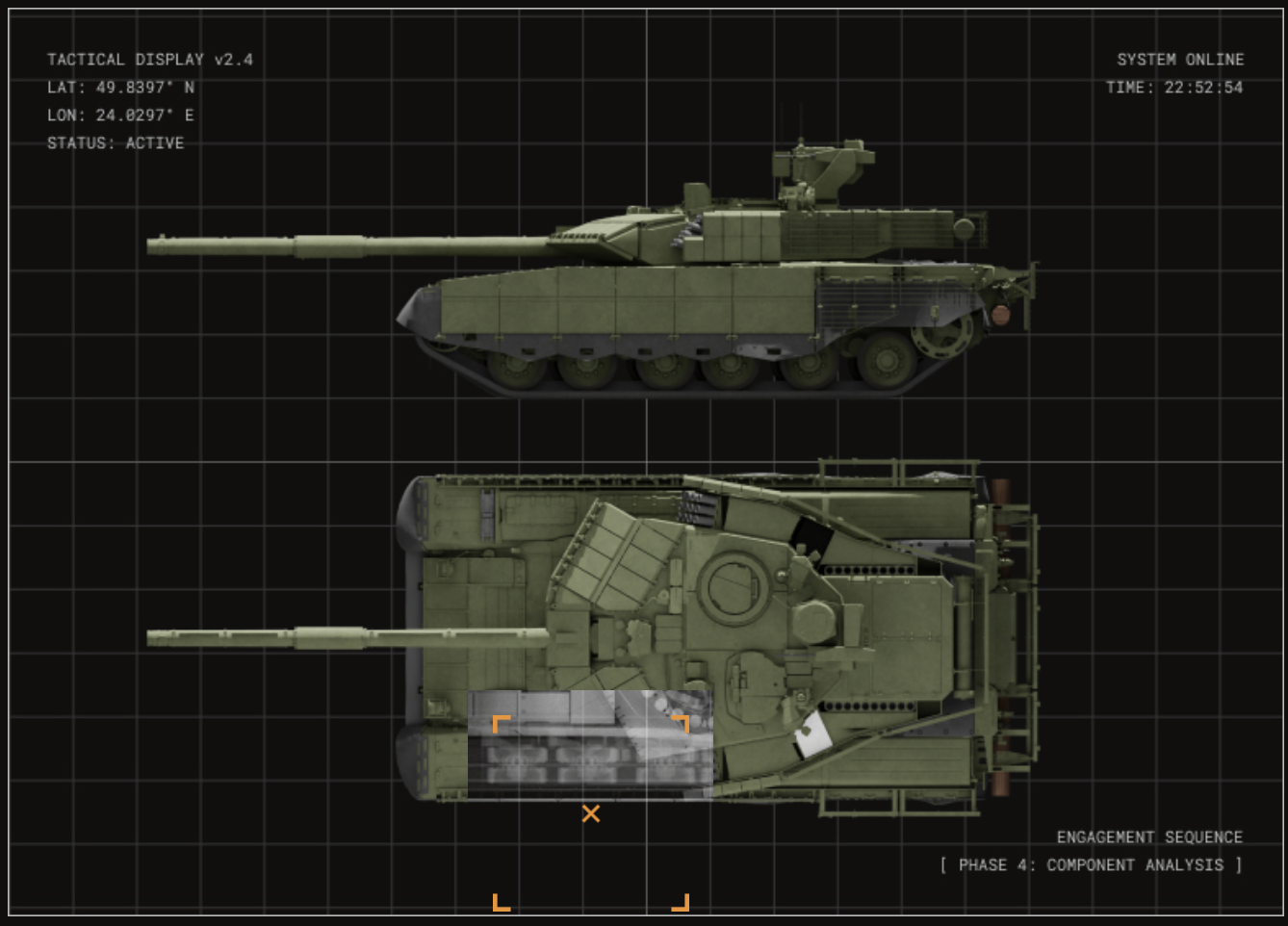
The Ministry of Defence has launched TrophyLab, a secure platform that it said will allow allied governments, research institutions, and defense manufacturers to study captured Russian military equipment recovered from the battlefield.

“Every missile, drone, and vehicle seized on the battlefield is now a source of knowledge for the free world,” the ministry said in its announcement. “Shared space for enemy weapons research,” is how it describes TrophyLab on its site.

This is not the first instance of Ukraine realising the opportunities of studying enemy equipment.

Ukraine forces (and their adversaries) already spend a lot of time reverse-engineering fallen drones and other systems in order to better understand how they work and to one-better the enemy. The country’s “Lightning” kamikaze drone, for example, was created from reverse-engineering Russia’s Molniya, and it has reportedly worked on reverse-engineering Russia’s mesh network used for electronic warfare and communications.

Capturing downed equipment was also already gamified to an extent: each piece is prized for helping to better understand how the adversary works (and to source components), giving rise to the term “trophy.”

Through crowdsourcing, TrophyLab is supercharging that kind of opportunity. Approved users will be able to access technical data, reports, vulnerability assessments, and other information on captured Russian systems. Partners will also be able to request access to physical samples for testing, giving engineers the opportunity to validate countermeasures against real enemy equipment.

“Companies, research institutions, and governments of the free world will be able to conduct in-depth studies of Russian missiles and other types of weaponry,” Ukraine minister of defence Mykhailo Fedorov said in a LinkedIn post announcing the platform. “This will help accelerate the development of effective countermeasures and strengthen joint efforts in support of Ukraine’s victory. We are convinced that knowledge about an adversary’s technologies should not remain restricted. It must be used by those building defense systems.”

Several modes of sample analysis will be available, ranging from non-destructive inspection to testing that involves full disassembly or destruction of the system. Partners will also be able to request physical access to captured equipment.

It is not clear if Ukraine will be charging for the service, or if the benefits of having better anti-Russian equipment is sufficient payment in-kind.

TrophyLab can shorten the cycle between identifying a battlefield threat and developing a practical response. Instead of relying only on reports, fragments, or assumptions about Russian systems, engineers can work from actual captured equipment and verified technical data.

And for the users of the platform, it might help them get their equipment closer to getting purchased by those looking to counter Russia.

TrophyLab is launching at the same time that Ukraine is seeing a number of its home-grown producers expanding the capabilities of their equipment. In one recent example, the attack on the Russian oil refinery was made using Fire Point-made kamikaze systems that have extended in range in recent months.

Ukraine is also already working on channels for international companies to test defense technologies in battlefield environments, through initiatives such as Brave1’s Test in Ukraine and the Dataroom project with Palantir to train battlefield AI models. It is not clear how far along either of those projects are; we are asking for an update.

TrophyLab is narrower in scope but potentially carries a lot of significance. It is focused specifically on captured Russian systems and the technical exploitation of enemy equipment.

That makes the platform another example of how Ukraine is turning battlefield experience into a both strategic asset and an export. Pre-registration is open now on the platform’s website.


 

Tags: Brave1reverse-engineeringRussiaTrophyLabUkraine
Previous Post

The war you don’t see

Luke Smith

Luke Smith

Related News

Detailed close-up of an illustration from a dollar bill, focusing on intricate line work.

The war you don’t see

byDavid Marksand1 others
June 18, 2026

Anyone who has been caught in a bar fight knows the worst defence is to flail wildly instead of focusing...

blue and yellow striped country flag

UK backs Ukraine’s drone industry with 150,000-drone order

byCarly Page
June 18, 2026

Britain is using money already earmarked for Ukraine to fund a fresh order of 150,000 Ukrainian-made drones, in a move...

Iceye, the Finnish satellite startup, nabs €1B at a €10B valuation amid growing demand for space intel

The Next Defence Primes: Kela, Dominion Dynamics and Terra Leaders Join Resilience Conference London

byLeslie Hitchcock
June 18, 2026

Who will build the next defence primes? The defence industrial base is undergoing a once-in-a-generation transformation. A new cohort of...

A man with a gun standing in the woods

How NATO’s Eastern Flank Deterrence Initiative is turning rhetoric into real capability

byArnel P. Davidand1 others
June 17, 2026

"Innovation" has become one of the most casually abused terms in defence circles. It appears in speeches, strategies, and budget...

Comand AI raises €32M for its C2 software, adds Saab as a strategic backer

Comand AI raises €32M for its C2 software, adds Saab as a strategic backer

byIngrid Lunden
June 17, 2026

Europe is betting big on artificial intelligence playing a significant role in how defence will be planned and executed in...

white red and green map

BAE puts €50M into Lakestar and Expeditions to back defence tech startups

byIngrid Lunden
June 17, 2026

As the UK defence sector braces for the publication of the Defence Investment Plan, the country's biggest defence prime is...

Lithuania’s PDKinematics raises €2M to scale precision guidance systems across NATO

Lithuania’s PDKinematics raises €2M to scale precision guidance systems across NATO

byFiona Alston
June 17, 2026

Lithuanian startup PDKinematics has raised a €2 million seed round to help the company scale manufacturing as it targets NATO...

Can AI save a satellite before it fails? PiLogic thinks so

Can AI save a satellite before it fails? PiLogic thinks so

byJohn Biggs
June 16, 2026

https://youtu.be/xSj3z-7nzqA Artificial intelligence is rapidly finding its way into defence and aerospace systems, but many of today's AI tools come...

Load More

Most viewed

InVeris announces fats Drone, an integrated, multi-party drone flight simulator

Uforce raises $50M at a $1B+ valuation to build defence tech for Ukraine

Auterion, the drone software startup, eyes raising $200M at a $1.2B+ valuation

Palantir and Ukraine’s Brave1 have built a new AI “Dataroom”

Twentyfour Industries emerges from stealth with $11.8M for mass-produced drones

Senai exits stealth to help governments harness online video intelligence

Resilience Media is an independent publication covering the future of defence, security, and resilience. Our reporting focuses on emerging technologies, strategic threats, and the growing role of startups and investors in the defence of democracy.

  • About
  • News
  • Resilence Conference
    • Resilience Conference Copenhagen 2026
    • Resilience Conference Warsaw 2026
    • Resilience Conference 2026
  • Guest Posts
  • Subscribe
  • Privacy Policy
  • Terms & Conditions
  • Mission Statement & Code of Practice
  • Press

© 2026 Resilience Media

No Result
View All Result
  • Home
  • About
  • Subscribe
  • Events
  • Guest Posts
  • Interview
  • News
  • Resilience Conference London 2026
  • Resilience Conference Copenhagen 2026
  • Resilience Conference Warsaw 2026

© 2026 Resilience Media

This website uses cookies. By continuing to use this website you are giving consent to cookies being used. Visit our Privacy and Cookie Policy.