Monday 8 June, 2026
[email protected]
Resilience Media
  • News
    • Events
    • Interview
    • Startups
    • Venture
    • Weekly Digest
  • Resilience Conference
    • Resilience Conference Warsaw 2026
    • Resilience Conference Copenhagen 2026
    • Resilience Conference London 2026
  • About
  • Guest Posts
    • Author a Post
  • Subscribe
No Result
View All Result
  • News
    • Events
    • Interview
    • Startups
    • Venture
    • Weekly Digest
  • Resilience Conference
    • Resilience Conference Warsaw 2026
    • Resilience Conference Copenhagen 2026
    • Resilience Conference London 2026
  • About
  • Guest Posts
    • Author a Post
  • Subscribe
No Result
View All Result
Resilience Media
No Result
View All Result

Deep tech breakthroughs in Ukraine get a boost from Europe

A fresh €20 million from the EIC aims to boost working on deep tech. However, this is not a defence-first play: initially it's intended to target 'civilian applications only'

Resilience MediabyResilience Media
August 1, 2025
in News, Startups, Venture
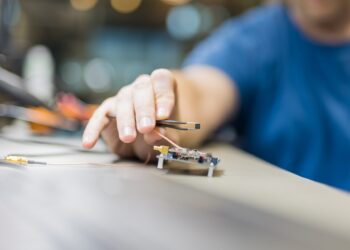
Photo by Polina Rytova on Unsplash

Photo by Polina Rytova on Unsplash

Share on Linkedin

The European Innovation Council (EIC) – sometimes called Europe’s answer to DARPA out of the U.S. – has announced a new €20 million of funding for Ukrainian “deep-tech startups and SMEs.” The EIC aims to back deep tech founders looking to scale “breakthrough” technologies from fully-working lab prototypes to market readiness within two to three years.

You Might Also Like

One small step for European resilience, a giant leap for tech

PhysicsX raises $300M at a $2.4B valuation for AI to create and test defence and other hardware

Molfar lands €1.5 million lead investment for small drone-detecting radar

In a press release, the EIC said it wants the programme to build on “Seeds of Bravery” (UASEEDS) – an earlier-stage Ukrainian startup funding initiative from its 2022 Work Programme, which also parachuted €20 million into growing the Ukrainian tech ecosystem.

The goal for “Seeds of Bravery” (aka UASEEDS) was to boost the visibility of Ukraine’s deep-tech startups to a wider global tech investment landscape – offering EU economic support as a helping hand to the war-torn country. The latest EIC initiative continues this push for “economic resilience” and notes that “activities funded should be for civilian applications only.”

High tech can still end up being dual-use. Drones are the classic example of a consumer technology that’s been extensively repurposed for the battlefield. Ukraine’s armed forces have gained particular renown for retooling relatively cheap consumer gadgets to slow Russia’s advances. Fresh EIC support for civilian deep tech could thus trickle down and indirectly bolster Ukraine’s military resources over time, too, particularly since the programme is targeting a number of defense-adjacant categories such as artificial intelligence, robotics, biotechnology, cybersecurity “and other priority areas for Ukraine.”

Pavlo Pikulin, co-founder and CEO of Deus Robotics, which builds robotics for warehousing and logistics, was one of over 100 Ukrainian deep-tech startups backed by UASEEDS. He said the programme helped his startup attract funding and scale internationally.

“The Seeds programme was incredibly valuable for us, particularly in terms of new connections,” Pikulin told Resilience Media. “We were introduced to many industry professionals who shared insights that helped us navigate unfamiliar territory.” Breaking into international markets alongside mentorship as two areas where it helped, he said.

Pikulin welcomed the follow-on EIC fund as a promising development for getting more Ukrainian innovations out of the lab and making a real impact.

Eligible companies can apply for grants of up to €500,000 to develop from Technology Readiness Level (TRL) 4 – meaning with tech that’s fully lab-validated – to TRL 6-7, with the technology working outside the lab, such as in a realistic simulated environment all the way up to a real operational setting.

It expects the programme to back around 40 projects and is actively focussing on female-led companies.

“Deep tech is inherently capital-intensive at the development stage, and customers typically only want to pay for fully functional products. That’s why the EIC’s new follow-on funding programme is so crucial,” Pikulin said. “Today, there are virtually no alternative sources of grant-based funding at this level within Ukraine – so this support can fill a critical gap and have real impact.”

As well as receiving a chunk of funding, successful deep-tech startups will be given free access to EIC Business Acceleration Services – including coaching and pitch support. They will also be eligible for a fast-track programme to join the EIC Accelerator itself, which can provide access to larger grants and EIC Fund investments. The wider EIC hope is that all this polish will enable promising startups to pull in private investment to continue their push towards commercialisation.

Access to expertise, market and funding are the three main challenges facing Ukrainian deep-tech entrepreneurs, according to Sviatoslav Sviatnenko, founder and chairman of INNOV8, a Ukrainian venture builder which is part of the UASEEDS consortium. “We need mentors and experts on very specific points, from IP to financial management, to go to market, to sales,” Sviatnenko told Resilience Media.

“We also need more entrepreneurs to have, in a way, a pure community for deep tech. And that’s where Seeds of Bravery definitely brought a lot of value – connecting people who work on deep tech.”

With ongoing disruption inside Ukraine from the war it remains challenging for the country’s own companies or government to test experimental tech – so a critical component of UASEEDS focused on finding pilot customers in other markets, Sviatnenko said.

The programme could also help mobilise more private capital, from inside and outside Ukraine, by providing what Sviatnenko described as a “seal of approval” to help VC firms assess technologies in areas like quantum or robotics that may lie outside their own in-house expertise.

Pikulin re-emphasised the international aspect of the programme. Beyond funding, startups “urgently need access to European customers.”

Tags: Deus RoboticsEICPavlo Pikulin
Previous Post

Western-built Drones Can’t Deal With Electronic Warfare. One Latvian Drone Manufacturer Could.

Next Post

Ukraine warns of AI-powered malware targeting the defence sector

Resilience Media

Resilience Media

Start Ups. Security. Defense.

Related News

blue and yellow flag on pole

One small step for European resilience, a giant leap for tech

byPaddy Stephens
June 8, 2026

The world may be consuming a lot of AI right now, but Europe has plans for a whole new cuisine....

black drone in mid air

PhysicsX raises $300M at a $2.4B valuation for AI to create and test defence and other hardware

byIngrid Lunden
June 8, 2026

PhysicsX, the London-based startup that has built an AI platform for hardware designers to run simulations of their work in...

Molfar lands €1.5 million lead investment for small drone-detecting radar

Molfar lands €1.5 million lead investment for small drone-detecting radar

byJohn Biggs
June 5, 2026

Polish-Ukrainian defence technology company Molfar Defence Technologies has secured the first tranche of a €2 million funding round as it...

a group of cell towers sitting under a cloudy blue sky

Ofcom examines whether telecoms security rules are slowing adoption of AI cyber defences

byCarly Page
June 4, 2026

Ofcom has launched a review into whether existing telecoms security rules are making it harder for operators to adopt AI-driven...

Colorful software or web code on a computer monitor

Middle powers in the age of Anthropic’s Mythos

byPaddy Stephens
June 4, 2026

As AI rapidly develops, many are facing a tougher job market – and not just entry-level software engineers. International prize-winning...

Custodia co-founder Thomas Brooks

Swiss startup Custodia launches offline AI appliance for sensitive workloads

byCarly Page
June 4, 2026

A Swiss startup is betting that growing concerns around AI privacy, data sovereignty, and cloud dependence have created a market...

gray concrete building under white sky during daytime

AI to cement the future of industry

byIngrid Lunden
June 3, 2026

A UK startup called Gigaton has built an AI platform to optimise how cement is manufactured, cutting costs and carbon...

Taiwan’s drone dream, deferred by Chinese nationalists

Taiwan’s drone dream, deferred by Chinese nationalists

byChris Horton
June 2, 2026

Taiwan is deeply divided when it comes to facing up to China. It has turned the island's defence strategy into...

Load More
Next Post
Ukraine warns of AI-powered malware targeting the defence sector

Ukraine warns of AI-powered malware targeting the defence sector

Welcome to Resilience Media

Resilience Media Secures Investment, Scales its Editorial Team

Most viewed

InVeris announces fats Drone, an integrated, multi-party drone flight simulator

Uforce raises $50M at a $1B+ valuation to build defence tech for Ukraine

Auterion, the drone software startup, eyes raising $200M at a $1.2B+ valuation

Palantir and Ukraine’s Brave1 have built a new AI “Dataroom”

Twentyfour Industries emerges from stealth with $11.8M for mass-produced drones

Senai exits stealth to help governments harness online video intelligence

Resilience Media is an independent publication covering the future of defence, security, and resilience. Our reporting focuses on emerging technologies, strategic threats, and the growing role of startups and investors in the defence of democracy.

  • About
  • News
  • Resilence Conference
    • Resilience Conference Copenhagen 2026
    • Resilience Conference Warsaw 2026
    • Resilience Conference 2026
  • Guest Posts
  • Subscribe
  • Privacy Policy
  • Terms & Conditions
  • Mission Statement & Code of Practice
  • Press

© 2026 Resilience Media

No Result
View All Result
  • Home
  • About
  • Subscribe
  • Events
  • Guest Posts
  • Interview
  • News
  • Resilience Conference London 2026
  • Resilience Conference Copenhagen 2026
  • Resilience Conference Warsaw 2026

© 2026 Resilience Media

This website uses cookies. By continuing to use this website you are giving consent to cookies being used. Visit our Privacy and Cookie Policy.