Others in the round include Thiel Capital, the NATO Innovation Fund, In-Q-Tel,, Project A, Döpfner Capital, and Joe Lonsdale’s firm 8VC. Sequoia also led Stark’s previous round, Stark confirmed. In total, the startup has now raised $100 million.
Details of this latest investment and investors had been rumoured by different publications in Germany and elsewhere for a couple of months, including Bloomberg earlier this month as the round was in progress. We’ve confirmed the details now directly with Stark, which added that the round is now closed.
Sequoia declined to comment on its involvement. But for some context, the firm, which has a European office out of London, is ramping up overall activity in Europe, which continues to see a lot of AI companies getting founded and scaling.
Related to that, Sequoia has become interested in defence tech and is making a number of investments in the space, including a separate, unannounced round in a startup still in stealth mode that is nevertheless on track for ARR of around $100 million this year, one partner at the firm told Resilience Media.
What is somewhat notable about Stark is that it’s raising money and growing without a permanent CEO at the helm.
Florian Seibel, Stark’s founder, is also the founder and CEO of drone company Quantum Systems. Seibel said in an interview last year that he founded Stark after the German government approached him about developing weaponised versions of Quantum Systems’ products.
However, while Quantum Systems focuses on surveillance and other intelligence gathering, a turn into building devices that could be used for strikes would be outside of the scope of what investors and their LPs signed up to fund; thus came the birth of Stark. (Quantum Systems has raised over $350 million, per PitchBook data; its backers also include Peter Thiel and Project A, as well as strategics like Airbus and Porsche.)
Yet Seibel – who is a co-founder of Stark with Johannes Schaback, the CTO – is not the CEO of Stark himself and currently is “not part of STARK’s executive team and is not involved in day-to-day operational decisions,” said Philip Lockwood, Managing Director of STARK International, , in an interview over email.
The plan at Stark last year was to bring someone on board as the CEO, although this has yet to happen. Reports that Uwe Horstmann – a partner in Stark investor Project A – was coming on as CEO have not been confirmed by the company (and it declined to comment on this for this story).
Horstmann spent years at German incubator Rocket Internet and interestingly, another alum from there, Andre Schneider, has taken on an important role at the startup. Currently Stark’s general counsel, Schneider was the final sign-off on fundraising, but it would be incorrect to describe him as an interim CEO, say sources. (Schaback, the CTO, is another Rocket Internet alum.)
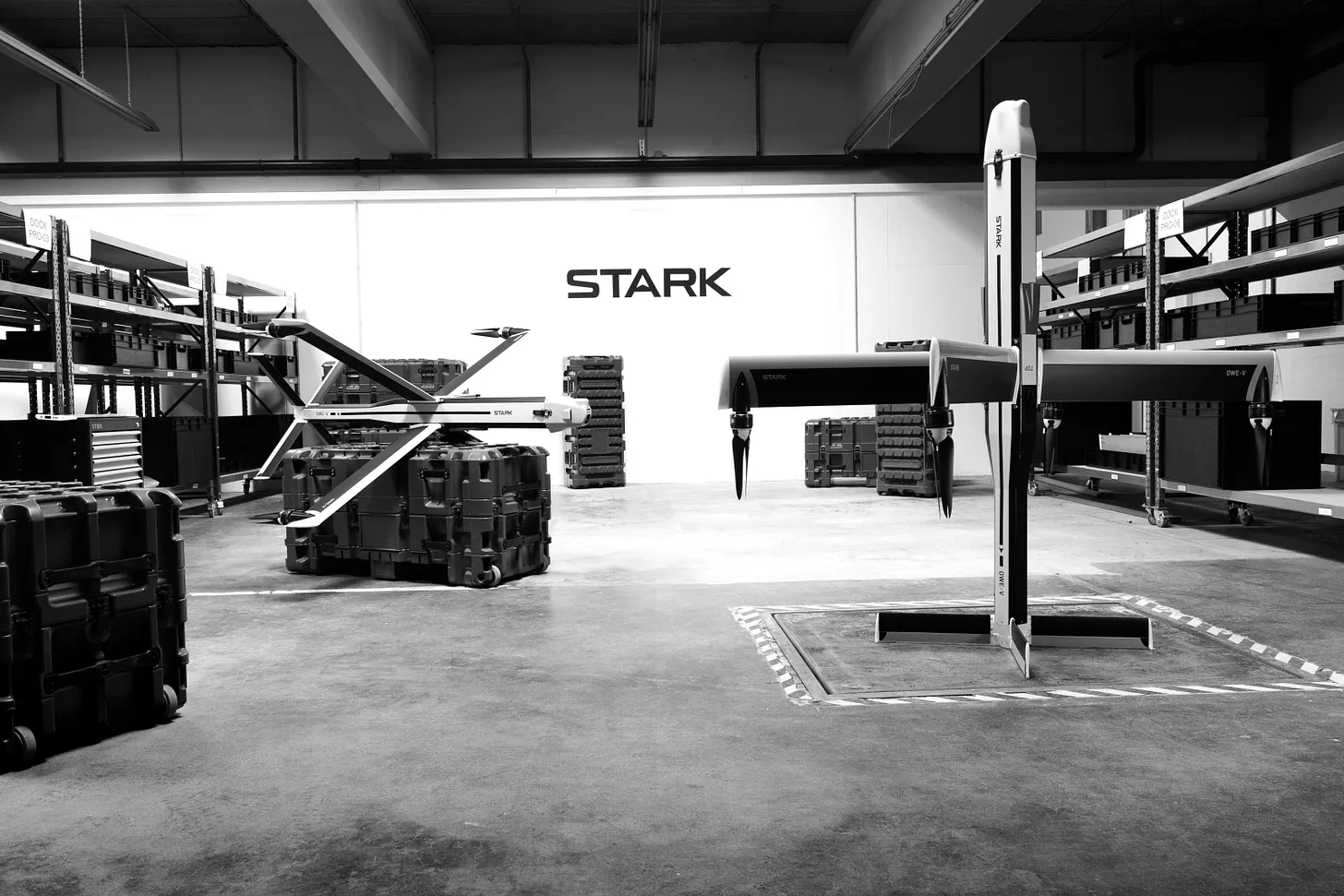
Stark was founded just 18 months ago, launching its first product only earlier this year. It has had a fast ascendancy, honed by a growing willingness among governments and militaries to look beyond primes when it comes to procurement, and to tap into the latest innovations and the faster iteration cycles associated with startups. Startups, it turns out, are right-sized for the current moment, what Stark describes as “modern warfare.”
“Defence startups have consistently proved themselves more agile than their ‘prime’ counterparts, able to keep pace with the constant demand for new battlefield technology,” said Lockwood, who joined Stark last year from his previous role as Head of Innovation at NATO. “European governments have recognised this in recent months with a growing number of contracts of record being awarded to new and fast-growing companies. As a young and rapidly-growing company we see our strengths in our ability to iterate extremely quickly and continuously improve our unmanned systems based on direct operational feedback.”
In terms of customers, Stark’s products are reportedly under consideration by the German government. It’s also understood to be making drones for NATO and its member countries, and in July 2025, it announced a new factory in Swindon, UK, to produce these. (Stark declined to comment on any purchasers of its products or future products.)
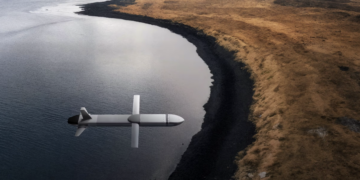
One of the key aspects of Stark’s strategy is interoperability. While the company has been building its own drones under the current product line Virtus, it has simultaneously been developing an operating system called Minerva, which aims to work and power devices across a multi-vendor environment.
That includes companies that are very close to Stark, like Quantum Systems (“We will work closely with Quantum Systems,” Lockwood told RM.); large primes like TDW (maker of warhead technology, which is collaborating with Stark on developing advanced warhead systems for Virtus munition); and companies directly competing with Stark on specific products.
“The Alliance’s leaders have repeatedly emphasized the significant threat facing us today and the massive capability gaps facing NATO Europe,” Lockwood told Resilience Media in emailed responses to our questions. “No one company will be able to address this issue. It takes the entire ecosystem, from start-ups to investors to established primes working in concert with our government and defence partners to ramp up the pace to maintain our technological edge. We also believe that competition in the market encourages the kind of innovation we desperately need. In fact, it is what sets apart the sort of innovative mindset that we enjoy in Western democracies compared to our adversaries and competitors.”
This also helps mitigate questions over whether it’s an issue that Stark has raised significantly less than some other defence tech startups in the market, such as Helsing, another German startup building AI-based defence technology which has to date raised more than $1.6 billion in funding. The long tail is a strong one: Startups in defence tech have raised more than $28 billion in the first eight months of 2025, according to PitchBook.
The landscape for defence tech continues to be fuelled in Europe in particular by the war in Ukraine and the threat that Russia poses.
“Supporting Ukraine with the technology it needs today is essential not only to deter further aggression but also to strengthen its position for future peace negotiations,” Lockwood said. “At the same time, Europe and NATO must build the capacity to mass-produce and deploy sophisticated systems that safeguard their own borders. Genuine defence rests on credible deterrence, which means being ready with advanced, reliable capabilities that can be rapidly produced at scale.”
Looking ahead, that will be what fuels what Stark itself develops next.
Stark has engineers testing new technology “side-by-side on the field, including in Ukraine,” and it reviews performance of those tests in real time.
“This allows us to iterate extremely quickly and continuously improve the system based on direct operational feedback,” said Lockwood. This is in turn feeding into the startup developing a wider family of products “built for the realities of modern warfare.” The company is not yet talking about what those future products will be, or when they will make their way to the market.