Orca AI’s co-captain brings real-time data sharing to commercial shipping
Navigation apps such as Waze changed the daily commute by letting motorists warn each other about “hazards” as they encountered them — maybe some roadworks, an accident, or camera-toting cop ‘round the next bend. Orca AI, a company building autonomous navigation systems for commercial sea vessels, is now attempting a maritime equivalent on the open waters.
The London-based startup has launched Co-Captain, a feature that allows ships to share data including real-time navigational alerts with each other, creating a live picture of risks across busy sea lanes.
“Each vessel becomes a key link in a safety chain that keeps crews connected and ahead of risk,” Orca AI co-founder and CEO Yarden Gross said at the product’s announcement last week.
All at sea
Maritime safety is under growing strain. According to DNV, a global maritime safety and classification body, safety incidents rose by some 42% between 2018 and 2024, even though the world fleet grew by only about 10% over the same period.
The causes are varied — older ships running beyond their optimal lifecycle, heavier traffic on key trade lanes, and new risks such as GNSS spoofing/jamming and cyber vulnerabilities. For systems like Co-Captain, this rising baseline of risk helps explain why real-time, peer-to-peer awareness could prove essential.
“Given that 90% of international trade is transported across oceans, collaborative navigation at sea is no longer optional—it’s a safety, environmental, and security imperative,” Gross added.
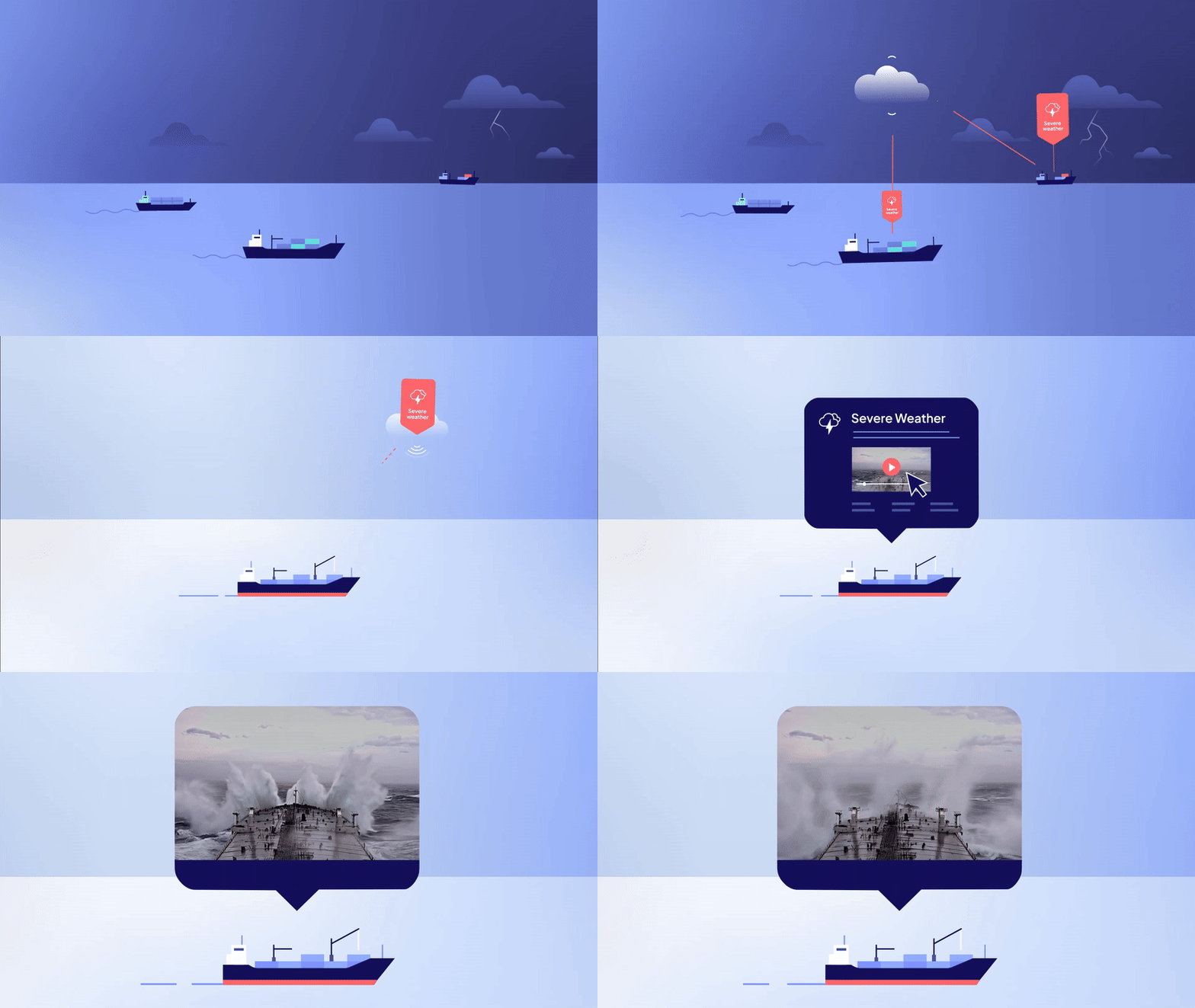
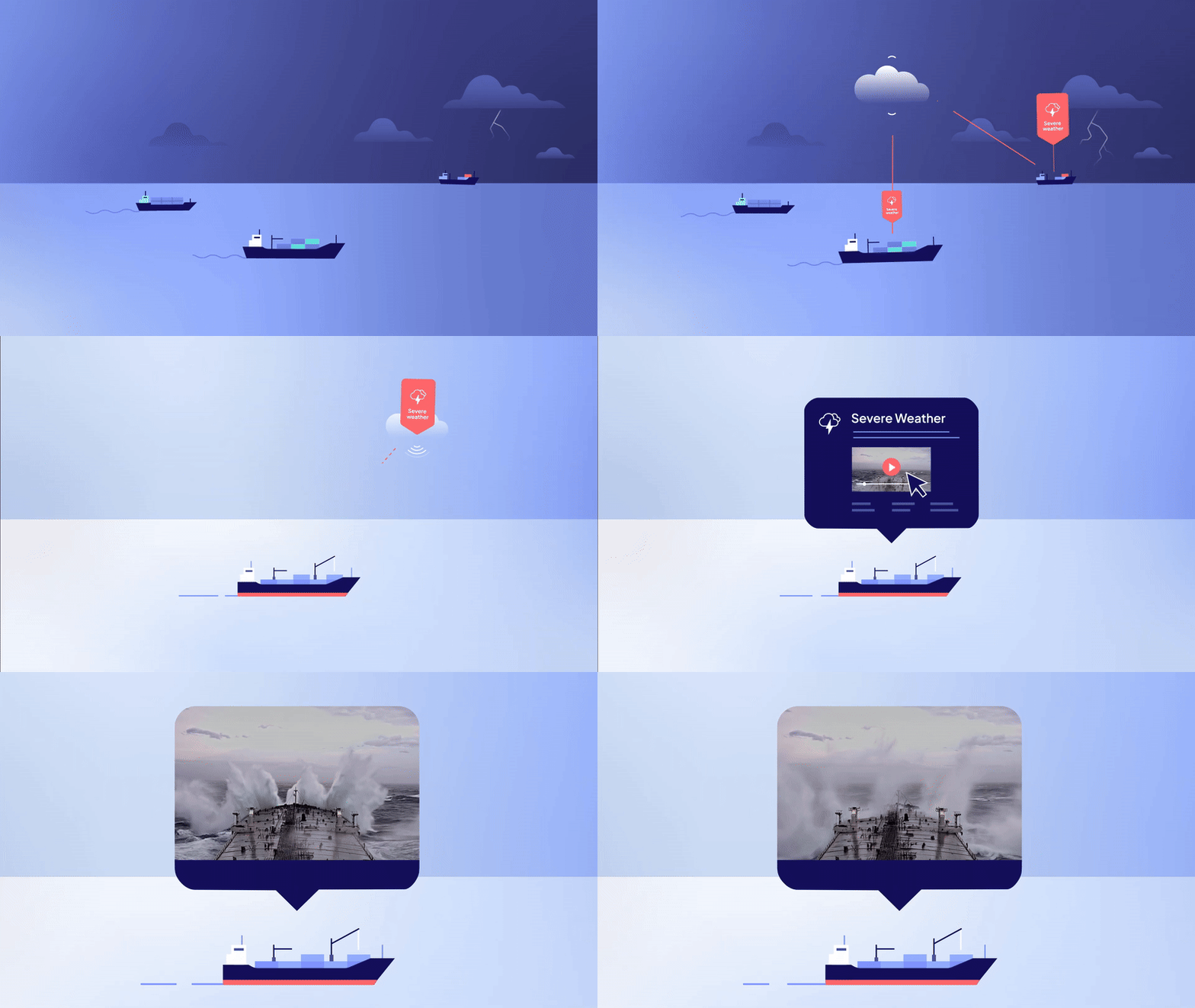
Orca AI, best known for its computer-vision navigation system fitted to more than a thousand commercial vessels, says Co-Captain turns each ship into both a sensor and a contributor. The system collects what a vessel sees — from small unregistered craft to shifting weather — and relays it to other ships on intersecting routes. In return, crews receive verified updates from vessels ahead of them: congestion, poor visibility, GNSS (Global Navigation Satellite System) interference, hazards in the water, regulatory restrictions, and even piracy threats.
Co-Captain sits on top of Orca’s existing products. SeaPod, the bridge-mounted AI-powered navigation assistant, captures the visual and sensor data; and FleetView, used by on-shore teams, analyses performance and incidents across an operator’s wider fleet.
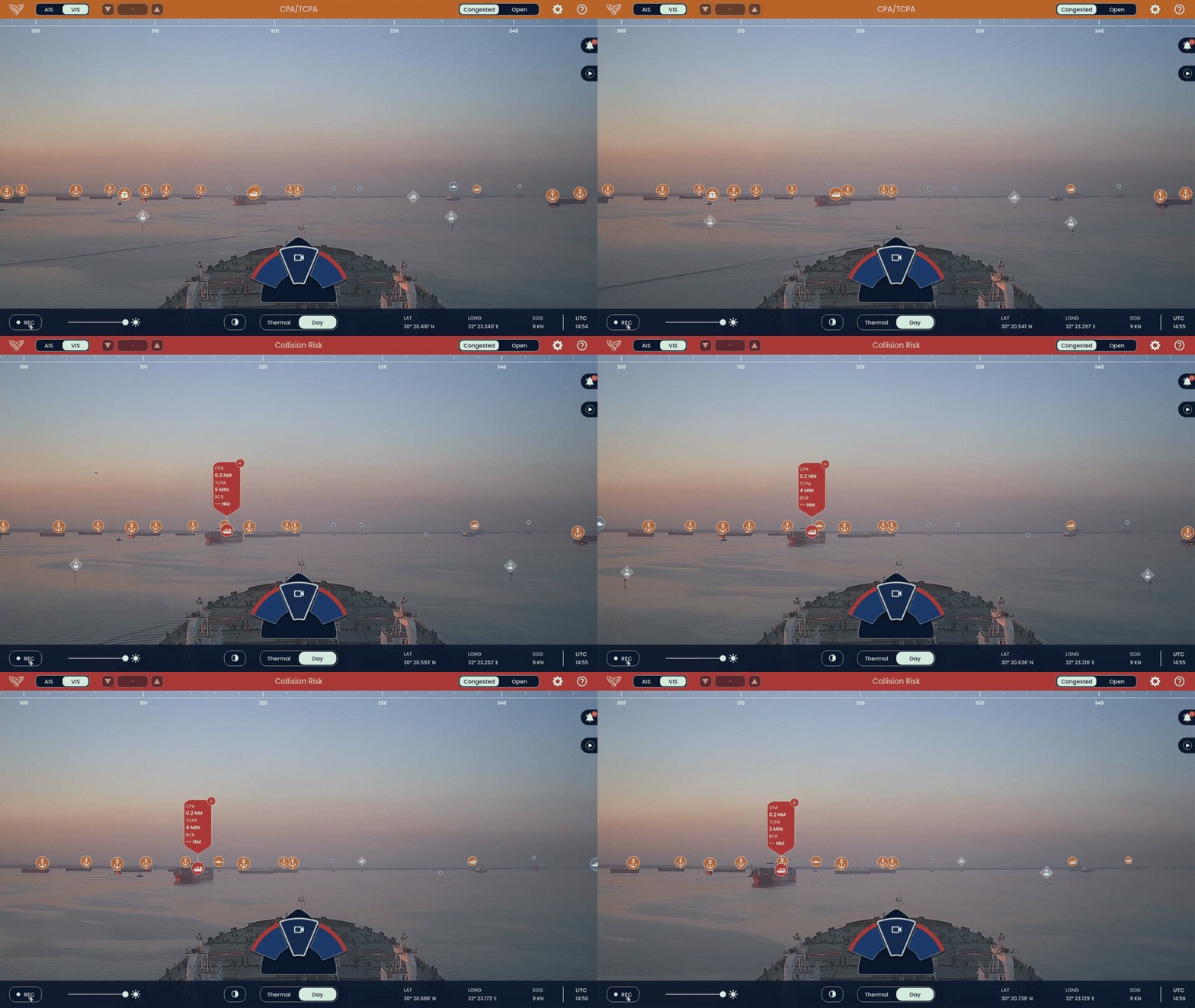
Co-Captain adds a third layer: ship-to-ship intelligence. Instead of a single vessel operating as its own island of information, the network stitches together what each ship encounters into a common pool of insight.
Crews can see congestion ahead based on close-encounter data from other vessels, or receive early warnings about deteriorating weather and visibility. This includes video of what other vessels are currently seeing.
The system also flags piracy risks before entering high-threat zones, with crews receiving live alerts when entering risky zones – with the added benefit of getting instant notifications if other vessels report live pirate activity.
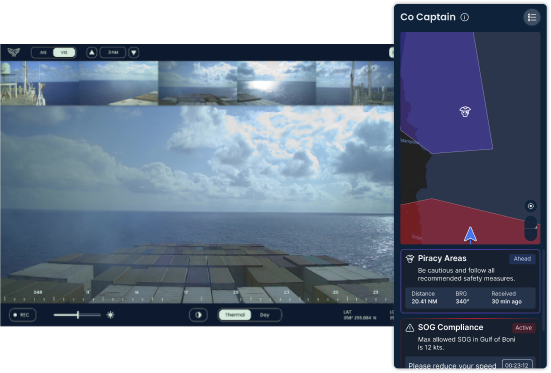
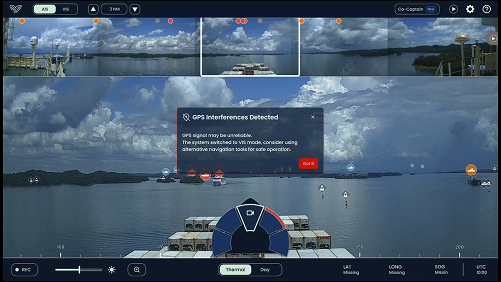
The network also pushes out practical safety updates, from drifting buoys, small craft and ice, to man-overboard reports and temporary restrictions in busy waterways, along with environmental notices such as whale-protection zones. Crews are additionally warned if another ship detects GNSS spoofing or jamming nearby, giving them time to adjust course or switch to alternative navigation methods before the interference reaches them.
Crossing into new waters
Founded in 2018 by CEO Yarden Gross and CTO Dor Raviv, Orca AI is fresh off the back of a $72.5 million round of funding in May, which the company said at the time was earmarked to help it expand into new categories – such as defence and security.
Indeed, while the lion’s share of Orca AI’s business lies in the commercial sphere, with customers such as shipping giants MSC, NYK, Scorpio, and Seaspan, the company signed its first contract with an unnamed Navy back in 2023.
That deal saw Orca AI’s system adopted as an automated watchkeeping tool for operations in high-risk regions, helping crews spot and respond to threats ranging from piracy and terrorism to airborne or sea-skimming drones.
Co-Captain sits outside that defence-focused work and is aimed squarely at day-to-day commercial operations.
“The new feature isn’t aimed at the defence market,” Gross confirmed to Resilience Media over email.
While the strength of Waze on the world’s highways comes from its sheer scale and ubiquity across Android and iOS handsets, its maritime counterpart operates on a far narrower canvas. At sea, Co-Captain’s reach is limited to vessels already running Orca AI’s platform — a network that is expanding but still small compared with consumer apps.
“To participate in the network and receive Co-Captain alerts, a vessel must have Orca AI’s SeaPod system installed onboard,” Gross said. “Today, around one thousand ships are live with Orca AI, covering every major trade lane. [An] additional 300 vessels are already booked to join, which will significantly expand both the coverage and frequency of the alerts.”
Of course, comparing a global shipping network with a consumer traffic app only goes so far. At sea, ubiquity matters less than placement: commercial vessels move along predictable corridors, and a few hundred well-positioned ships can illuminate vast stretches of ocean in a way that would be impossible on land.
“Based on our data-driven analysis, there are roughly 8,500 potential ‘meetups’ between Orca-equipped vessels every week – meaning ships that pass within the same area or timeframe,” Gross said. “This illustrates the growing density of the Co-Captain network and its ability to deliver meaningful, localized alerts across global routes.”
It’s also worth noting that Co-Captain doesn’t rely purely on ship-to-ship alerts. The system also draws upon geo-based alerts from “verified external sources,” notifying crews as they approach regulated or high-risk regions. So while onboard data sources include the likes of vessel motion, sea state, visibility, and traffic density, externally Co-Captain also draws on datasets such as IMO regulatory updates, NOAA, Admiralty navigation warnings, and more.
And the company says that it’s looking at ways to widen that data picture even further.
“We’re in discussions with several third-party data providers to further expand Co-Captain’s value, adding new use-cases like port congestion insights, berth and anchorage waiting times, NAVTEX integration (broadcast system for maritime safety warnings), and other maritime intelligence layers that enhance operational awareness and voyage planning,” Gross explained.
Gross stresses that external feeds play only a supporting role; the core of Co-Captain’s alerting still comes from real observations made by vessels in the network.
“The ground truth always comes from ship sensors and the SeaPod’s vision,” he said.