Friday 2 January, 2026
Resilience Media
  • About
  • News
  • Resilience Conference
  • Guest Posts
    • Author a Post
  • Subscribe
No Result
View All Result
  • About
  • News
  • Resilience Conference
  • Guest Posts
    • Author a Post
  • Subscribe
No Result
View All Result
Resilience Media
No Result
View All Result

Why Germany’s Defence Startups Are Looking Elsewhere

25% want to go to the U.S.

Resilience MediabyResilience Media
April 30, 2025
in News
Share on Linkedin

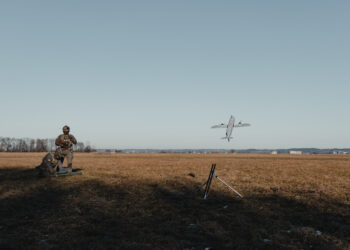
There’s been a quiet boom in German defence tech since the war in Ukraine began. Startups are building software, AI, and drone systems for military use. But even as their numbers grow, many founders say they wouldn’t launch in Germany again.

You Might Also Like

Space Forge launches a 1,000°C orbital furnace to make cleaner semiconductor crystals in microgravity

GPS: the first front in electronic warfare

Space is becoming the next battleground for securing defence data

According to a recent Handlesblatt report, only about a third of German defence startup founders would choose to build their company here if they had the chance to start over. That’s the takeaway from a Bitkom survey of 44 startups working in defence. The rest? They’d head elsewhere: 25% to the U.S., 16% to another EU country, and 18% to somewhere else entirely.

Their reasons: a stagnant economy, heavy regulation, and lack of private capital. But what really stands out is how many say they feel ignored. A full third of respondents said they don’t feel appreciated in Germany.

Low Priority

The mood is pessimistic. Most founders don’t believe Germany is equipped to defend itself. One in four rated the country’s readiness as “very low.”

Still, a few German companies have gained serious ground. Helsing, based in Munich, is now one of Europe’s most valuable defence AI startups, worth an estimated €5 billion. Quantum Systems, which makes military drones, may soon join the unicorn club with a $1 billion+ valuation. Other rising players include Arx Robotics and Alpine Eagle, which launched in 2023 and focuses on counter-drone technology.

Bitkom president Ralf Wintergerst said startups like these must play a central role in rebuilding Germany’s military, alongside traditional defence firms.

Funding Gaps

Germany has made some moves. Defence spending is now mostly exempt from the country’s debt cap, and the EU has proposed a €150 billion defence fund. But founders doubt much of that will reach them.

They want faster procurement, less bureaucracy, and better access to military buyers. Many startups don’t survive long enough to get into formal government procurement pipelines. Some suggest changes to national security clearance laws and want a public-facing marketplace where startups can connect with innovation units inside the military—something that already exists in the U.S.

They’re also asking for more live testing and trial sites, so products can be evaluated in real-world scenarios. At least one location—Erding Air Base—is being converted to support that kind of work.

And of course, money matters. Founders want the government to take startup investment seriously. They point to France’s Fonds Innovation Défense and the Netherlands’ SecFund as models. France is even looking into letting retail investors put money into defence startups.

That said, given the high costs of employment and even materials in Germany it’s no wonder startups are heading where they can find savings. The result, however, is a Germany ill-prepared for what’s next.


Tags: BitkomGermanyHelsingRalf Wintergerst
Previous Post

Helsing Leads New Alliance to Strengthen Europe’s Undersea Defences

Next Post

The lights went out: It’s time to get serious about energy security

Resilience Media

Resilience Media

Start Ups. Security. Defense.

Related News

Space Forge launches a 1,000°C orbital furnace to make cleaner semiconductor crystals in microgravity

byJohn Biggs
December 31, 2025

Cardiff-based Space Forge has announced it has put a microwave-sized manufacturing payload into orbit, including a 1,000°C furnace for smelting...

GPS Satellite

GPS: the first front in electronic warfare

byPaddy Stephens
December 31, 2025

From the earliest weeks of Russia’s invasion of Ukraine, Ukraine’s power plants have been pummeled by projectiles from its adversary....

view of Earth and satellite

Space is becoming the next battleground for securing defence data

byCarly Page
December 30, 2025

For defence organisations trying to keep command and control working, the challenge is no longer a lack of data. It’s...

Orqa will distribute drone manufacturing globally, reducing dependence on commodity hardware

byJohn Biggs
December 23, 2025

Orqa, a Croatian FPV drone company, has announced it is starting a Global Manufacturing Program meant to raise annual drone...

Frankenburg demonstrates first “hard-kill” intercept between rocket and Shahed-style drone

byJohn Biggs
December 23, 2025

Rocket maker Frankenburg Technologies reported that it conducted "kill-chain hard-kill intercept against a fast-moving aerial target" on 12 December 2026...

Resilience Media’s top stories from 2025

byResilience Media
December 22, 2025

In 2025, we reported on the complexities of defence, technology, and geopolitics. Our journalism came to readers from conference halls,...

Photo credit Stark Defence

Stark and TDW accelerate loitering munition readiness with successful live warhead test

byLeslie Hitchcock
December 22, 2025

Stark and TDW have successfully conducted the first warhead live firing using Stark's loitering munition, according to join statements posted...

TNT

How Swebal plans to rebuild Europe’s TNT supply

byPaul Sawers
December 19, 2025

A Swedish startup is preparing to build one of the first new TNT production facilities in Europe in decades, after...

Load More
Next Post
When the lights go out - a ‘darksky event’

The lights went out: It's time to get serious about energy security

Image via Tekever

Tekever Commits £400M to UK Drone Manufacturing After RAF Contract Win

Most viewed

Scout Ventures GP Brad Harrison talks about funding the future of defence

UK launches undersea surveillance programme to counter growing Russian threat

Skana wants to shore up coastal defence with amphibious vessel for shallow waters

Welcome to the greyzone of warfare in space

The Long Read: How Helsing Sees the World

Exein, the embedded security startup, nabs €100M at ~€700M valuation

Resilience Media is an independent publication covering the future of defence, security, and resilience. Our reporting focuses on emerging technologies, strategic threats, and the growing role of startups and investors in the defence of democracy.

  • About
  • News
  • Resilence Conference
  • Guest Posts
  • Subscribe
  • Privacy Policy
  • Terms & Conditions

© 2025 Resilience Media

No Result
View All Result
  • About
  • News
  • Resilence Conference
  • Guest Posts
  • Subscribe
  • Privacy Policy
  • Terms & Conditions

© 2025 Resilience Media

This website uses cookies. By continuing to use this website you are giving consent to cookies being used. Visit our Privacy and Cookie Policy.