Tuesday 22 September, 2026
[email protected]
Resilience Media
  • News
    • Events
    • Interview
    • Startups
    • Venture
    • Weekly Digest
  • Resilience Conference
    • Resilience Conference London — Oct 2026
    • Resilience Conference Copenhagen — May 2026 (PAST)
    • Resilience Conference Warsaw — Apr 2026 (PAST)
  • Launch
  • About
  • Guest Posts
    • Author a Post
  • Subscribe
No Result
View All Result
  • News
    • Events
    • Interview
    • Startups
    • Venture
    • Weekly Digest
  • Resilience Conference
    • Resilience Conference London — Oct 2026
    • Resilience Conference Copenhagen — May 2026 (PAST)
    • Resilience Conference Warsaw — Apr 2026 (PAST)
  • Launch
  • About
  • Guest Posts
    • Author a Post
  • Subscribe
No Result
View All Result
Resilience Media
No Result
View All Result

Dutch semiconductor company is bringing secure, authenticated satellite positioning to handheld devices

John BiggsbyJohn Biggs
June 23, 2026
in Cyber, News, Startups
Share on Linkedin

For years, authenticated satellite positioning has largely been reserved for expensive, power-hungry systems operating in defence, aviation, and other specialised sectors. Meanwhile, the devices most exposed to spoofing and signal manipulation like asset trackers, wearables, drones, and IoT sensors have largely been left without protection.

You Might Also Like

Iceland’s Laki Power charges up with €6M from NIF because electric grids are under threat

Germany has Europe’s biggest defence budget. Startups don’t get much of it

Denmark’s Final Frontier and Myriad join forces to create a new defence fund

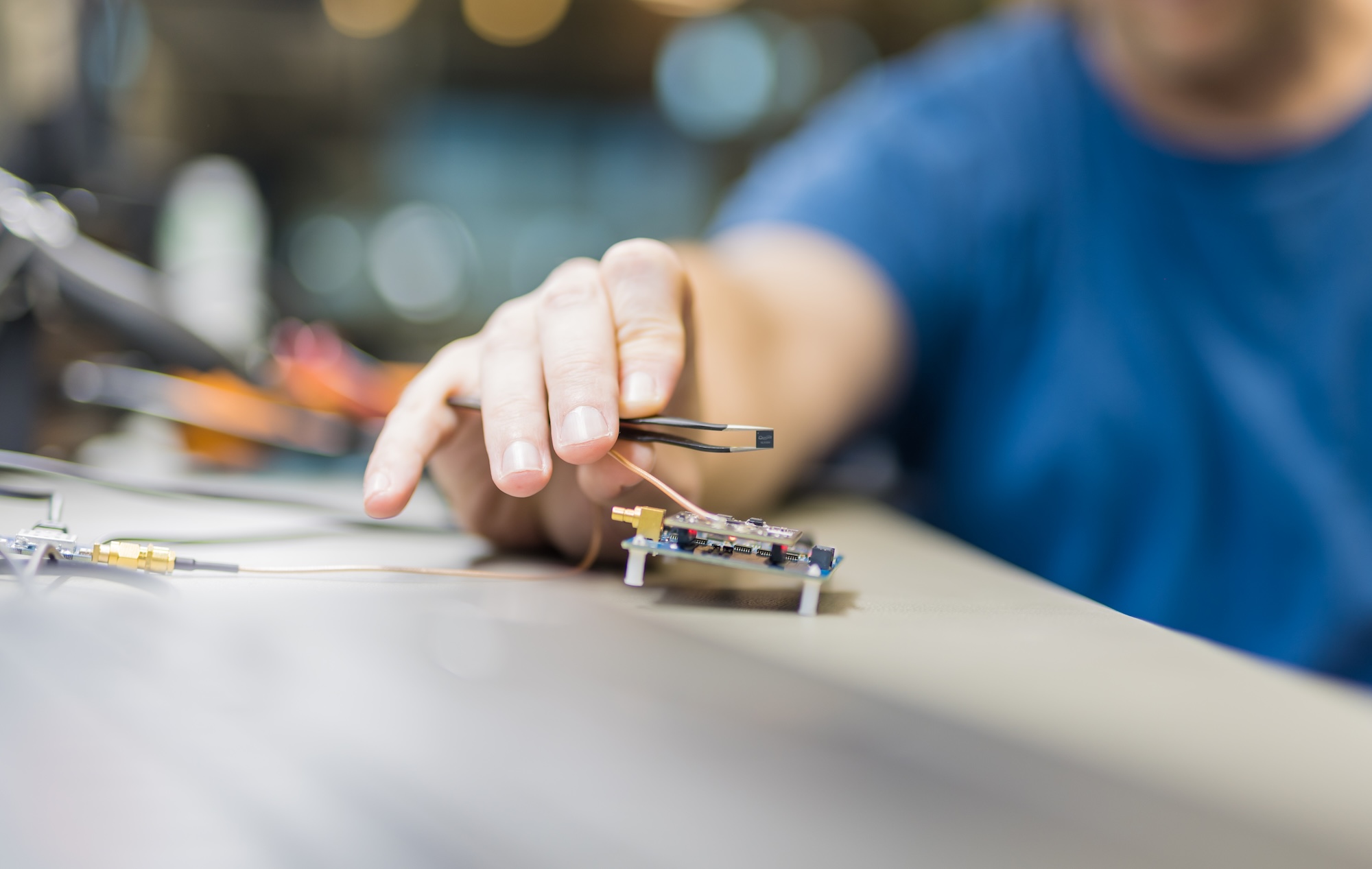
To remedy that, Dutch semiconductor company Qualinx has announced that its new QLX3Gx Series GNSS receiver now supports Galileo’s Open Service Navigation Message Authentication (OSNMA). It claims to be the first ultra-low-power GNSS platform designed to provide authenticated positioning as a standard feature.

Galileo, the EU-owned Global Satellite Navigation System, is Europe’s equivalent of the US’s GPS, and it is used for timing and location across some 4 billion devices globally.

OSNMA works by adding a digital signature to navigation signals transmitted by Galileo satellites. This allows a receiver to verify that the positioning data it is receiving comes from the satellite network and has not been altered or spoofed by an attacker. Spoofing can trick receivers into reporting false positions.

Qualinx has integrated this authentication capability directly into the hardware of its ultra-low-power QLX3Gx GNSS chip, allowing small battery-powered devices to confirm the authenticity of their location data without increasing power consumption.

The move comes as concerns over GPS and GNSS spoofing continue to grow across both civilian and military environments. Interference with positioning signals has become increasingly common around conflict zones, critical infrastructure, and transportation networks, highlighting the need for trusted location data far beyond traditional defence applications.

Qualinx plans to begin mass production of the QLX3Gx in the second half of 2026. If adoption follows expectations, authenticated positioning could soon become a standard feature across millions of devices that have historically operated without any meaningful defence against spoofing.

“Authenticated positioning has for too long been out of reach for the devices that need it most,” said Qualinx CEO Tom Trill. “By building OSNMA support into the QLX3Gx at the hardware level from day one, we’re making trusted positioning the default, not a premium option, for the wearables, asset trackers, and IoT devices that make up the bulk of the GNSS market.”

The development was carried out with support from the European Union Agency for the Space Programme (EUSPA), which has been pushing wider adoption of Galileo’s security features.

“OSNMA represents one of Galileo’s most important contributions to positioning security, and our mission is to see it adopted as widely as possible,” said Florent Koné, satcom market and innovation manager at EUSPA, in a statement. “Qualinx has demonstrated that authenticated GNSS is no longer confined to high-power applications.”

As positioning data becomes increasingly important to logistics, autonomous systems, consumer electronics, and connected infrastructure, the ability to verify that location data is genuine is likely to become a baseline requirement rather than a specialised capability.

 

Previous Post

Stark confirms monster €500M funding round, reportedly approaching a €3B valuation

Next Post

Irish space tech firm Ubotica raises $11M

John Biggs

John Biggs

John Biggs is an entrepreneur, consultant, writer, and maker. He spent fifteen years as an editor for Gizmodo, CrunchGear, and TechCrunch and has a deep background in hardware startups, 3D printing, and blockchain. His work has also appeared in Men’s Health, Wired, and the New York Times. He has written nine books including the best book on blogging, Bloggers Boot Camp, and a book about the most expensive timepiece ever made, Marie Antoinette’s Watch. He lives in Brooklyn, New York. He runs the Keep Going podcast, a podcast about failure. His goal is to share how even the most confident and successful people had to face adversity.

Related News

a street light in the snow at night

Iceland’s Laki Power charges up with €6M from NIF because electric grids are under threat

byIngrid Lunden
September 21, 2026

The NATO Innovation Fund is making another resilience tech investment out of its €1 billion+ coffer, and it happens also...

German military uniform

Germany has Europe’s biggest defence budget. Startups don’t get much of it

byPaul Sawers
September 21, 2026

A pattern is emerging among European defence-tech startups looking for sales: plenty of money is up for grabs, but the...

Denmark’s Final Frontier and Myriad join forces to create a new defence fund

Denmark’s Final Frontier and Myriad join forces to create a new defence fund

byFiona Alston
September 21, 2026

It started with a cup of coffee and ended up in two Danish early stage New Nordics defence funds becoming...

Terra bags $22M more to build out Africa’s first defence prime

Terra Industries puts $1M into Aeon, a Nigerian cybersecurity startup

byIngrid Lunden
September 18, 2026

After closing its $52 million seed round with a bumper $18 million in August, Nigeria's Terra Industries is using some...

The London Defence Tech Week programme is here

The London Defence Tech Week programme is here

byLeslie Hitchcock
September 17, 2026

From 1-8 October, London Defence Tech Week brings together conferences, networking events, workshops, investor gatherings and partner events across London....

Canada’s SPARC AI launches GPS-free positioning for soldiers

Canada’s SPARC AI launches GPS-free positioning for soldiers

byJohn Biggs
September 16, 2026

Canadian defense technology company SPARC AI has launched Overwatch Patrol, a positioning system designed to let soldiers track themselves and...

Martin Herem appointed Estonia’s new defence minister

Martin Herem appointed Estonia’s new defence minister

byIngrid Lunden
September 16, 2026

Two weeks after losing its defence minister amid a botched Ukraine procurement deal, Estonia has named a new person from...

‘We’ve had the proliferation phase in Ukraine, now we go into consolidation’

‘We’ve had the proliferation phase in Ukraine, now we go into consolidation’

byLuke Smith
September 16, 2026

When the MITS Lightning Fund closed its first venture fund in May, its partners had raised slightly more than $20...

Load More
Next Post
Irish space tech firm Ubotica raises $11M

Irish space tech firm Ubotica raises $11M

Nearfield Instruments

Nearfield Instruments raises $380M to stake Europe's claim in the global chip supply chain

Top stories

The UK built and flew a new jet engine in under seven months
UK Defence

The UK built and flew a new jet engine in under seven months

September 17, 2026
The London Defence Tech Week programme is here
Events

The London Defence Tech Week programme is here

September 17, 2026
‘We’ve had the proliferation phase in Ukraine, now we go into consolidation’
Interview

‘We’ve had the proliferation phase in Ukraine, now we go into consolidation’

September 16, 2026
German military uniform
News

Germany has Europe’s biggest defence budget. Startups don’t get much of it

September 21, 2026

Resilience Media is an independent publication covering the future of defence, security, and resilience. Our reporting focuses on emerging technologies, strategic threats, and the growing role of startups and investors in the defence of democracy.

  • About
  • News
  • Resilence Conference
    • Resilience Conference Copenhagen 2026
    • Resilience Conference Warsaw 2026
  • Guest Posts
  • Subscribe
  • Privacy Policy
  • Terms & Conditions
  • Mission Statement & Code of Practice
  • Press

© 2026 Resilience Media

No Result
View All Result
  • Home
  • About
  • Subscribe
  • Events
  • Guest Posts
  • Interview
  • News
  • Resilience Conference London 2026
  • Resilience Conference Copenhagen 2026
  • Resilience Conference Warsaw 2026

© 2026 Resilience Media

This website uses cookies. By continuing to use this website you are giving consent to cookies being used. Visit our Privacy and Cookie Policy.