Tuesday 25 August, 2026
[email protected]
Resilience Media
  • News
    • Events
    • Interview
    • Startups
    • Venture
    • Weekly Digest
  • Resilience Conference
    • Resilience Conference London — Oct 2026
    • Resilience Conference Copenhagen — May 2026 (PAST)
    • Resilience Conference Warsaw — Apr 2026 (PAST)
  • Launch
  • About
  • Guest Posts
    • Author a Post
  • Subscribe
No Result
View All Result
  • News
    • Events
    • Interview
    • Startups
    • Venture
    • Weekly Digest
  • Resilience Conference
    • Resilience Conference London — Oct 2026
    • Resilience Conference Copenhagen — May 2026 (PAST)
    • Resilience Conference Warsaw — Apr 2026 (PAST)
  • Launch
  • About
  • Guest Posts
    • Author a Post
  • Subscribe
No Result
View All Result
Resilience Media
No Result
View All Result

Germany’s STARK delivers Germany its first unmanned reconnaissance vehicle, the Seetaube

This AI-powered boat can find signals at sea.

John BiggsbyJohn Biggs
August 25, 2026
in Drones & UAS, News
Share on Linkedin

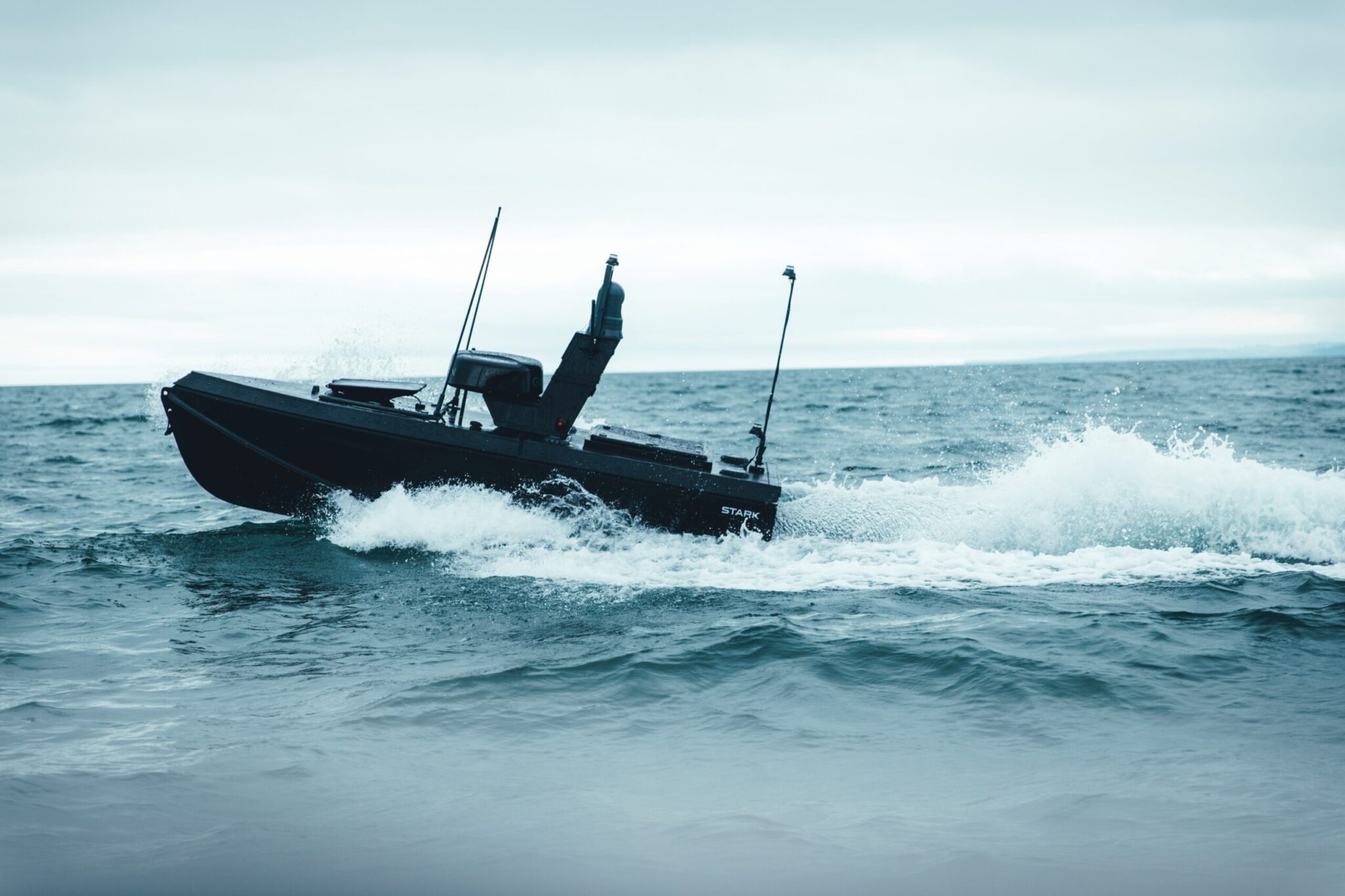
German defence company STARK, which recently raised $500 million from various funders, has delivered the first Seetaube unmanned surface vessel to the German Armed Forces’ Cyber and Information Domain Service. The six-metre crewless boat is designed to conduct maritime reconnaissance while acting as a mobile sensor platform for German forces.

You Might Also Like

UK gets its hands on Ukraine’s Avengers AI data

Smaller satellites are getting sharper eyes

Inside Resilience Conference: Where Defence Tech Meets the Press

Based on STARK’s Vanta platform, Seetaube carries cameras, sensors, and radar. It can follow a pre-programmed route autonomously while sending data back to its operator in real time. A human operator monitors the mission remotely and can take control of the vessel when required, but the system can traverse the open seas without user intervention.

These new Seetaubes are intended to help German naval vessels locate hostile signal sources. Instead of relying on sensors aboard a single ship, commanders can send the USV away from the vessel and use it as a second observation point. Each device can search for signals in its own area, ensuring maximum coverage without having to remain close to the mothership or other drones. A relatively small USV like the Seetaube can move ahead of a larger vessel, investigate an area, collect information, or provide another sensor position while sailors remain farther away.

These devices are decidedly more focused on defence than offense. Distributed USVs can give a navy more observation points across a wider area, while keeping sailors away from some of the most exposed positions. They can also provide data to larger ships and other systems, turning relatively inexpensive vessels into extensions of a wider intelligence network.

STARK has been raising capital and buying companies in an effort to roll out more advanced UAV and USV systems. The company is also shipping airborne strike drones to Germany even as it rolls out its Seetaube drones.

Germany isn’t putting Seetaube directly into service yet. Over the coming months, the Bundeswehr will train personnel and conduct sea trials before deciding on its formal adoption.


Tags: GermanyStarkUSV
Previous Post

Smaller satellites are getting sharper eyes

Next Post

UK gets its hands on Ukraine’s Avengers AI data

John Biggs

John Biggs

John Biggs is an entrepreneur, consultant, writer, and maker. He spent fifteen years as an editor for Gizmodo, CrunchGear, and TechCrunch and has a deep background in hardware startups, 3D printing, and blockchain. His work has also appeared in Men’s Health, Wired, and the New York Times. He has written nine books including the best book on blogging, Bloggers Boot Camp, and a book about the most expensive timepiece ever made, Marie Antoinette’s Watch. He lives in Brooklyn, New York. He runs the Keep Going podcast, a podcast about failure. His goal is to share how even the most confident and successful people had to face adversity.

Related News

the statue of christ in the center of a city

UK gets its hands on Ukraine’s Avengers AI data

byIngrid Lunden
August 25, 2026

The UK and Ukraine are taking a big step forward in how they collaborate when it comes to developing military...

Smaller satellites are getting sharper eyes

Smaller satellites are getting sharper eyes

byJohn Biggs
August 25, 2026

Belgium-based Simera Sense is pushing further into the space market with the xScape200 Dual-Use, a new version of its compact...

Inside Resilience Conference: Where Defence Tech Meets the Press

Inside Resilience Conference: Where Defence Tech Meets the Press

byTobias Stone
August 24, 2026

At Resilience Media, a founding part of our mission was to inform the wider tech sector and society about the...

Oshen raises $5M to scale autonomous ocean robots for defence missions

Oshen raises $5M to scale autonomous ocean robots for defence missions

byCarly Page
August 24, 2026

Plymouth-based robotics company Oshen has raised $5 million to ramp up production of its autonomous ocean robots as demand grows...

Arkenstone talks about the most boring parts of military manufacturing

Arkenstone talks about the most boring parts of military manufacturing

byJohn Biggs
August 24, 2026

The future of warfare may depend on drones, AI, autonomous systems, and weapons that barely existed a few years ago....

Weekly Digest: Spiderweb to Minister of Defense

Weekly Digest: Spiderweb to Minister of Defense

byLeslie Hitchcock
August 21, 2026

Good afternoon from Resilience Media. One month after the ouster of the popular Mykhailo Fedorov, the Ukrainian parliament approved the appointment of Yevhenii Khmara as Minister...

UK-based Tiberius begins formal testing of its Invictus missile

UK-based Tiberius begins formal testing of its Invictus missile

byJohn Biggs
August 20, 2026

Tiberius Aerospace, a company whose Chief Strategy Officer is former Nest and Apple engineer Andy Baynes, is moving its Invictus...

Yevhenii Khmara takes over Ukraine’s Defense Ministry in wake of Fedorov turmoil

Yevhenii Khmara takes over Ukraine’s Defense Ministry in wake of Fedorov turmoil

byLuke Smith
August 20, 2026

Ukraine has a new defence minister: Yevhenii Khmara, formerly a leader in the country’s security and intelligence service, has now...

Load More
Next Post
the statue of christ in the center of a city

UK gets its hands on Ukraine's Avengers AI data

Top stories

A close up view of a blue and black fabric
News

Callosum raises $100M to build an alternative to winner-takes-all in AI

August 20, 2026
UK-based Tiberius begins formal testing of its Invictus missile
Drones & UAS

UK-based Tiberius begins formal testing of its Invictus missile

August 20, 2026
Oshen raises $5M to scale autonomous ocean robots for defence missions
News

Oshen raises $5M to scale autonomous ocean robots for defence missions

August 24, 2026
GALLOS Technologies raises £35M to expand defence tech portfolio
News

GALLOS Technologies raises £35M to expand defence tech portfolio

August 20, 2026

Resilience Media is an independent publication covering the future of defence, security, and resilience. Our reporting focuses on emerging technologies, strategic threats, and the growing role of startups and investors in the defence of democracy.

  • About
  • News
  • Resilence Conference
    • Resilience Conference Copenhagen 2026
    • Resilience Conference Warsaw 2026
    • Resilience Conference 2026
  • Guest Posts
  • Subscribe
  • Privacy Policy
  • Terms & Conditions
  • Mission Statement & Code of Practice
  • Press

© 2026 Resilience Media

No Result
View All Result
  • Home
  • About
  • Subscribe
  • Events
  • Guest Posts
  • Interview
  • News
  • Resilience Conference London 2026
  • Resilience Conference Copenhagen 2026
  • Resilience Conference Warsaw 2026

© 2026 Resilience Media

This website uses cookies. By continuing to use this website you are giving consent to cookies being used. Visit our Privacy and Cookie Policy.