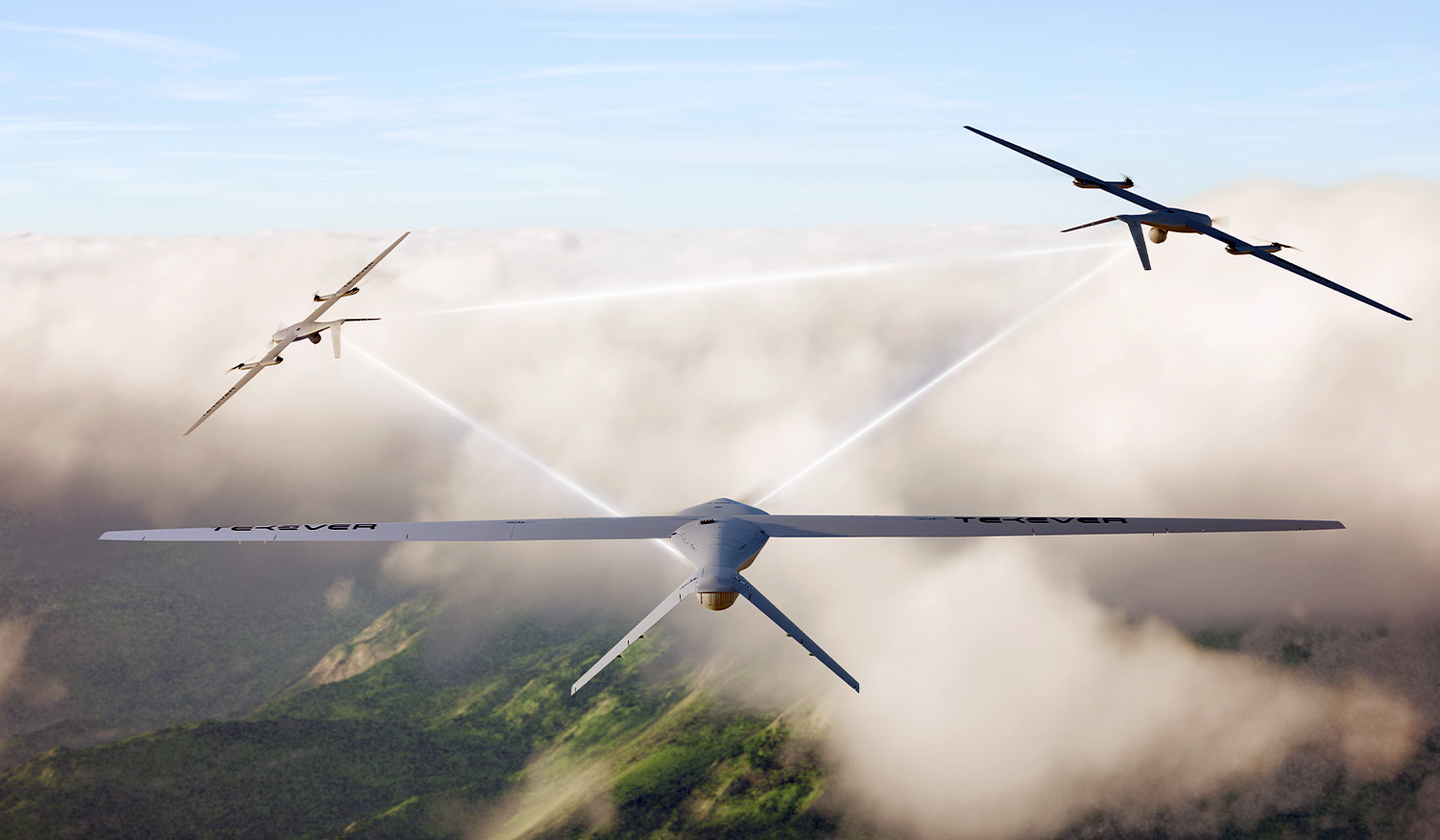
Another huge fundraise has landed in the world of European defence tech. Tekever, the autonomous air systems startup founded in Portugal, has raised $580 million — a Series D round that values the company at $6.4 billion. The company is describing this as a “first close.” There is more money being raised for this Series D, which may come in at the same valuation, or might ratchet it up even further. It’s a big bump for Tekever, which was valued at just $1.32 billion after a raise in May 2025.
The company has now raised over $1.25 billion in outside funding, per PitchBook data.
The company’s announcement comes on the heels of some other notable advances. It’s been pursuing some M&A, acquiring the “heavy-drone” startup Flowcopter in Scotland earlier this month. And that built on another big effort it’s undertaking in the UK: in 2025, Tekever said it would be committing £400 million to the country to build out its drone business here after winning an electronic warfare deal with the Royal Airforce. Tekever is also a key supplier for the Corvus programme for intelligence, reconnaissance and surveillance equipment at the MoD, and this potentially may also be worth as much as £400 million over the next 10 years.
Tekever’s Series D has been rumoured for months before today. Taking a moment to announce the first close will likely contribute to helping get its name on the radar further, not least because there are some very notable investors in this latest round.
Co-leads are Baillie Gifford, the huge UK private equity and venture firm, and UC Investments. The UC stands for University of California, and UC Investments manages pensions, endowments and working capital for the institution. Tekever is its very first direct investment outside of the US (meaning it’s an LP in other funds).
That signifies how defence tech continues to grow as a category, and how large funds, previously more comfortable with playing a role in the background as LPs, are taking more prominent stakes in defence tech startups (along with more technology investments overall).
“This investment represents far more than a capital raise. It brings together an exceptional group of investors around a shared ambition for what Tekever is becoming,” said Ricardo Mendes, founder and CEO of Tekever, in a statement. “Together, we share the belief that scientific excellence, artificial intelligence, autonomy and sovereign technological capability will be fundamental to the security and resilience of democratic societies in the decades ahead. This investment gives us the resources to move faster, scale further and continue building a global technology leader from Europe.”
Others in the round include Merlyn Advisors, Crescent Cove, Ventura Capital and Iberis Capital. NIF is a previous backer but it’s not named here.
Merlyn Advisors is not just another investor. It’s the UK hedge fund that employs the former UK defence secretary Sir Ben Wallace, and was once controversially in the news for allegedly paying former Prime Minister Boris Johnson to broker a meeting with Nicolas Maduro (the ex-president of Venezuela whose ouster was spurred by a US invasion).
“Europe’s security will increasingly depend on its ability to build technology companies that can innovate at speed, scale industrially and deliver capabilities that respond to real operational needs. TEKEVER has a proven track record that shows it can do all three,” said Sir Wallace said in a statement. “We are very pleased to back TEKEVER as it enters its next phase of international growth.”
Series D investments are typically described as later-stage growth rounds, and that is exactly what Tekever will be doing with the funds. It plans to expand internationally, build more manufacturing muscle, and more R&D.
With war in Ukraine and the Middle East, Europe and other parts of the world are focused on modernising their defences, and that presents a ripe opportunity for companies like Tekever but also others. AI and other technology advances are at the centre of how defence companies are evolving right now, but competition is arguably fiercer than ever, and the bigger defence techs are raising huge rounds both to meet market demand, but also to work on ways to out-tech their rivals.