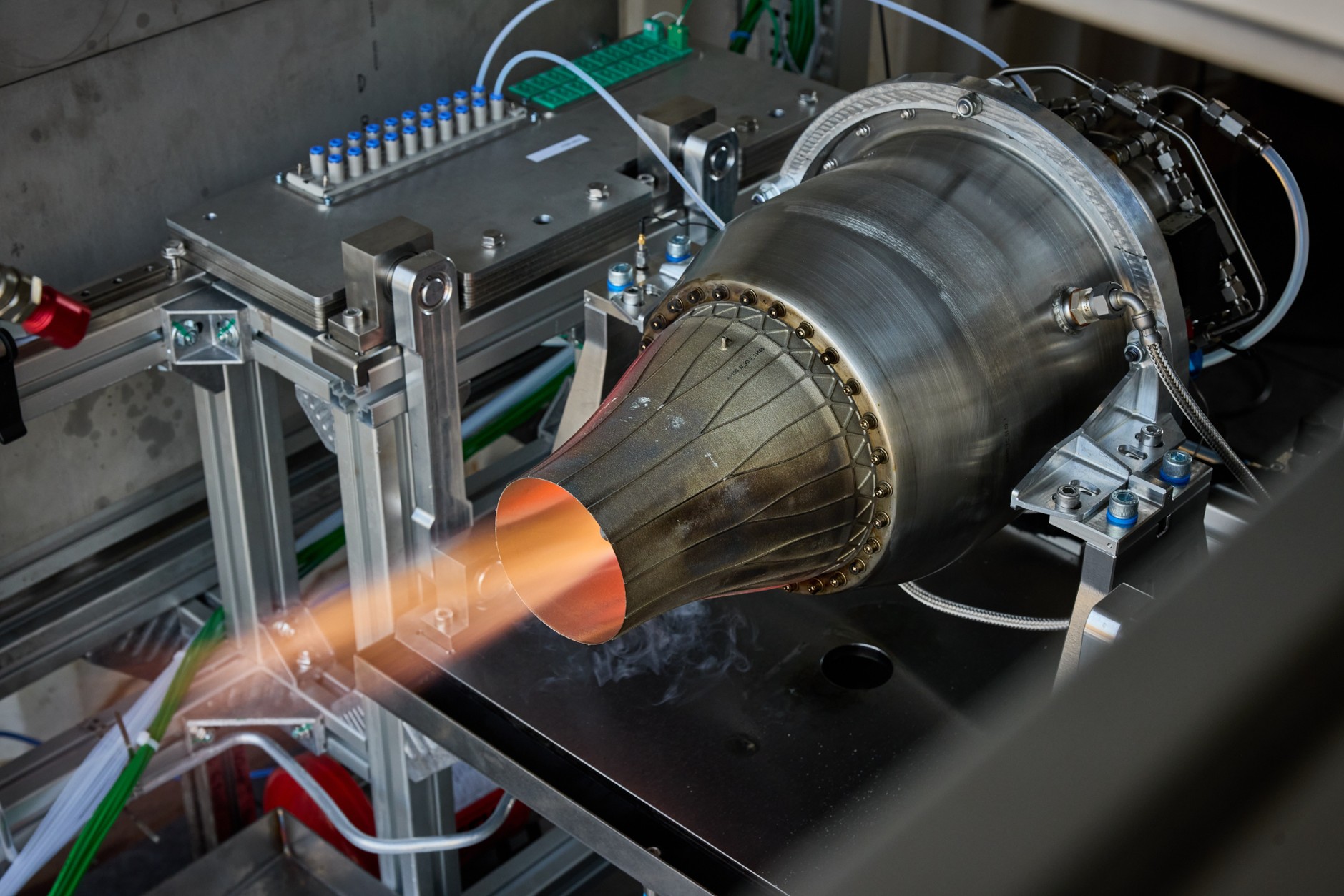
Like something out of James Bond’s Q Branch, the UK has taken a new turbojet engine from concept to flight-ready status in less than seven months. The engine was part of a Ministry of Defence program aimed at building a domestic source of engines for drones and other military aircraft.
The engines were co-developed by the MOD and Oxford-based startup Alloyed, with the work led by the MOD’s Strategic Capabilities Office. The program has produced a family of turbojets ranging from 30 Newtons to 2,000 Newtons of thrust, covering applications from small uncrewed aircraft to much larger platforms.
“Working alongside the Ministry of Defence has enabled Alloyed to bring to bear its world-leading metals technologies to mature and demonstrate advanced propulsion systems at remarkable pace while building a lasting capability in the UK. This programme shows the power of combining defence expertise, digital engineering and industrial innovation,” said Michael Holmes, Alloyed CEO in a release.
Two engines are already moving into production. A 300N engine has completed flight testing and entered production in the UK, while a larger 1,100N engine went from its initial concept to flight-ready in less than seven months.
Jet engines have traditionally been expensive, complex systems with long development and production cycles. Alloyed is trying to change through digital engineering and additive manufacturing. In other words, they are building and testing the systems in software and then 3D printing them using extruded metals and CNC systems.
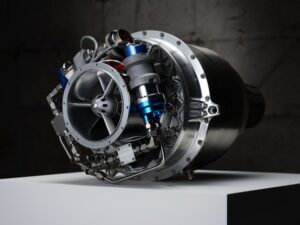
Alloyed propulsion division, Argive, designs engines around additive manufacturing from the start rather than using 3D printing simply to replace conventionally manufactured components. The company’s 300N A300, for example, weighs 3kg and uses an additively manufactured architecture intended to reduce part count while allowing more complex internal geometries. It is also designed to run on diesel, kerosene and Jet A-1, a useful trick when fueling these drones in the field.
Alloyed says its Argive engines use UK intellectual property and nearshore supply chains, with manufacturing that can also be deployed in allied countries. The MOD says the current program already involves more than 40 British suppliers, mostly small and medium-sized companies.
More than 60 engineering and advanced manufacturing jobs have been created under the program, according to the MOD, with another 45 expected during the next year as production increases. The government and Alloyed are jointly funding the work, combining MOD investment with matched private funding from the company.
As drones become cheaper and production volumes rise, the question is increasingly not whether a country can design a new aircraft. It is whether it can manufacture the engines, electronics and other critical components in sufficient numbers without depending on a foreign supply chain.
Alloyed and the MOD are betting that propulsion can be treated less like a decade-long aerospace program and more like a product that can be redesigned, manufactured and scaled on the fly, something that has long eluded traditional aviation manufacturers.