HyImpulse Technologies, a startup out of Germany building a new approach to launching and travelling in space using paraffin-based hybrid propulsion technology, has picked up some funding to fuel its mission: €50 million to close out its Series A at nearly €100 million.
JOIN Capital and Ace Capital Partners are co-leading the round, with participation from new investors North Ventures, BW-Capital, Bayern Kapital and the German Aerospace Center (DLR), alongside continued support from existing shareholders including Campus Founders Ventures and others. CEO and co-founder Christian Schmierer told Resilience Media in an interview that the company has now raised some €125 million in total across equity and grant funding. No valuation is being disclosed.
HyImpulse is a deep tech company that is just now coming into the light.
It has been around as a startup since 2018 — a spin out from Germany’s national aerospace laboratories (the DLR) — and even before then started initially as the co-founders’ project in university.
It has yet to launch a commercial rocket. However, based on successful tests it’s been running so far and demand in the market at the moment, it has an order book of some €350 million to fill out, Schmierer said. This is just the tiniest tip of the iceberg: the company cites forecasts that estimate global demand for launch services at $32 billion by 2035.
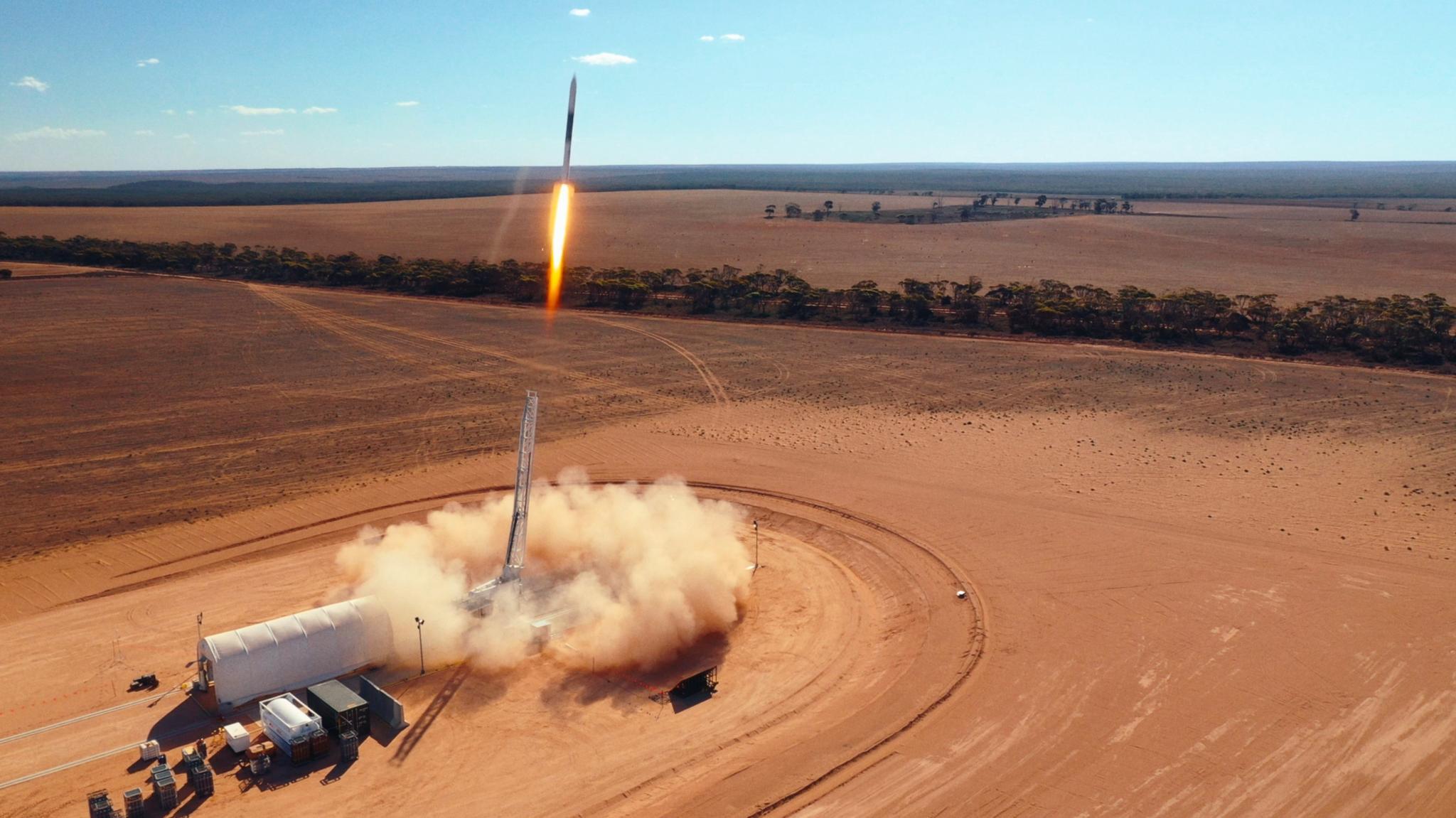
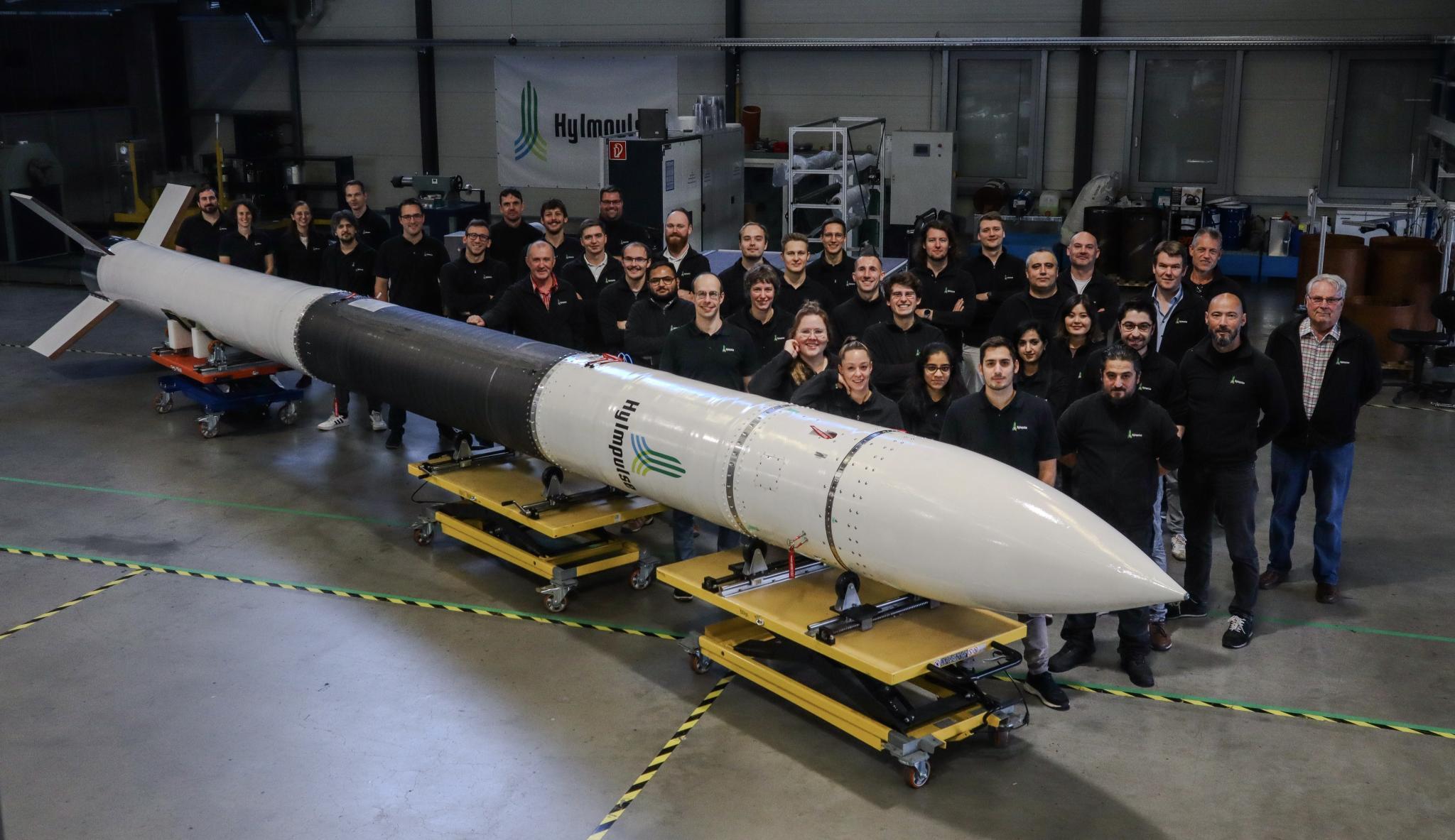
To that end, the startup said will be using the equity to continue R&D on the three products its revealed to date: the SR75 sub-orbital launcher; the SL1 for orbital launch; and HyMove for in-space mobility. And more immediately, later this year, it’s planning the first launch of the SR75 at the SaxaVord Spaceport in the UK’s Shetland Islands (after a successful initial pilot in 2024 in Australia) and the maiden flight of the SL1. (You can read more about HyImpulse’s launch plans here.)
 HyImpulse’s rise is coming in the midst of a bigger push into the skies.
Globally, space has become a critical piece of the resilience puzzle as a domain that can be used for communications and data infrastructure, defence capabilities, research opportunities and much more — and countries are keen to develop their own capabilities in order to have more control over their destinies, and in some cases ensure that adversaries do not develop those capabilities first and close off opportunities for others.
Now, amid that race to space, startups building relevant tech are seeing a surge of interest.
Germany in particular has been doubling down on building out its space research and development, and HyImpulse is not the only company in Europe building tech to improve how to get to space and move once you’re there.
Other startups working on the challenges include another German startup, Isar Aerospace, and PLD Space from Spain. There are also giant existing companies like SpaceX also operating in the market, albeit with a more reduced funnel for launches that comes nowhere close to meeting demand.
Schmierer contends that other existing and new solutions are all essentially built on old technology and thus less good for fixing existing problems in areas like cost and volatility. HyImpulse’s system, in contrast, is a proprietary breakthrough that relies on paraffin.
“All our competitors basically use the same technology that has been used for rockets since the 1960s and are just recreating what American companies have already done,” he said in an interview.
“Today’s space launch market suffers from significant over-demand, especially for affordable, dedicated launches – and HyImpulse offers a groundbreaking solution to this bottleneck,” noted Shimon Tsentsiper from ACE Capital Partners in a statement.
The SR75 can carry a payload of up to 250 kilograms to a distance of 200 kilometres; the SL1 can carry up to 600kg into Low Earth Orbit and the HyMove will be designed to work with payloads of up to 400kg. The wider range allows for speeds of up to Mach 15 and ranges of up to 10,000 kilometres, making HyImpulse’s technology useful also for testing new kinetics such as hypersonic and suborbital flight services.
What caught investors’ eye was not just the successful testing amid a more heated market for space capabilities, but that it might be carried out on a cost base that does not break the bank.
“Europe doesn’t just need more rockets; it needs launch economics that actually work,” said JOIN Capital Founding Partner Jan Borgstädt in a statement. “HyImpulse has built a fundamentally leaner rocket architecture: roughly half the parts, a path to half the cost per kilogram and far less capital required to get to orbit. They have already proven the technology in flight. That’s why we co-led this round, and why the upcoming SR75 launch matters.”
Updated to correct the range of the SR75: it’s 200 kilometres, not 200 metres.