The UK is giving British defence companies access to Ukrainian battlefield data to develop AI models for autonomous drone swarms. The data, sourced from live drone activity in the country, can be used to simulate real-world drone flights, thereby allowing AI companies train their models under a myriad conditions.
Up to twelve UK companies will initially gain access to Ukraine’s Avengers AI Labs, a government platform containing imagery and video collected by uncrewed systems using daylight and thermal sensors. The dataset includes information from more than six million detections of tanks, artillery, air defence systems, infantry and aerial targets, including Shahed drones and reconnaissance UAVs.
The value of this data is clear: by training uncrewed drones against actual battlefield interactions, the systems can “learn” how to differentiate, say, a tank from a Toyota Yaris.
“Ukraine is the frontline of freedom for us all. On my recent visit to Kyiv, I saw first-hand the courage and resilience of the Ukrainian people. I also saw the extraordinary innovation which is allowing them to repel Putin’s illegal and unprovoked invasion,” UK Defence Secretary Wes Streeting said. “This world-first access to real battlefield data will allow British companies to continue pushing the frontier of defence innovation, deterring our enemies and making us safer at home as well as further strengthening Ukraine.”
The Ministry of Defence is offering companies the opportunity to submit proposals for how they will use the data. They are looking for companies who will use it for target recognition, drown swarms, electronic warfare simulations, and telemetry sharing.
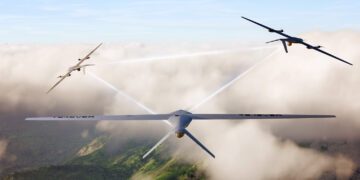
One focus is keeping groups of drones operational when communications are disrupted or satellite navigation is unavailable. That could allow multiple systems to adjust routes, share information and coordinate actions without depending on constant communication with a central controller. The MOD sees applications ranging from battlefield resupply and targeting to maritime operations and submarine hunting. Human involvement will remain part of the systems being developed.
The programme also follows recent British Army work on autonomous swarms. Earlier this month, the Army completed trials of an eight-drone swarm developed through Dstl’s Software Defined Swarms programme, testing collective control technology in realistic military environments.