The NATO Innovation Fund is making another resilience tech investment out of its €1 billion+ coffer, and it happens also to be its first investment into the country of Iceland. Laki Power — which builds drones and other hardware to monitor and secure electrical grids, tapping conductors to power the monitoring hardware and software — has closed a Series A of €6 million. NIF is leading the round, with previous backer ReykVC also participating.
The investment in Laki Power is coming as countries and companies focus more on locking down and improving the resilience of their critical infrastructure. Alongside energy networks, this includes other indispensable vectors that help society function, like communications, public health, financial services and food production.
Europe now sees multiple daily instances of grey zone warfare tactics, and critical infrastructure is regularly identified as the top security risk across Europe, such as in this report from the European University Institute.
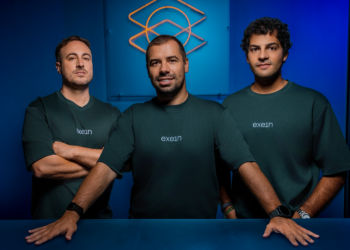
“When we founded Laki Power, our goal was to give grid operators eyes on infrastructure which they have previously operated blind,” said Ósvaldur Knudsen, CEO and co-founder, in a statement. “Recent years have shown that a resilient grid is not just an operational asset but a security imperative.”
The timing of the investment is also notable given Iceland’s specific security profile these days.
The country, one of the more far-flung members of the NATO Alliance, does not have a standing army and has long relied on NATO for national security. These days, however, that stance is getting tested. The Arctic and Nordic regions are contested for their strategic position and access to natural resources, putting Iceland in the crosshairs.
It hasn’t helped that Trump has mistaken Iceland for Greenland, a neighbouring island that the Trump administration is determined to annex, despite rebuffs from its leaders.
Lastly, there is another interesting intersection between Iceland and NIF: earlier this year, the investor appointed an Icelander, board member Ari Kristinn Jónsson, as its first-ever president. Sander Verbrugge, a new partner who joined in 2025, is leading NIF’s investment, but having an Icelandic president may well be contributing to investing partners getting more focus and insight into how that region is shaping up.
Given all of this, it’s no surprise that Laki Power is growing and getting on NIF’s radar.
Laki’s flagship product is something called the LKX-MULTI. This is technology that helps electricity grid operators monitor lines and manage services during extreme weather conditions such as winter storms and wildfires, including in very remote locations.
Laki has designed a self-powered monitoring system for conductors (more numerous than just monitoring at the substation level) on high-voltage lines that incorporates cameras, weather and line sensors, onboard compute and satellite communications.
It’s powered directly with up to 300W of power from the power lines that it’s monitoring, which it says gives it more resource to monitor and manage than other observing solutions, which typically rely on solar or battery power and do not have enough “juice” to manage continuous, high-data functionality. (The backups, if the grid is completely down, will still be those other power sources.)
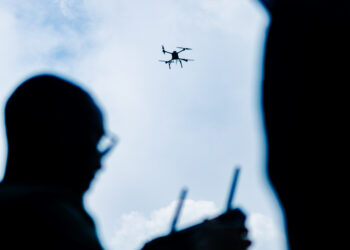
Laki is also rolling out more products for monitoring that sit alongside its flagship system. It has plans for an ISR drone — also for monitoring power utility infrastructure — that can autonomously dock at a conductor to recharge.
The company claims to already have commercial deals with utilities and operators in Europe, North America and Australia.