100 investors to watch 2026 100 investors to watch 2026 100 investors to watch 2026
Friday 9 October, 2026
[email protected]
Resilience Media
  • News
    • Events
    • Interview
    • Startups
    • Venture
    • Weekly Digest
  • Resilience Conference
    • Resilience Conference London — Oct 2026
    • Resilience Conference Copenhagen — May 2026 (PAST)
    • Resilience Conference Warsaw — Apr 2026 (PAST)
  • Launch
  • About
  • Guest Posts
    • Author a Post
  • Subscribe
No Result
View All Result
  • News
    • Events
    • Interview
    • Startups
    • Venture
    • Weekly Digest
  • Resilience Conference
    • Resilience Conference London — Oct 2026
    • Resilience Conference Copenhagen — May 2026 (PAST)
    • Resilience Conference Warsaw — Apr 2026 (PAST)
  • Launch
  • About
  • Guest Posts
    • Author a Post
  • Subscribe
No Result
View All Result
Resilience Media
No Result
View All Result

NATO’s eastern flank needs cheaper air defences to counter Russian threats, industry warns

Frankenburg CEO Kusti Salm warns that thousands of potential targets across NATO's eastern flank cannot be protected using conventional air defence systems alone.

Carly PagebyCarly Page
October 9, 2026
in Drones & UAS, European Defence, News, Resilience Conference
Share on Linkedin

NATO needs to rethink how it defends its eastern flank against Russian aerial threats, with industry leaders warning that existing air defence systems are too expensive to protect thousands of potential targets.

You Might Also Like

Social networking apps like Snapchat are being used to recruit agents in grey-zone warfare, says Augur CEO

GCHQ CTO warns outdated procurement risks driving UK tech overseas

Estonia’s Golbriak Space raises €4M

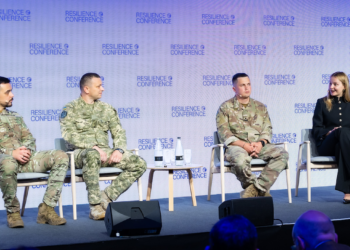
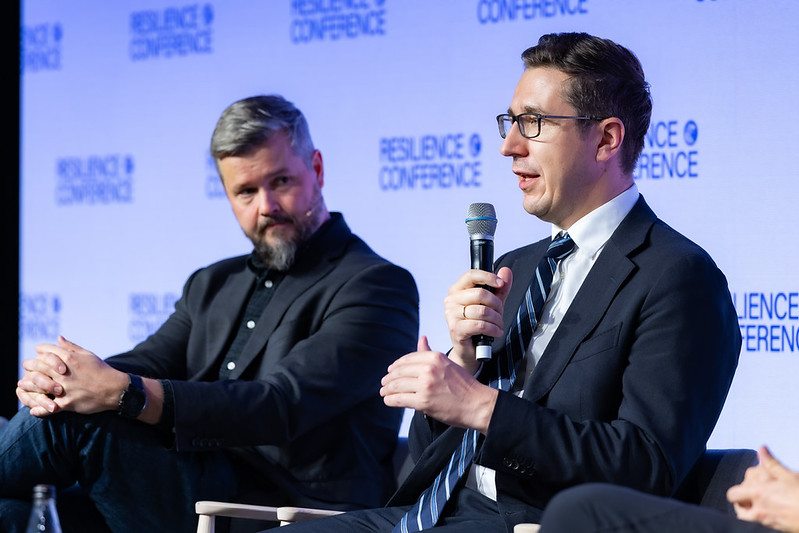
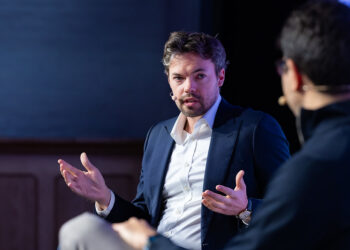
Speaking at the Resilience Conference in London, Kusti Salm, CEO of Estonian missile manufacturer Frankenburg Technologies and former permanent secretary of Estonia’s Ministry of Defence, said the scale of the threat demanded a different approach.

Frankenburg has identified approximately 5,000 potential targets across Finland, the Baltic states and Poland based on Russia’s targeting practices in Ukraine, said Salm. He added that NATO lacks the resources to provide even a fraction of these sites with conventional air defence protection. Frankenburg and others believe that the solution is affordable, short-range interceptors that can be deployed locally and manufactured in large quantities.

“Spot defence is the only way I can affordably do it at scale,” Salm said, explaining why Frankenburg had prioritised developing its short-range Mark I missile.

The company is also developing its longer-range Mark II interceptor to counter emerging threats from low-cost cruise missiles.

Salm warned that Russia’s approach to warfare is driven by the economic imbalance between relatively inexpensive weapons and the far more valuable infrastructure they can destroy. Defending against such attacks with costly conventional systems risks becoming unsustainable.

Janne Hietala, CEO of Finnish autonomous airship manufacturer Kelluu, argued that NATO must also reconsider how it monitors and detects threats.

Kelluu’s hydrogen-powered airships provide persistent surveillance across remote areas, including Finland’s 1,300-kilometre border with Russia. Its current systems can remain airborne for more than 12 hours, while a second generation being tested this year is designed to operate for several days.

Hietala said future surveillance networks should be distributed across numerous inexpensive platforms rather than concentrated in a handful of costly systems that could be destroyed in an attack.

Both executives argued that adopting new technology would require changes to military doctrine and force structures, rather than simply purchasing additional equipment.

Hietala called for a “complete force redesign,” with autonomous and distributed capabilities integrated into existing military operations, while Salm also questioned whether Western defence priorities adequately reflected the scale of the threat.

“If in our defence tech conferences, the main answer in the future is AI and autonomy,” he said, Russia’s focus remains on “more and bigger bombs.”

The challenge for NATO, the panel suggested, is not simply developing cheaper defensive technology, but deploying enough of it to make large-scale attacks less attractive in the first place.

Tags: FrankenburgkelluuResilience ConferenceRussia
Previous Post

Social networking apps like Snapchat are being used to recruit agents in grey-zone warfare, says Augur CEO

Carly Page

Carly Page

Carly Page is a freelance journalist and copywriter with 10+ years of experience covering the technology industry, and was formerly a senior cybersecurity reporter at TechCrunch. Bylines include Forbes, IT Pro, LeadDev, The Register, TechCrunch, TechFinitive, TechRadar, TES, The Telegraph, TIME, Uswitch, WIRED, & more.

Related News

Social networking apps like Snapchat are being used to recruit agents in grey-zone warfare, says Augur CEO

Social networking apps like Snapchat are being used to recruit agents in grey-zone warfare, says Augur CEO

byIngrid Lunden
October 8, 2026

Grey-zone manoeuvres are closer than you think to disrupting everyday life, even in countries far from the frontlines of current...

GCHQ CTO warns outdated procurement risks driving UK tech overseas

GCHQ CTO warns outdated procurement risks driving UK tech overseas

byCarly Page
October 8, 2026

GCHQ has warned that government procurement rules “designed for the 1900s” are making it harder to turn British technology into...

Estonia’s Golbriak Space raises €4M

Estonia’s Golbriak Space raises €4M

byFiona Alston
October 8, 2026

Estonian space tech company Golbriak Space has raised €4 million to expand its production capacity as the firm prepares to...

Ukraine’s military tells defence startups to get closer to the front line

Ukraine’s military tells defence startups to get closer to the front line

byJohn Biggs
October 7, 2026

Defence companies looking to sell into Ukraine should stop treating the country's military as a testing ground and start treating...

Airlogix opens UK production as Ukraine pushes defence industry west

Airlogix opens UK production as Ukraine pushes defence industry west

byCarly Page
October 6, 2026

Ukrainian drone maker Airlogix has opened production in the UK, as Kyiv pushes for deeper integration between its defence industry...

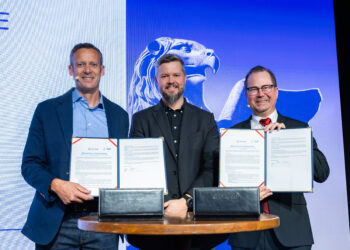
NATO Innovation Fund and Finland’s DEFINE sign MoU

NATO Innovation Fund and Finland’s DEFINE sign MoU

byIngrid Lundenand1 others
October 6, 2026

The NATO Innovation Fund (NIF) and Defence Innovation Network Finland (DEFINE) have launched a new partnership to help NIF-backed startups...

Buntar Aerospace raises $16M led by Freedom Fund

Buntar Aerospace raises $16M led by Freedom Fund

byFiona Alston
October 6, 2026

Buntar Aerospace -- a Ukrainian company that has developed an intelligence, surveillance, and reconnaissance (ISR) platform and corresponding reconnaissance drone...

GCHQ head warns AI advances are exposing Britain’s legacy systems

GCHQ head warns AI advances are exposing Britain’s legacy systems

byCarly Page
October 6, 2026

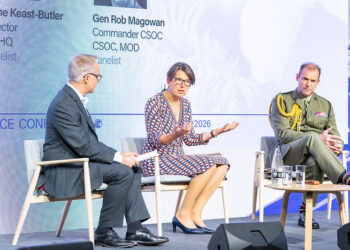
Britain's legacy technology is already being exposed by rapid advances in AI, GCHQ director Anne Keast-Butler has warned, as the...

Load More

Top stories

Dark digital map of north-western Europe
European Defence

State of Defence Tech 2026: European defence startup funding to quadruple to $10.5B

October 5, 2026
USEUCOM builds new ‘front door’ for European defence tech
News

USEUCOM builds new ‘front door’ for European defence tech

October 6, 2026
Terra CEO Nathan Nwachuku with Dominion Dynamics CEO Eliot Pence on stage at Resilience Conference
Drones & UAS

Terra cuts China from supply chain in push for ‘parallel’ Global South defence ecosystem

October 5, 2026
NATO Innovation Fund and Finland’s DEFINE sign MoU
European Defence

NATO Innovation Fund and Finland’s DEFINE sign MoU

October 6, 2026

Resilience Media is an independent publication covering the future of defence, security, and resilience. Our reporting focuses on emerging technologies, strategic threats, and the growing role of startups and investors in the defence of democracy.

  • About
  • News
  • Resilence Conference
    • Resilience Conference Copenhagen 2026
    • Resilience Conference Warsaw 2026
  • Guest Posts
  • Subscribe
  • Privacy Policy
  • Terms & Conditions
  • Mission Statement & Code of Practice
  • Press

© 2026 Resilience Media

No Result
View All Result
  • Home
  • About
  • Subscribe
  • Events
  • Guest Posts
  • Interview
  • News
  • Resilience Conference London 2026
  • Resilience Conference Copenhagen 2026
  • Resilience Conference Warsaw 2026

© 2026 Resilience Media

This website uses cookies. By continuing to use this website you are giving consent to cookies being used. Visit our Privacy and Cookie Policy.