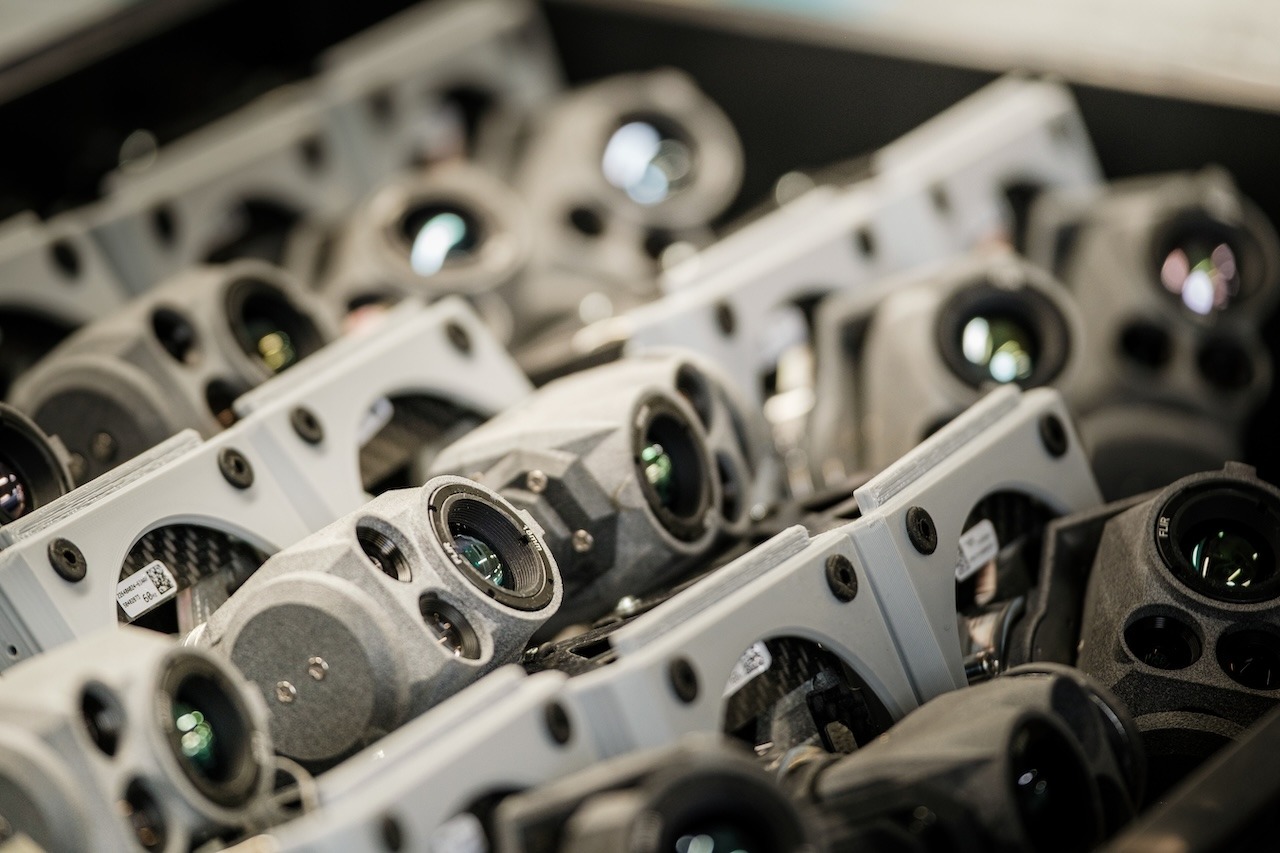
Lithuanian drone company Granta Autonomy and loitering munitions Berlin-based unicorn Stark have signed a memorandum of understanding to integrate Granta’s micro-class camera gimbals, Night Scout and Solo, into STARK’S Gambit, a quadcopter designed to be used for intelligence, surveillance and reconnaissance as well as a short-range, one-way-effector.
Granta Autonomy was founded in 2015 by Gediminas Guoba and Laurynas Litvinasbegan, former Lithuanian military engineers. It began as a manufacturer of fixed wing reconnaissance UAVs. However, spotting a gap in the market — there are tons of drone companies, but not enough European producers of specialised parts — it pivoted into developing critical drone components. These include cameras as well as data link technology designed to let systems operate in communications-denied environments.
Its products are used Ukraine and are known to be capable of flying through Russian jamming systems.
Guoba sat down with Resilience Media’s John Biggs in March to discuss the future of drone warfare and specifically the shortage of quality gimbals.
“There are very few manufacturers of micro-class camera gimbals globally, as it requires exceptionally complex technological solutions,” he said of the new partnership in a statement. “We are currently seeing massive interest in our products, particularly our gimbals, so we are delighted to be partnering with a market leader in loitering munitions, like STARK.”
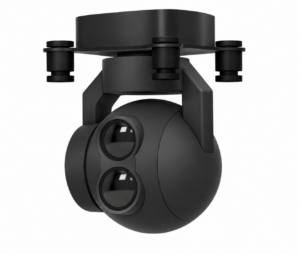
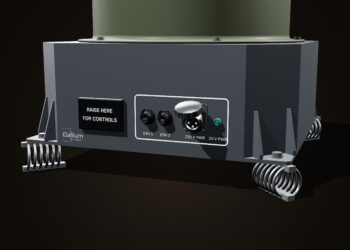
- Solo micro-class camera gimbal
Granta Autonomy’s Night Scout was developed for intelligence, surveillance, and reconnaissance (ISR) missions. It has a low-power consumption thermal camera with 640×480 resolution.
Its Solo offering is designed for loitering munitions. The 135g Solo gimbals have advanced image processing due to the built-in dual-EO camera with up to 40x zoom (x20 optical and x2 digital), along with onboard recording and streaming using different protocols.
“This strategic partnership also gives Granta the opportunity to integrate its Hornet XR ISR platform into our fully certified C2 software, Minerva, enabling new recce-strike optionality for military partners in Lithuania and elsewhere,” said Johannes Arlt, SVP and MD of Nordics at STARK.
Stark has deep pockets for business development and M&A at the moment. It raised a €500 million funding round this past summer, reportedly valuing the company at around €3 billion, and has now raised €640 million overall. While sometimes it integrates through MOUs, other times it acts as the consolidator, bringing in tech through acquisitions to have more control, and potentially to make sure that its partners stick around for the long haul. In September it acquired Electronic Warfare systems startup Raydiant RF.