The ability to transport payloads into orbit and return them to precise locations on Earth could give European armed forces a new way to strike targets over long distances — potentially within an hour.
And German space startup Atmos Space Cargo is partnering with European missile manufacturer MBDA to explore that exact possibility, under a newly signed agreement to develop a precision orbital strike system.
Deep precision strike
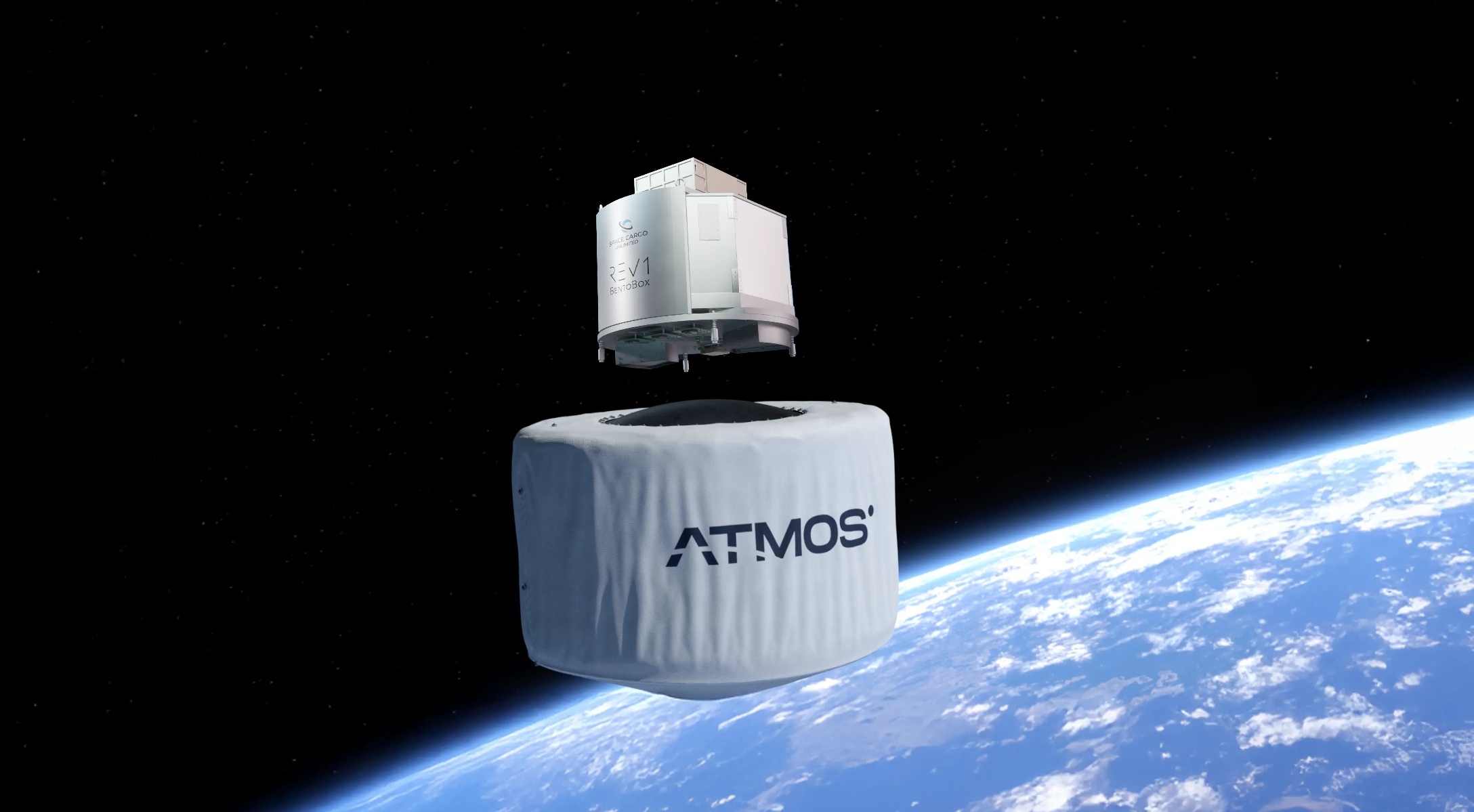
Founded in Germany in 2021, Atmos develops reusable spacecraft capable of transporting payloads into orbit and returning them to Earth in one piece.
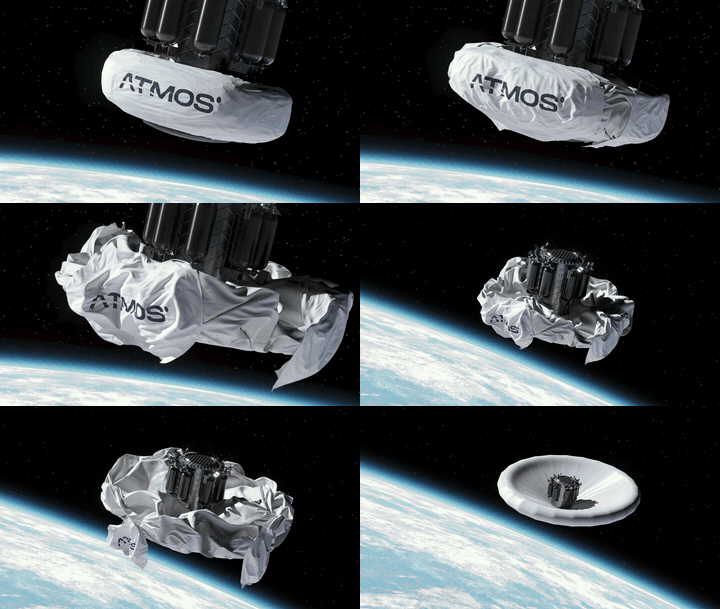
Its technology has potential applications in scientific research, biotechnology and industrial manufacturing, although its commercial return service is still under development. The company has completed one orbital demonstration mission and is preparing its next generation of PHOENIX vehicles for commercial operations.

At the Resilience Conference in Warsaw back in April, Atmos CEO Sebastian Klaus announced that the company was expanding into Poland to develop its military capabilities. Speaking at the event, Klaus outlined the potential of its orbital technology to reach almost anywhere on Earth within 60 minutes.
Shortly afterwards, Atmos announced a $30.2 million Series A round of funding, led by Balnord and Expansion, adding to the previous $20 million it had garnered through various seed and grant funding.
Central to Atmos’s military ambitions is the concept of “deep precision strike.” In a LinkedIn article published in March, Klaus outlined a vision for orbital weapons capable of striking military targets with centimetre-level accuracy, arguing that such a capability could strengthen Europe’s conventional deterrence by allowing it to respond rapidly to aggression without resorting to nuclear weapons.
“The growing absence of deterrence architecture allowed new powers to rise — and to threaten and attack free nations with confidence that the cost will remain tolerable,” he wrote at the time. “Deterrence that wins does not destroy. It eliminates Europe’s adversaries’ confidence to attack.”
As The Times reported [paywalled] in early November, Atmos has been developing a system known as Precision Orbital Deep Strike (PODS). The proposed weapon would involve releasing a conventional projectile from an orbiting satellite inside a protective re-entry vehicle, allowing it to survive its descent through Earth’s atmosphere before striking a target.
At the time, Klaus identified MBDA as a prospective partner that could help the company move beyond prototypes and navigate the political and legal complications surrounding weapons deployed from space. Today’s agreement brings that ambition a step closer, although the companies are initially concentrating on “systems architecture, technical feasibility, payload integration studies and potential technology demonstration.”
No deployment timetable or development budget has been disclosed.
MBDA, for the uninitiated, was established in 2001 through the merger of European missile businesses and is jointly owned by Airbus, BAE Systems and Leonardo. The company develops weapons including air-defence systems and long-range precision-strike missiles, and has been involved in efforts to expand European defence production.
In March, MBDA was among 13 defence companies invited by the UK government to meet representatives from Gulf states seeking to acquire air-defence, counter-drone and command-and-control systems amid Iranian attacks in the region.
A sovereign space
The partnership comes amid growing efforts to strengthen Europe’s independent space and defence industries, as governments seek greater control over strategically important technologies and infrastructure.
In a press release issued to Resilience Media, Klaus asserted that developing these capabilities through European industry is essential to the continent’s security.
“Europe must be able to develop, build and operate its critical defence capabilities through its own industry, and that starts with infrastructure,” he said. “Orbital transportation and return form a new layer of strategic infrastructure, and infrastructure determines what Europe can achieve on its own terms.”
MBDA Deutschland managing director Thomas Gottschild, meanwhile, also said the partnership aimed to provide a “sovereign European capability” to armed forces, while supporting the company’s broader ambitions in space — “reinforcing both space for defence and the defence of space.”
Atmos is among a growing number of European companies pursuing independent orbital transport and re-entry capabilities. In September, Munich-based The Exploration Company raised $450 million to develop its reusable Nyx spacecraft and reusable rocket-engine technology, part of a wider effort to reduce Europe’s dependence on foreign space providers.
The scale of the challenge was illustrated last weekend by Elon Musk’s SpaceX, which successfully returned a Starship upper stage from orbit and caught it using the mechanical arms of its Texas launch tower for the first time, marking a major advance towards fully reusable orbital rockets. The American company’s lead is particularly relevant to Atmos, whose first PHOENIX demonstration vehicle reached orbit aboard a SpaceX Falcon 9 rocket in April 2025.
As The Times pointed out in its coverage of PODS earlier this month, the 1967 Outer Space Treaty prohibits the placement of nuclear weapons and other weapons of mass destruction in orbit, although it doesn’t explicitly prohibit conventional weapons. The proposed system, therefore, could raise some legal and regulatory concerns as it advances toward commercialization.