Mercedes-Benz is pushing deeper into defence technology, announcing this week a partnership with a Munich drone-defence startup to mount counter-drone systems on vehicles. It was one of a wave of partnerships binding Europe’s industrial giants to young challengers.
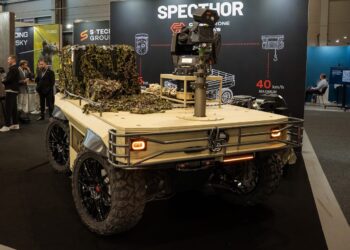
The automotive giant has signed a memorandum of understanding (MoU) with Tytan Technologies, a deal unveiled at ILA Berlin — Germany’s largest aerospace and defence exhibition — in the presence of Federal Minister for Economic Affairs and Energy Katherina Reiche. Under the agreement, the two will explore building vehicle-based counter-drone and mission platforms on Mercedes’ G-Class and Sprinter, aimed at protecting civilians and critical infrastructure.
“The current geopolitical challenges make it clear that we must rethink resilience and security,” Reiche said in a statement. “This makes it all the more important to deliberately pool the strengths of our industry.”
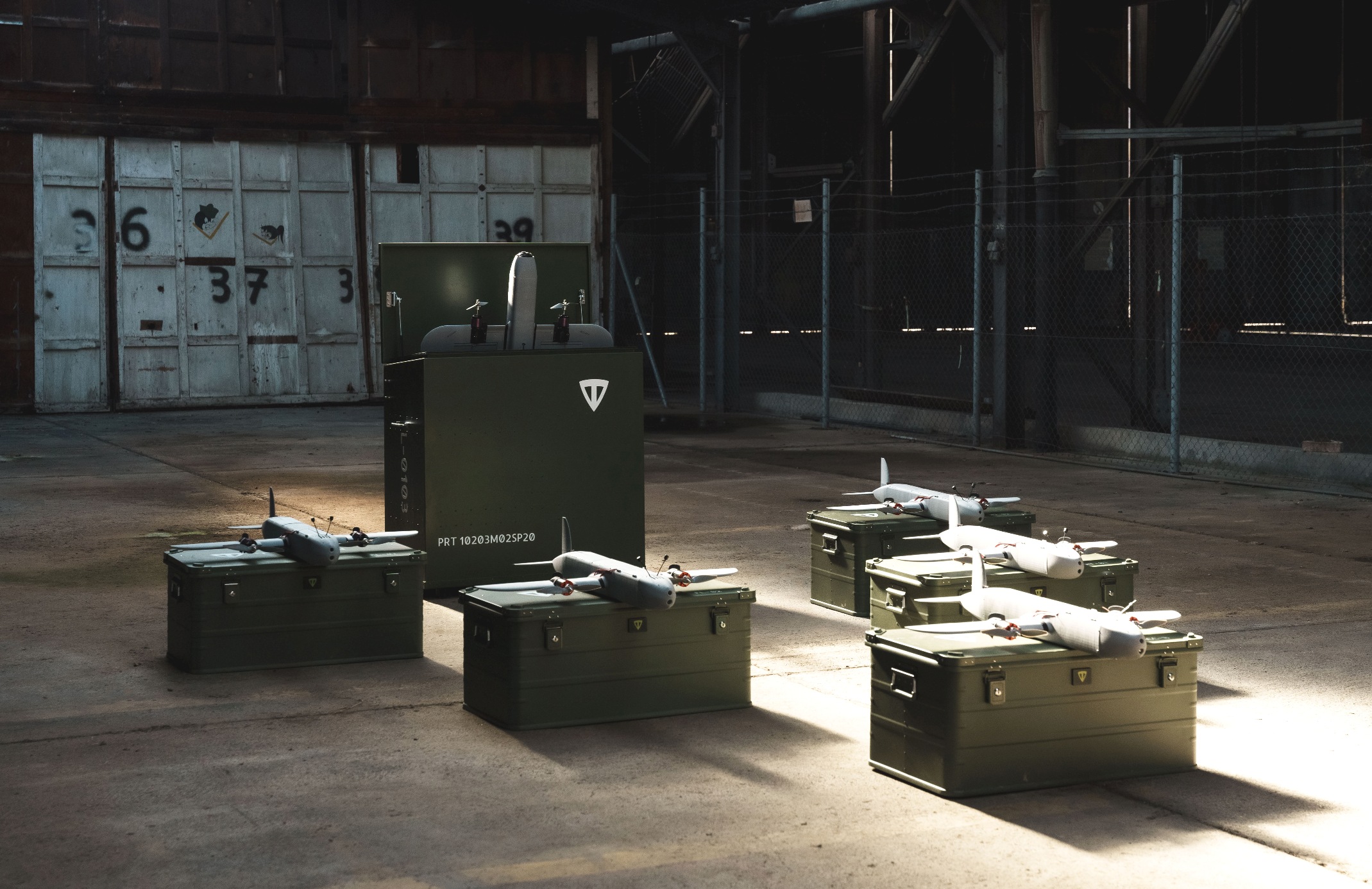
Founded in 2023 as a spinout from the Technical University of Munich, Tytan builds AI-guided interceptors designed to track and bring down hostile drones, and has tested its systems on the ground in Ukraine.
In February, the startup raised a €30 million Series A round from backers including the NATO Innovation Fund, at a reported valuation of around €150 million, and it holds a contract worth several hundred million euros to supply Germany’s armed forces with a kinetic anti-drone system.
Separately, it has been busy assembling partners: last October, Tytan teamed up with Axon’s Dedrone division on sensor-fusion technology to widen the range of drones its interceptors can engage.
For Mercedes, the tie-up extends a push into a sector it pinpoints as a major growth area. Michael Schiebe, a member of the Mercedes-Benz Group board of management, said the arrangement plays to each side’s respective strengths — the carmaker supplying dependable base vehicles, Tytan the specialist drone technology.
“We are pooling our respective strengths: Mercedes-Benz stands, today and in the future, for robust and reliable base vehicles, while Tytan brings highly specialised expertise in drone, sensor and mission technology,” Schiebe said in a statement. “Together, we want to work on innovative solutions for security and protection tasks. For Mercedes-Benz, expanding our long-standing expertise in the defence sector is a strategic growth field.”
Airbus plays the field
The ILA Berlin trade show proved fertile ground for such pairings. Airbus, the European aerospace juggernaut, used the event to sign two separate startup deals of its own, both centered on the drone threat.
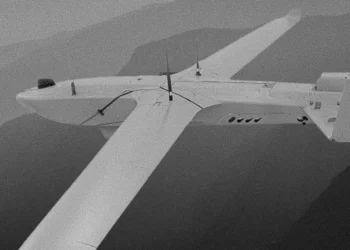
The first, a cooperation agreement with Quantum Systems, will see the Munich firm’s counter-drone interceptors integrated onto Airbus military helicopters, starting with the multi-role H145M. Founded in 2015, and now valued at around €3 billion after raising €340 million across 2025, Quantum has grown into one of Europe’s defining defence-tech names — and Airbus is already an investor, having joined the startup’s Series C earlier that year.
The latest deal landed the same day Quantum unveiled PULSE P19, a new medium-altitude aircraft, at the show.
The second, an MoU with Alta Ares, folds the French startup’s AI-guided interceptors into Airbus’s air-defence software. Founded only in 2024 and based outside Paris, Alta Ares has moved fast: its systems are deployed across three active conflict zones in Europe, the Middle East and Asia, and just two days before the signing it announced a fresh €50 million round of funding.
Airbus, for its part, has been building its own counter-drone credentials: in March it flight-tested an autonomous interceptor drone, the Bird of Prey, developed with Estonian missile startup Frankenburg Technologies. François Lombard, head of connected intelligence at Airbus Defence and Space, cast the Alta Ares deal as part of a push to include protection against one-way attack drones — cheap, mass-produced UAVs that detonate on impact, destroying themselves in the process — into the company’s wider air-defence offering.
“Against the current geopolitical backdrop, defending against suicide drones is a priority that urgently needs to be tackled and integrated into our broader air defence solutions,” Lombard said in a statement. “Our counter-drone strategy aims to provide armed forces with cost-efficient and cutting-edge solutions, which can be fully integrated in the air defence ecosystem.”
Money where the MOU[th] is
The agreements signed this week are only part of the story. Increasingly, the primes — that is, the established defence giants that contract directly with militaries and governments — aren’t just partnering with startups but taking equity stakes in them. Putting money into the same fledgling companies whose technology they want to feature inside their own systems.
Quantum Systems is a case in point. When the drone-maker closed its €160 million Series C in May 2025, two of its backers were Airbus and Hensoldt, the German sensor maker — itself carved out of Airbus in 2017. At the time, Hensoldt CEO Oliver Dörre cast the firm as a “bridge-builder” between established defence players and younger, faster-moving startups — a role it has returned to at ILA Berlin.
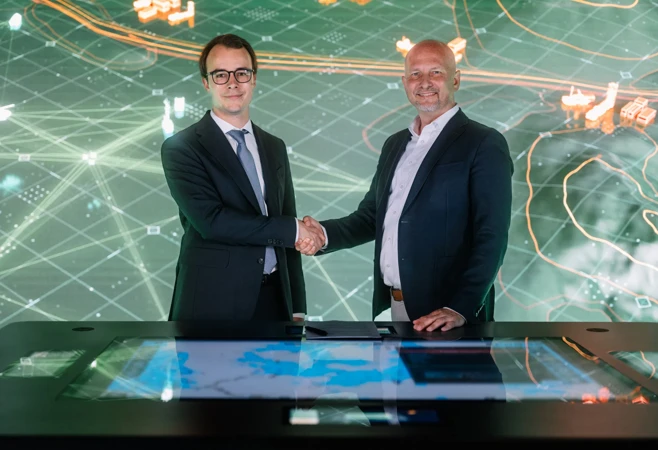
On Tuesday, Hensoldt signed an MoU with SE3 Labs, a Munich company specialising in spatial artificial intelligence. Founded in 2023 out of the Technical University of Munich’s computer vision group, SE3 builds AI that interprets sensor data in three dimensions in real time — its core product, SpatialGPT, pairs computer vision with language so operators can interrogate a live picture and control systems by voice.
That capability speaks directly to what Hensoldt is trying to build. Its MDOcore software ties together sensors and command systems across land, air, sea, cyber and space, fusing their feeds into a single real-time picture that commanders can act on. The suite already leans on AI and large language models (LLMs) to let operators query that picture by text or voice; folding in SE3’s spatial models is designed to enhance how it reads sensor data.
Sven Heursch, Hensoldt’s chief digital officer and head of software-defined defence, said the agreement represents a move beyond gathering and displaying data, towards systems an operator can talk to directly.
“Agentic AI is the next logical step for multi-domain operations — moving away from pure data aggregation and visualisation towards systems that allow users to interact directly with military situational awareness and control operations via voice commands,” Heursch said.
Individually, none of these agreements tell much of a story; MoUs are easily signed and just as easily shelved when priorities shift. But collectively, they highlight the growing tie-ups between Europe’s defence establishment and its upstarts — the primes supplying the scale and the customers, the startups the tech and the battlefield lessons.