At the end of the summer, the Lakestar Institute convened a small group of leaders at their second annual Resilience Summit at a venue outside London.
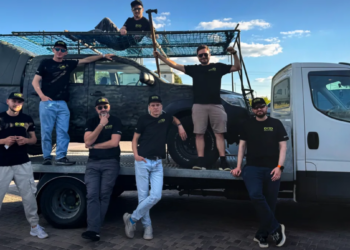
The event was a private gathering, under the Chatham House Rule, but we have been given permission to share here some of what was discussed. For disclosure, we were invited as a Lakestar portfolio company.
The gathering brought together LPs, an array of experts from the worlds of military, politics, investment, and academia, and of course the founders of the Lakestar portfolio companies. The Lakestar team believes that the ecosystem of people they are building is as important as the financial assets they bring to their startups, and this event was evidence of that belief.
The gathering was unique in the diversity of people it brought together and yet everyone there shared a sense of urgency and purpose. This was about defence in the face of a growing threat. The Ukrainians present reminded us of how bad things are in Kyiv right now. The historians gave us context, the experts talked about the future. The conversation focussed in on the UK, Europe, Ukraine, and Russia, and zoomed right out to Africa, China, and America.
Much of the discussion looked at the tension between the innovative defence tech Lakestar has been investing in, and the existing military infrastructure and procurement.
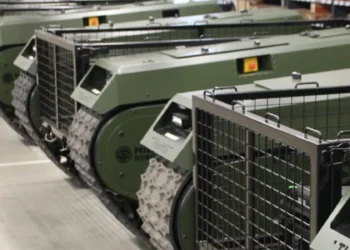
One founder expressed this by suggesting that the procurement agencies have been living in peacetime, but he and the other founders were executing at wartime speed. The concern was aired that novel military technologies are being deployed into dated and static force structures and tactics.
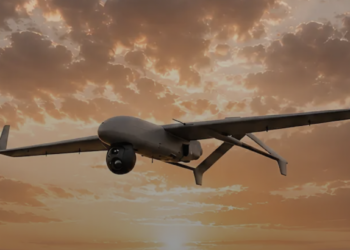
A military attendee complained that we spend £15 billion for 100+ tanks to form a square division, yet the reality in Ukraine is now that a tank will last roughly an hour once it is identified, and it will be destroyed by five or six £4,000 fibre optic drones with a 35-km range. This is also seen in the war in the US war with Iran, when expensive missiles are used against cheap Shaheds.
As one speaker commented, “We have been throwing Ferraris at Frisbees.”
Consolidation is coming
The speakers looked at whether society is ready for what many feel may be on the horizon.
More than a million Russian soldiers have been killed or wounded in Ukraine. In the West, we would be paralysed by major debates in our parliaments if a hundred of our soldiers were killed in a conflict. How, the speaker wanted to know, would that affect our ability to come up against Russia in a land war in Europe?
On the topic of sovereign tech, one speaker pointed out that it should not be acceptable to Europeans that Elon Musk could, at some point, decide he doesn’t agree with a mission Ukraine is carrying out and shut down Starlink.
Lakestar has invested in 26 of the top European defence tech companies. Its portfolio represents 80% of the European defence tech market cap or revenues. This gives Lakestar a unique insight into the current market.
Lakestar suggested that the next phase will see consolidations because of the limited number of the supplier relationships ministries will actually maintain. A partner pointed out that the number of companies procurement agencies have dealt with over the last decade is small, and he does not expect them to take on twenty new relationships. In his view, this arithmetic forces consolidation on startups.
Lakestar also put forward an argument that the category leaders in defence tech have already been established, adding that they will come from Germany or the UK because “your right to exist starts with the first contract of your home military.” In Germany, 85% of suppliers to the Germany military are of German origin or are Germany associated.
He also warned that capital requirements will rise significantly.
“We are in this phase where we always were in Europe,” the partner said. “We have too little money for growth.”
Much of the conversation addressed the industrial base and supply chains in Europe. One speaker reminded the audience that China can sustain itself in complete economic isolation for six months, while the world would last six weeks without China.
Given that China still controls such a large proportion of the raw materials needed for renewable energy, if we do electrify everything there is a risk China will do with electricity what Russia did with oil and gas in 2022.
One speaker warned that China will fight us with raw materials, with the industrial base. This was further emphasised when someone pointed out that German workers log less than half the annual hours of Chinese workers. To overcome the problem with raw materials, Europe needs to build stockpiles, but this is expensive. Who will pay for it, one speaker asked: is it a state responsibility or does it fall to industry?
Testing limits
Turning to Russia, one military speaker reminded the audience that in the future, when a Russian general leaves Ukraine and is deployed to Europe’s Eastern Flank, he needs to look over the border and see what looks like a Ukrainian brigade on the other side, equipped with sophisticated defence technologies. “Then he will think twice. If they don’t see that, they see opportunity,” the speaker said.
On procurement and engagement with the military, a speaker observed that the tradition of rotating people through roles in the military made it increasingly difficult to maintain relationships between companies and the military.
“People just disappear,” the speaker said. “They’ve been rotated or are out of the service.”
Another complained about the mismatch of timelines in procurement between how people and institutions operation. “Our procurement cycle is broadly speaking measured in lifetimes, and yet the pace of change is measured in weeks and months,” the person noted. “There’s an uncomfortable reality that some of our inventory — even some of our brand new inventory — is not competitive, it is just sunk cost.”
One speaker from the automotive industry pointed out, however, that his industry is used to being competitive to the last cent, because they compete with Chinese players in the car industry. He suggested that the auto industry can bring that advantage into defence.
Russia was a central topic. On the one hand, the weakness of Russia was discussed looking at several indicators. Russia sold ten tons of gold in July — the largest amount in thirty years. Some estimate that Russia’s economy may run out of sovereign wealth funds by the end of this year. The military has lost 1.4 million men killed or wounded.
However, as one speaker suggested, Russia probably looks at NATO and recognises that it has a better military, better hardware, more money, and more people, but if a Russian army can outlast NATO forces for four weeks, NATO will run out of weapons, and the relatively small number of NATO casualties will cause debates in European parliaments.
Another speaker argued that as it becomes impossible for Russia to win in Ukraine, the only option is horizontal escalation, either to bring NATO into the war, or to keep it out.
Seizing a piece of land – for example in Norway’s Svalbard archipelago, where many believe Russia is deploying hybrid tactics already to test NATO – changes the calculus, the speaker said. America would likely not trigger Article 5 (the mutual defence clause) and go to war with Russia. Therefore Article 5 would be over, and Putin would have European land as a bargaining chip in a negotiated settlement with Ukraine.
The event developed plenty of valuable insights for the founders. One military speaker proposed that startups should deliver great technology building blocks and then find a mechanism to connect them quickly. “We shouldn’t encourage them to develop full-fledged systems by themselves,” the speaker said.
It was also suggested that certification of military equipment is unavoidable, so designing for certification and interoperability from the beginning would prevent companies from failing later.
A speaker explained that whoever takes drones, uncrewed systems, AI and data, and designs military tactics around them will win the next war. This reflected other points throughout the discussions about the need for innovative defence technologies to be matched by tactics. Germany was seen to be far ahead on integrating this into doctrine, rather than trying to bring novel technologies like drones into a conventional approach to fighting.
“Agility will matter almost more than anything else in the future fight,” one speaker concluded.
In that regard, Ukraine’s defence ecosystem remains a country to watch.
“Ukraine has been a net importer of security,” one panellist told the audience. “They’re now going to be a net exporter. If we do not have Ukrainian battalions on the ground with us in the next fight, we will lose.”