Sunday 12 July, 2026
[email protected]
Resilience Media
  • News
    • Events
    • Interview
    • Startups
    • Venture
    • Weekly Digest
  • Resilience Conference
    • Resilience Conference Warsaw 2026
    • Resilience Conference Copenhagen 2026
    • Resilience Conference London 2026
  • About
  • Guest Posts
    • Author a Post
  • Subscribe
No Result
View All Result
  • News
    • Events
    • Interview
    • Startups
    • Venture
    • Weekly Digest
  • Resilience Conference
    • Resilience Conference Warsaw 2026
    • Resilience Conference Copenhagen 2026
    • Resilience Conference London 2026
  • About
  • Guest Posts
    • Author a Post
  • Subscribe
No Result
View All Result
Resilience Media
No Result
View All Result

Quaze deal gives Red Cat wireless power for drones and robots

John BiggsbyJohn Biggs
May 27, 2026
in News, Startups
Share on Linkedin

Red Cat Holdings has acquired Québec-based Quaze Technologies, adding wireless charging capability to its growing portfolio of autonomous systems. The companies will target one of the biggest limitations in UAVs: keeping drones and uncrewed robots powered in the field without human intervention.

You Might Also Like

Nokia, NestAI combine 5G, AI, and sensing for constant battlefield connectivity

SFC Energy’s fuel cells are headed to Ukraine to supply troops with instant electricity

Dispatches from Estonia: Quantum Systems moves in

“Autonomous systems are only as effective as their ability to stay in the fight,” said Red Cat CEO Jeff Thompson. “Quaze gives us a critical advantage by removing one of the biggest operational constraints, which is how systems recharge in the field.”

The company will continue operating independently inside Red Cat while integrating its technology into the holding company’s expanding “Family of Systems.”

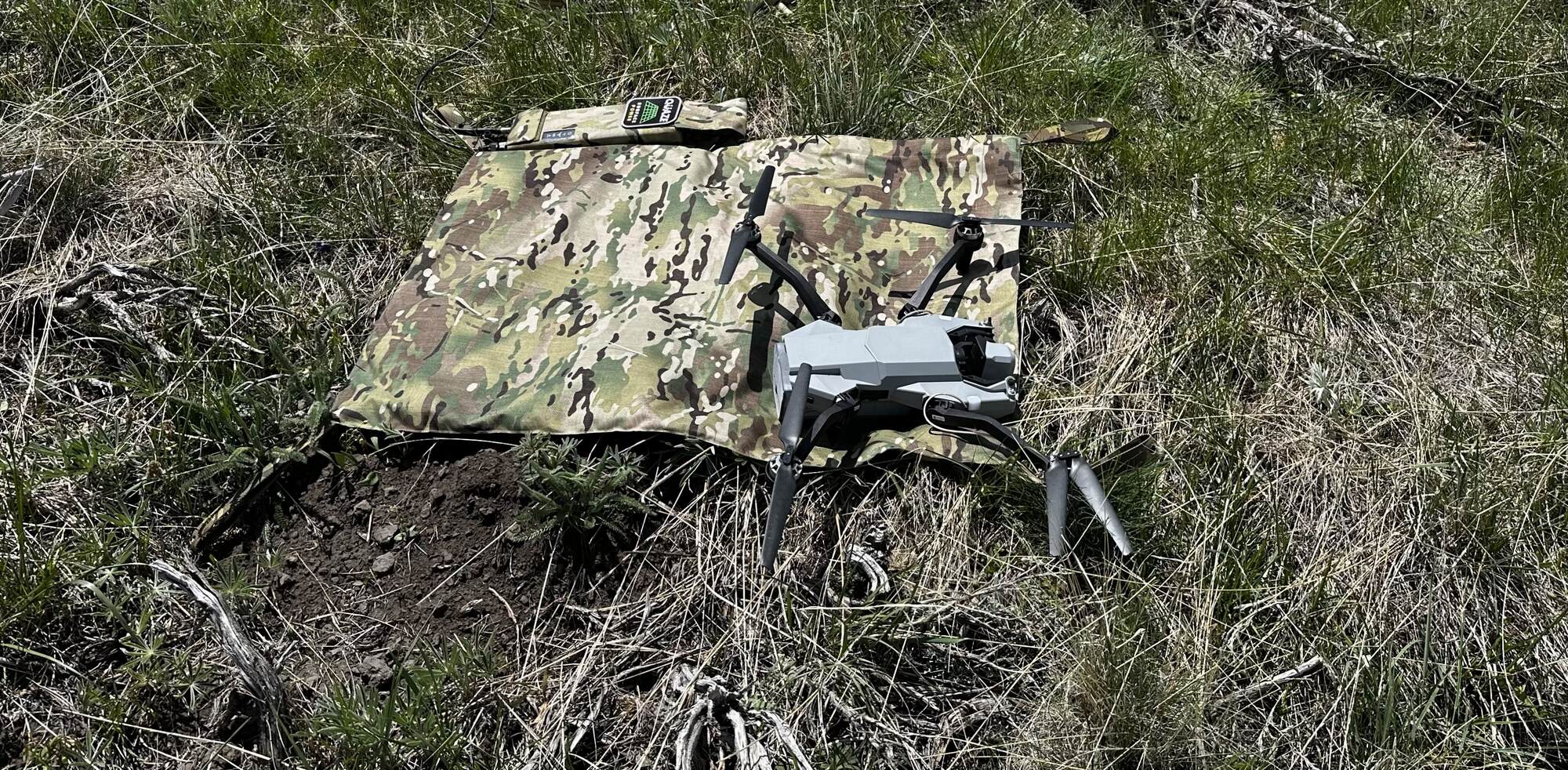
The core of the acquisition is Quaze’s QU6 architecture, a wireless energy mat that turns large surfaces into charging zones. Unlike conventional docking systems, the platform does not require precise alignment or physical connectors. Systems can recharge even in dirty or wet environments, including sand, ice, snow, or debris-covered terrain. Essentially, the QU6 is an all-terrain covering that lets drones land, charge, and take off at will.

Battery management remains one of the least glamorous but most important bottlenecks in autonomous warfare. Drones can navigate autonomously, identify targets, and coordinate in swarms, but many still depend on operators to physically swap batteries or reconnect charging systems. In contested environments, that creates delay and failure points.

Quaze’s systems can be integrated into drone-in-a-box deployments, unmanned surface vessels, fixed infrastructure, and even underwater charging stations. Red Cat says the technology could support “mothership” charging systems, distributed charging networks, and long-duration ISR missions where autonomous systems remain active for extended periods with limited human involvement while coming home to “roost” on Quaze mats.

Quaze will continue selling its technology to third-party OEMs, giving Red Cat exposure to systems it does not manufacture directly. In practice, the company is betting that wireless power infrastructure could become a common layer across autonomous platforms in the same way standardized fueling systems shaped traditional military logistics.

“Robotics has made major advances in autonomy and intelligence, but energy has remained a limiting factor,” said Xavier Bidaut, Co-founder of Quaze. “Our goal is to make power as accessible and reliable as fuel is for traditional vehicles and something every drone or robot can tap into, anywhere, without friction. By joining Red Cat, we can accelerate that vision and help establish a common power infrastructure for autonomous systems across industries.”

The acquisition lands as defence companies increasingly focus on persistence rather than isolated drone performance. The challenge is no longer simply getting autonomous systems into the field. Instead, the goal is to manage autonomous systems that can stay on the field indefinitely and Quaze has one part of the solution.

Tags: chargingDronesquaze
Previous Post

New cameras from Odd Systems are making drones faster, smarter, and more accurate

Next Post

UK’s intelligence chief eyes Russia and China as the major cyberthreats of our time

John Biggs

John Biggs

John Biggs is an entrepreneur, consultant, writer, and maker. He spent fifteen years as an editor for Gizmodo, CrunchGear, and TechCrunch and has a deep background in hardware startups, 3D printing, and blockchain. His work has also appeared in Men’s Health, Wired, and the New York Times. He has written nine books including the best book on blogging, Bloggers Boot Camp, and a book about the most expensive timepiece ever made, Marie Antoinette’s Watch. He lives in Brooklyn, New York. He runs the Keep Going podcast, a podcast about failure. His goal is to share how even the most confident and successful people had to face adversity.

Related News

Nokia, NestAI combine 5G, AI, and sensing for constant battlefield connectivity

Nokia, NestAI combine 5G, AI, and sensing for constant battlefield connectivity

byJohn Biggs
July 10, 2026

Two Finnish companies, Nokia and NestAI, have announced the first products built through their 2025 partnership. The systems, which connect...

SFC Energy’s fuel cells are headed to Ukraine to supply troops with instant electricity

SFC Energy’s fuel cells are headed to Ukraine to supply troops with instant electricity

byJohn Biggs
July 10, 2026

https://youtu.be/EkWlOo8cEFs German fuel cell company SFC Energy recently announced that they are delivering approximately €42 million worth of combat-proven fuel...

Dispatches from Estonia: Quantum Systems moves in

Dispatches from Estonia: Quantum Systems moves in

byFiona Alston
July 10, 2026

Following its acquisition of Estonian intelligence software company SensusQ, Quantum Systems is opening an official office for Estonian operations in...

man in green and brown camouflage uniform holding black rifle

British Army bets £2B on AI-driven training overhaul

byCarly Page
July 10, 2026

The Ministry of Defence has awarded a £2 billion contract to deliver a new AI-enabled training system for the British...

Satellites become a growing target for grey-zone warfare

Satellites become a growing target for grey-zone warfare

byPaddy Stephens
July 10, 2026

In late May, four Russian military satellites – launched just a month before – moved around ICEYE-X36, a commercial radar...

Resilience Media’s top stories from 2025

Taiwan takes aim at IP theft as it sharpens its defence stance

byHarry Saunders
July 10, 2026

In November 2025, Taiwan’s government launched an investigation into Lo Wei-jen, a longtime TSMC executive who left the company last...

UK-based Kraken and US-based Capewell successfully test rapid, repeated autonomous boat drops from a cargo aircraft

UK-based Kraken and US-based Capewell successfully test rapid, repeated autonomous boat drops from a cargo aircraft

byJohn Biggs
July 9, 2026

UK-based Kraken Technology group has partner with US-based Capewell to perform the "world’s first extracted-load airdrop of an uncrewed surface...

Project Q unveils open source defence integration platform HYDRIS

Project Q unveils open source defence integration platform HYDRIS

byCarly Page
July 9, 2026

European defence technology company Project Q has launched HYDRIS, an open source integration and orchestration platform designed to connect sensors,...

Load More
Next Post
UK’s intelligence chief eyes Russia and China as the major cyberthreats of our time

UK's intelligence chief eyes Russia and China as the major cyberthreats of our time

text

The defence tech boom is creating a cybersecurity industry for machines

Most viewed

InVeris announces fats Drone, an integrated, multi-party drone flight simulator

Uforce raises $50M at a $1B+ valuation to build defence tech for Ukraine

Auterion, the drone software startup, eyes raising $200M at a $1.2B+ valuation

Palantir and Ukraine’s Brave1 have built a new AI “Dataroom”

Twentyfour Industries emerges from stealth with $11.8M for mass-produced drones

Senai exits stealth to help governments harness online video intelligence

Resilience Media is an independent publication covering the future of defence, security, and resilience. Our reporting focuses on emerging technologies, strategic threats, and the growing role of startups and investors in the defence of democracy.

  • About
  • News
  • Resilence Conference
    • Resilience Conference Copenhagen 2026
    • Resilience Conference Warsaw 2026
    • Resilience Conference 2026
  • Guest Posts
  • Subscribe
  • Privacy Policy
  • Terms & Conditions
  • Mission Statement & Code of Practice
  • Press

© 2026 Resilience Media

No Result
View All Result
  • Home
  • About
  • Subscribe
  • Events
  • Guest Posts
  • Interview
  • News
  • Resilience Conference London 2026
  • Resilience Conference Copenhagen 2026
  • Resilience Conference Warsaw 2026

© 2026 Resilience Media

This website uses cookies. By continuing to use this website you are giving consent to cookies being used. Visit our Privacy and Cookie Policy.