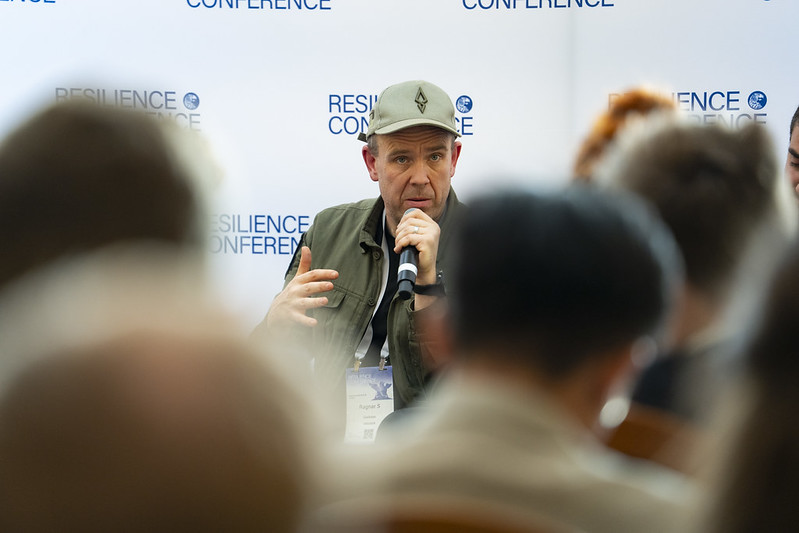
“My biggest surprise this year is that the fastest growing vertical among Ukraine startups is UGVs,” said Ragnar Sass, leaning forward in his seat. Ukraine may have given flight to the huge innovations we have seen in air defence — and air defence may be the most active area of defence tech right now due to Ukraine and the Middle East, he continued. But when it comes to what is being developed next, it is land-based drones.
“Logistics doesn’t exist as we know it, and Ukraine has at least 100 companies building land-based drones,” he said.
Sass is the co-founder of Estonia’s trailblazing defence tech fund and incubator “coalition” Darkstar, as well as war relief organisation Help99, making him also the unofficial impresario of a wider ecosystem that bridges the battlefields of Ukraine with the relative safe haven of the Baltics — a bridge that’s proven to be essential for developing, manufacturing and financing defence tech to help Ukraine in its fight against Russia. What Sass notices carries a weight to it — maybe even heavier than the autonomous tanks that are turning the wheels of the war machine.
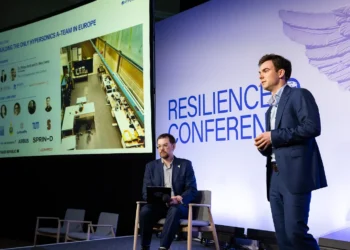
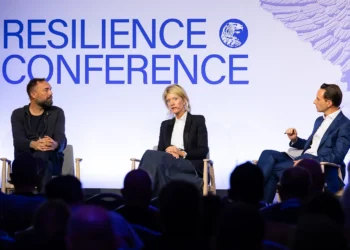
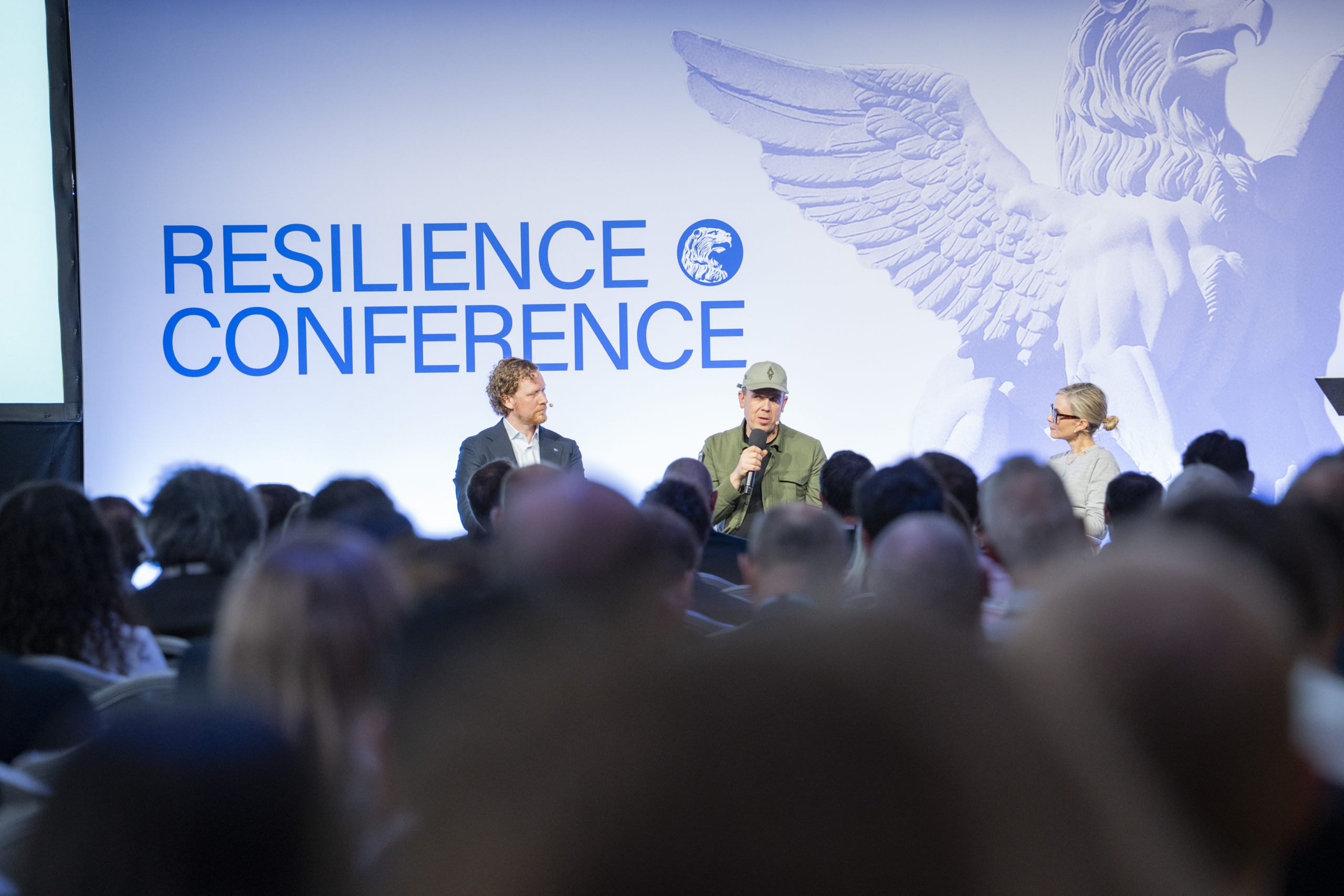
Resilience Media caught up with Sass on the sidelines of Resilience Conference in Copenhagen last month, where he spoke on the subject of backing Ukraine, Nordic-style. (You can watch that panel here.) In our conversation, we covered existing challenges and opportunities, as he sees them. (His quotes are lightly edited for clarity.)
‘There is so much over-promised’
One of the biggest evolutions Sass said he’s witnessing is around the rules of engagement between suppliers and buyers. UGVs might be the “fastest growing” vertical, but is that development equally matched to demand in the field, or funding to buy and build? That is the big, looming question in Ukraine right now, as an army weaned on the rapid pace of need-it-build-it-use-it matures.
Mature is the operative word: it just so happens that as of 11 June, the war in Ukraine against Russia officially became longer than the First World War.
“What has changed is Ukrainians are more and more picky,” said Sass. “If you talk with different units, you will get different opinions.”
Sass spoke out about what motivates a lot of the international involvement in the country. Some of it, he says, is about wanting to help, and that is good. Other times it is opportunistic and not for the best. Over-capitalised startups look for opportunities to justify their valuations and drum up business on iffy products, and that is less good.
“There’s so much over-promised,” he said. “If somebody fundraises hundreds of millions or even billions of dollars, and their drones are not working… There is this feeling by Ukrainians that some people want to get rich by the Ukrainian war.”
On the right way to tap battlefield expertise
Sass also offered a constructive example of more positive engagement. He said that when he encounters startups at Darkstar boot camps say they want to build tech for Ukraine, the question he always asks first is, “How can you go and help them?” It may sound obvious, but there is an imperative in that, and a signal of how promising a startup might be is in how they respond.
“In our last boot camp we had a Polish company,” he recalled. They came to Ukraine with six drones made a call-out, he continued: “‘Hey, we are choosing 2-3 units, and we will give this free of charge to you!’ And these were good drones, and they had so many teams talking with them.”
That gave the startup instant engagement and feedback on what they were building from multiple units, plus an inroad into potentially selling more of those drones to those units to get a foothold into the wider market. “They were going to soldiers in the field, and I believe that they had an absolutely positive experience,” Sass said.
“It is the same as with investors or any expert,” Sass continued. you may get different feedback. This goes back to Ukrainian buyers becoming more discerning as they mature and have better ideas of what they specifically need.
Again, some of the nuances of engagement are not really nuances at all: no one in the US would think the Navy needs the exact same solutions as the Army.
“We need to understand that there are different branches of military in Ukraine: regular army, National Guard, special operation force, military intelligence, unmanned system forces, and those are just different use cases,” he said. “Something that happens on the frontline is not the same case as what the operation force is using, and it is understanding that difference deeply that helps you understand how to work in that environment.”
Funding talent
On stage, Sass told the audience that technical talent remained in short supply, and so did the funds to pay for it. He gave a plug for hackathons — one of Darkstar’s specialties — as a good place for scooping up new hires.
Hackathons and boot camps can be lucrative for talented builders. One boot camp run by the European Union offers a prize of €120,000, and some can go as high as €200,000, he noted. Others building bootcamps and hackathon competitions include the Defence Business Lab, a pre-accelerator programme run by the Tehnopol Startup Incubator and Sparkup, the Tartu Science Park.
Darkstar has also partnered to develop two defence bootcamps in Estonia and in France, collectively called the Brave TechEU DefTEch Forges. These are managed by the European Commission via EUDIS and were pulled together in just six weeks.
“We are always criticising how slow Europe is, but this time, I need to be frank,” he said. “How Europe implemented that programme is a great example of attitudes finally changing.”
Darkstar and sealing the deal
Even with years of experience behind him as an investor, founder and operator at every level (he calls himself Help99’s truck driver on his LinkedIn), Sass said that Darkstar still surprises him with how “super active” it has been.
“I didn’t imagine that there would be so much going on,” he said. I instantly like how he’s phrased this. If you have ever had the chance to stand back and observe how Sass operates, it seems that there is very little lifting the foot from the accelerator. So replying ‘active’ rather than the usual ‘busy’ implies, to me, that this driver — truck or otherwise — is in full control.
For starters, Darkstar has taken on a much more international profile.
“Lately we have started to see promising companies from Europe,” he said. “The market is changing very rapidly.”
Darkstar is likely to announce more investment rounds this year, but Sass says getting to that point remains arduous because of bureaucratic red tape. “Closing investment still takes time because of legal reasons and so on, and it’s pretty difficult to change that,” he says.
Might we see some change in the speed of that process soon?
“Yes, I see that banks have been making better processes to handle bank accounts,” he said. In his words, defence companies unable to open accounts or move money “has been one of the bottlenecks.” Legal frameworks, meanwhile, are speeding up, “but it’s not significantly changing,” telling me one of their investments took around six months to close, four of them related to the deal having to clear banking hurdles.
Procurement pickles
Equally challenging are supply chains and getting customers to close deals at the purchasing end.
“Honestly, I have heard so many talks about how procurement is changing, but I don’t see real proof of that yet,” he said. “First of all, having decentralised procurements so battalion commanders can buy the things, this is still, sadly, not where we have to be.”
“I see that militaries, as end users, are more and more fully aware of what needs to be changed, like in Estonia, for example, we have Force Transformation Command which is now fully working at high speed.”
The Command has been set up to support, in its words, “the existing forces and arms to eliminate identified capability gaps at an appropriate pace, ensuring comprehensive and coherent development across the entire Defence Forces.”