With all the investment we’re seeing into drones, we’re also witnessing a major surge of attention around companies building tech to defend against them.
In the latest development, the Paris startup Alta Ares last week announced it had raised €50 million in funding to build out its own counter-drone stack: a vertically integrated system that includes kinetic components.
The startup last raised a seed of €2 million around a year ago; and while it is not disclosing its valuation, there are several signals that might explain why this latest round was boosted by 2400%.
There is big interest in counter-drone technology most immediately because of geopolitical events. In Ukraine, both the country’s army and its adversary, Russia, have leaned heavily into lower-cost drones both for attacking and reconnaissance, underscoring what shape the next generation of warfare will take. Iran has also put up a very strong fight against the US and allies using its low-cost Shahed drones.
As we have written many times – most recently here – a lot of so-called “exquisite” weaponry has been used to defend against Shaheds, highlighting the need for more agile, newer-generation approaches, such as those being made by startups.
Modern warfare is defined by “the capacity for continuous adaptation,” as Alta Ares CEO Hadrien Canter has said.
Closer to home, France last week approved a major boost to its defence spending budget. That included special provisions for organisations in critical industries and public space operators will adopt more immediate security measures by directly investing in counter-drone (C-UAS) technologies. That is a move that will spur the development of the wider industry to target end users beyond the military. This, too, could see a business boost to companies like Alta Ares.
Indeed, no less than President Emmanuel Macron congratulated the startup on the round. “From Toulouse to Ukraine, our talents are building the defence technologies that protect our sovereignty,” he said in a LinkedIn post.
Alta Ares is co-founded by Canter, Stanislas Walch, Theo Bondarec and Alain Henry, and it has said that its understanding of what needs to be built and early experience was forged in Ukraine – which has become short-hand in defence tech for “we’re serious about this”.
Notably, some critics have pointed out that not all of those coming to “help” Ukraine have brought the best intentions, nor the best equipment.
It’s not immediately clear who the technical brains is behind the AI and other systems Alta Ares is building, nor which of the founders have military backgrounds. Nevertheless, it seems that Alta Ares might legitimately be in the “helpful” column.
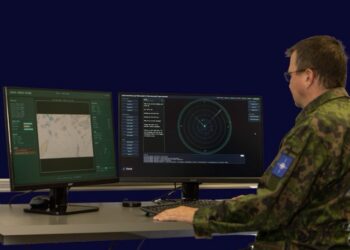
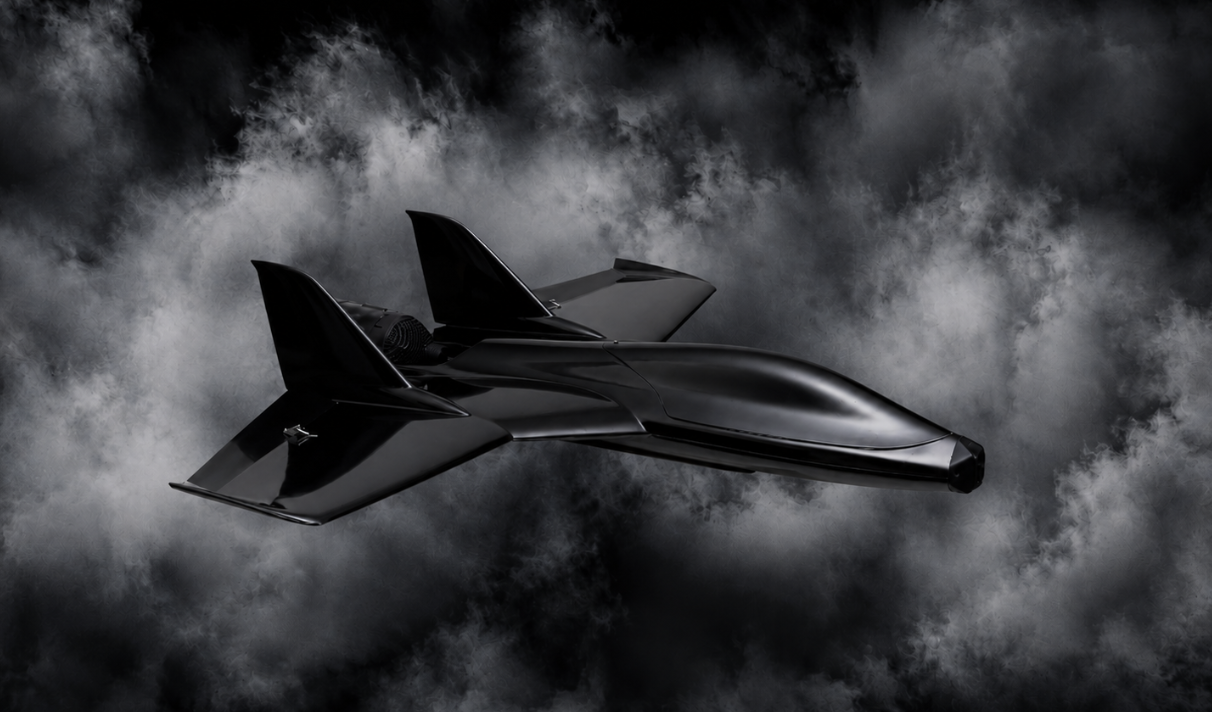
Currently its product stack definitely leans into its namesake (the Greek god of war, played out up high). It includes two models of effectors that can be loaded up with warheads and other equipment to fight off kinetic drones; an AI-supported software system for humans to control those drones; an ISTAR platform for understanding the wider landscape; and a ruggedised command-and-control system to use in the field — along with AI to power it all when humans are cut out of the loop due to electronic warfare or other more tragic reasons.
Earlier this year, the startup ran successful Arctic tests with the Estonian military. Before that, it also said it had a successful test in Biscarrosse, France.
The latter was a precursor to co-developing a factory to build kit for Ukrainian soldiers, and the test helped the startup gain it the “backing” of NATO – although it’s not clear if that is an investment or just an endorsement.
(Officially, the investors in this latest Series A are Air Street Capital in the lead, with participation also from Cherry Ventures, OTB Ventures and Harpoon.)
It’s apparently been trying to drum up business far and wide, including in Africa, as far back as 2024. As with a lot of defence tech companies, it’s not fully clear who the full, active customer list might be although it claims to have users in “three active conflict zones.”
And with those customers, the world’s biggest contractors are taking notice. The startup has gone on to ink a lucrative manufacturing and development partnership with Airbus that it announced last week just two days after its funding news. Airbus, one of the big European primes, is tying up with a number of startups to tap into the new generation of tech that has been shaping warfare recently and will continue to do so in the future.
The funding will be used to fill out those opportunities, to continue its R&D, and for hiring, the company said.