Tuesday 15 September, 2026
[email protected]
Resilience Media
  • News
    • Events
    • Interview
    • Startups
    • Venture
    • Weekly Digest
  • Resilience Conference
    • Resilience Conference London — Oct 2026
    • Resilience Conference Copenhagen — May 2026 (PAST)
    • Resilience Conference Warsaw — Apr 2026 (PAST)
  • Launch
  • About
  • Guest Posts
    • Author a Post
  • Subscribe
No Result
View All Result
  • News
    • Events
    • Interview
    • Startups
    • Venture
    • Weekly Digest
  • Resilience Conference
    • Resilience Conference London — Oct 2026
    • Resilience Conference Copenhagen — May 2026 (PAST)
    • Resilience Conference Warsaw — Apr 2026 (PAST)
  • Launch
  • About
  • Guest Posts
    • Author a Post
  • Subscribe
No Result
View All Result
Resilience Media
No Result
View All Result

Project Q launches passive surveillance sensor kit for contested environments

John BiggsbyJohn Biggs
June 15, 2026
in Cyber, News, Startups
Share on Linkedin

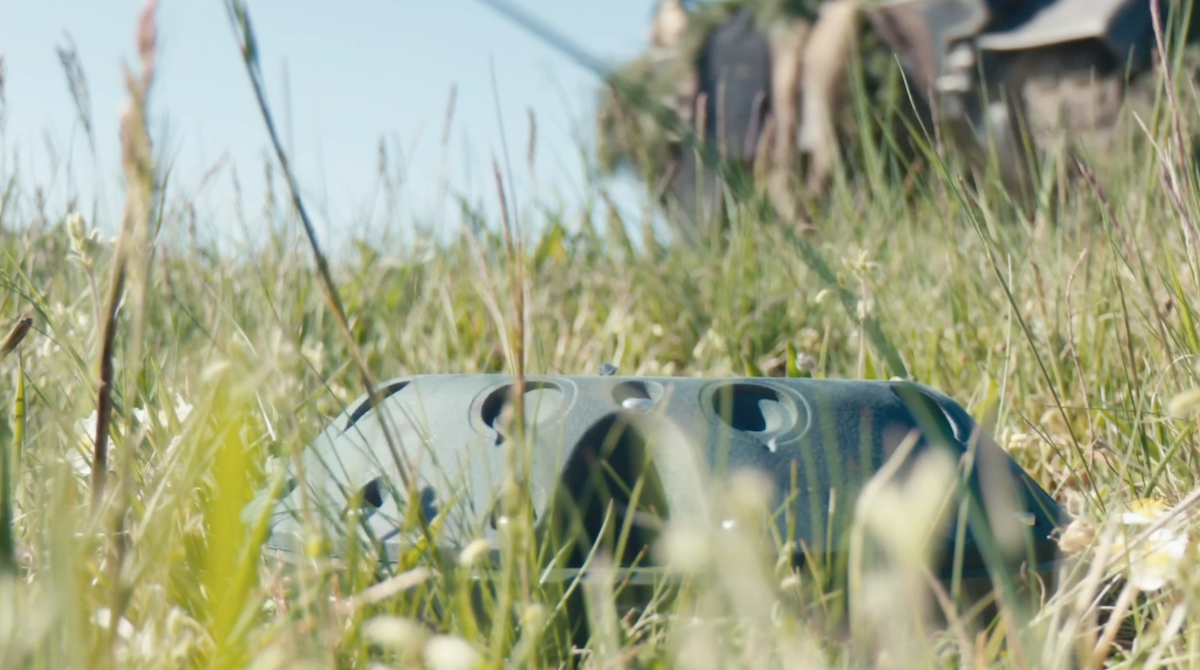
German defence technology company Project Q has unveiled a new Unattended Ground Sensor (UGS) Mission Kit at Eurosatory 2026. The device, which sits low to the ground and senses troop movements, offers armed forces a passive surveillance capability designed for large-area monitoring in contested and communications-constrained environments.

You Might Also Like

Exein raises $270M to build embedded cybersecurity for physical AI systems

Open Cosmos fires up its satellite ambitions with €300M

Isembard puts critical manufacturing minutes from Whitehall

The devices can hide in tall grass or mud and are primarily designed to report back on nearby movement of humans, drones, or vehicles. These devices use a mesh network to connect to each other while avoiding electronic jamming.

The UGSs are important because they improve immensely on current sensor systems. Traditional radar systems can reveal their position through electromagnetic emissions, making them vulnerable to detection and targeting. At the same time, fibre-optically controlled drones can bypass many RF-based detection systems, while optical sensors often struggle in terrain where visibility is limited.

Project Q’s answer is a network of seismic-acoustic ground sensors that create an invisible detection layer across a wide area. The sensors are designed to identify and classify drones, vehicles, and personnel using onboard AI processing. Multiple sensors are packaged into a portable mission kit that can be rapidly deployed and placed into operation with minimal setup.

Unlike systems that require constant communications links, the UGS Mission Kit performs processing directly on the sensor itself. Information is transmitted only when a relevant detection occurs, reducing bandwidth demands while limiting the system’s electromagnetic signature. The company says this makes the platform particularly suitable for GNSS-denied and contested environments where communications infrastructure may be degraded or unavailable.

The sensors can be integrated into existing command and control networks through Hydris, Project Q’s open-core integration and orchestration layer. Hydris is designed to connect commercial technologies, legacy systems, sensors, and autonomous platforms into a common operational environment, allowing operators to combine data from multiple sources without becoming dependent on a single vendor ecosystem.

The launch reflects a broader trend across European defence. As the battlefield becomes increasingly saturated with drones and electronic warfare systems, armed forces are looking for passive sensing technologies that can remain hidden while maintaining persistent awareness across large areas. Systems that reduce emissions and push processing to the edge are becoming increasingly attractive as militaries prepare for operations against technologically sophisticated adversaries.


Previous Post

Saronic, Castelion plan autonomous hypersonic strike platform for maritime operations

Next Post

In Kyiv, naval drone developers look beyond the kamikaze era

John Biggs

John Biggs

John Biggs is an entrepreneur, consultant, writer, and maker. He spent fifteen years as an editor for Gizmodo, CrunchGear, and TechCrunch and has a deep background in hardware startups, 3D printing, and blockchain. His work has also appeared in Men’s Health, Wired, and the New York Times. He has written nine books including the best book on blogging, Bloggers Boot Camp, and a book about the most expensive timepiece ever made, Marie Antoinette’s Watch. He lives in Brooklyn, New York. He runs the Keep Going podcast, a podcast about failure. His goal is to share how even the most confident and successful people had to face adversity.

Related News

Exein raises $270M to build embedded cybersecurity for physical AI systems

Exein raises $270M to build embedded cybersecurity for physical AI systems

byIngrid Lunden
September 15, 2026

AI is powering an increasing array of hardware today, from robots and autonomous vehicles to drones and your phone. That...

Open Cosmos fires up its satellite ambitions with €300M

Open Cosmos fires up its satellite ambitions with €300M

byIngrid Lunden
September 14, 2026

Open Cosmos, a UK startup founded by three engineers from Spain, made a name for itself in 2015 when it...

Isembard puts critical manufacturing minutes from Whitehall

Isembard puts critical manufacturing minutes from Whitehall

byCarly Page
September 14, 2026

British manufacturing startup Isembard has opened a 160,000 square-feet factory in central London that will produce components for defence, aerospace...

Finland’s Creoir gets backing from Gungnir Capital for its on-device speech tech

Finland’s Creoir gets backing from Gungnir Capital for its on-device speech tech

byFiona Alston
September 14, 2026

Finland's Creoir, a developer of voice interface technology, has raised investment from Swedish VC Gungnir Capital. The funding is part...

NewOrbit is heading lower to get a better look at Earth

NewOrbit is heading lower to get a better look at Earth

byJohn Biggs
September 14, 2026

The UK satellite manufacturer NewOrbit has secured a Q3 2028 launch slot for NEO-1, a commercial rideshare satellite designed to...

Fortaegis raises $50M to scale secure silicon for defence

Fortaegis raises $50M to scale secure silicon for defence

byCarly Page
September 14, 2026

Amsterdam-based Fortaegis Technologies has raised $50 million to take its silicon-rooted security technology into mass production, as the company eyes...

Mach Industries raises $600 million to build weapons at scale

Mach Industries raises $600 million to build weapons at scale

byJohn Biggs
September 11, 2026

U.S.-based defense startup Mach Industries has raised another $600 million as it begins to build its autonomous weapons at scale....

Website interface with text and abstract drawing

Claude AI helped Russia-based threat actors develop autonomous kamikaze drone swarm

byCarly Page
September 11, 2026

A Russia-based threat actor used Anthropic’s Claude AI to help build an autonomous swarm of kamikaze drones capable of selecting...

Load More
Next Post
In Kyiv, naval drone developers look beyond the kamikaze era

In Kyiv, naval drone developers look beyond the kamikaze era

Alpine Eagle and Origin Robotics integrate to strengthen counter-drone defence

Alpine Eagle and Origin Robotics integrate to strengthen counter-drone defence

Top stories

Something new, something BIG at Resilience Conference London
News

Meet the LAUNCH@RC and SCALE@RC 2026 Cohorts

September 11, 2026
Resilience Conference London a
News

The Resilience Conference London 2026 Agenda is live

September 2, 2026
Website interface with text and abstract drawing
News

Claude AI helped Russia-based threat actors develop autonomous kamikaze drone swarm

September 11, 2026
The German flag flying above the Reichstag building in Berlin, Germany
Cyber

Berlin launches crisis response after Rhysida dumps 5.79TB of allegedly stolen government data

September 7, 2026

Resilience Media is an independent publication covering the future of defence, security, and resilience. Our reporting focuses on emerging technologies, strategic threats, and the growing role of startups and investors in the defence of democracy.

  • About
  • News
  • Resilence Conference
    • Resilience Conference Copenhagen 2026
    • Resilience Conference Warsaw 2026
  • Guest Posts
  • Subscribe
  • Privacy Policy
  • Terms & Conditions
  • Mission Statement & Code of Practice
  • Press

© 2026 Resilience Media

No Result
View All Result
  • Home
  • About
  • Subscribe
  • Events
  • Guest Posts
  • Interview
  • News
  • Resilience Conference London 2026
  • Resilience Conference Copenhagen 2026
  • Resilience Conference Warsaw 2026

© 2026 Resilience Media

This website uses cookies. By continuing to use this website you are giving consent to cookies being used. Visit our Privacy and Cookie Policy.