In July 2025, the US government tested out Helsing drones for the first time during the Project Flytrap exercise in Europe. One year later, Helsing is making a move in hopes of capitalising on that across the ocean. Today, the German defence tech startup announced that it would open its first factory in the US, in the state of West Virginia.
The news comes one day after Helsing announced a mega funding round of $1.8 billion at an $18 billion valuation, money that it specifically said it would be using to fuel its expansion to serve present and future contracts with NATO allies.
Helsing is coming with deep pockets, but its investment into the US operation is relatively small in comparison. The Parkersburg News and Sentinel, a local publication, notes that the company is due to invest $50 million into the factory.
On the other hand, it will be making an outsized impact in doing so. West Virginia is one of the poorest states in the US, with around 18% of its residents living in poverty and average income in the range of $55,000 to $59,000. The publication confirmed that the defence tech’s average salaries will be more than twice at amount, at around $125,000.
“Helsing’s decision to establish its first US manufacturing facility in West Virginia is another signal that our state is becoming a destination for advanced manufacturing and defense technology,” Governor of West Virginia, Patrick Morrisey, said in a statement. “This investment will create high-skilled jobs, strengthen America’s defense industrial base, and demonstrate that West Virginia has the workforce, energy resources, and manufacturing heritage to help lead the next generation of industrial innovation. We’re proud to welcome Helsing to the Mountain State.”
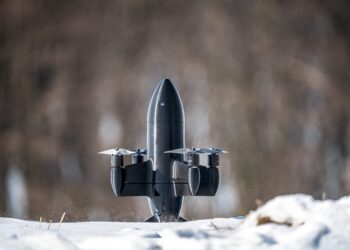
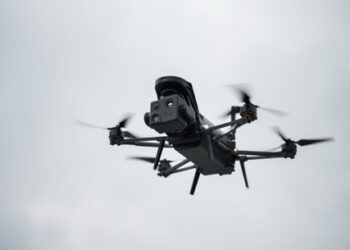
The West Virginia factory, which will be located in Martinsburg, is set to manufacture Helsing’s flagship HX-2 AI-powered drones at the rate of 2,000 per month when fully operational. To date, these have had their most visible use in Ukraine in its war against Russia (somewhat controversially, it seems), and as the cornerstone of the company’s very large contract with the German military, the Bundeswehr.
“Modern deterrence requires advanced technology and the ability to produce it at speed, at scale, and in sustained volumes,” said Dr. Jennifer McArdle, GM of Helsing US, in a statement. “The conflicts of today demonstrate that industrial capacity is a critical strategic advantage. With its commitment to innovation, skilled local workforce and competitive infrastructure, West Virginia is the right place for Helsing to start building this industrial capacity in the US.”
Currently, Helsing does not have any contract with the US government, but the Department of Defense has shown a strong appetite for buying from the new wave of defence technology startups, which are pitching the dream: cutting-edge weaponry and systems that can outclass current stocks and those of adversaries, at a fraction of the price of legacy systems.
Whether or not all of them will truly deliver on that remains to be seen — for now, large defence primes still account for the vast majority of defence equipment spend — but in the meantime companies like Helsing, and its big rival Anduril (valued at over $60 billion) have defined a new category: the “neo-prime.”
Indeed, Anduril has several deals in place with the US military, including a plum supplier deal in place with the US Army worth up to $20 billion if fully exercised. But that is alongside many other startups supplying the US government in smaller deals. These include other European companies like Auterion and Kraken, which indicates the window of opportunity that Helsing is hoping to glide through.