Drone interceptors are the name of the game right now in Europe, and today one of the companies building systems to defend against drone incursions has raised substantial early investment to expand its business.
InLeap Photonics, a German developer of precision laser-based systems that can incapacitate and take down drones, has closed a Seed round of €20 million, funding that it plans to use for R&D, production, sales and testing. This is on top of a pre-Seed of €2 million raised in 2025.
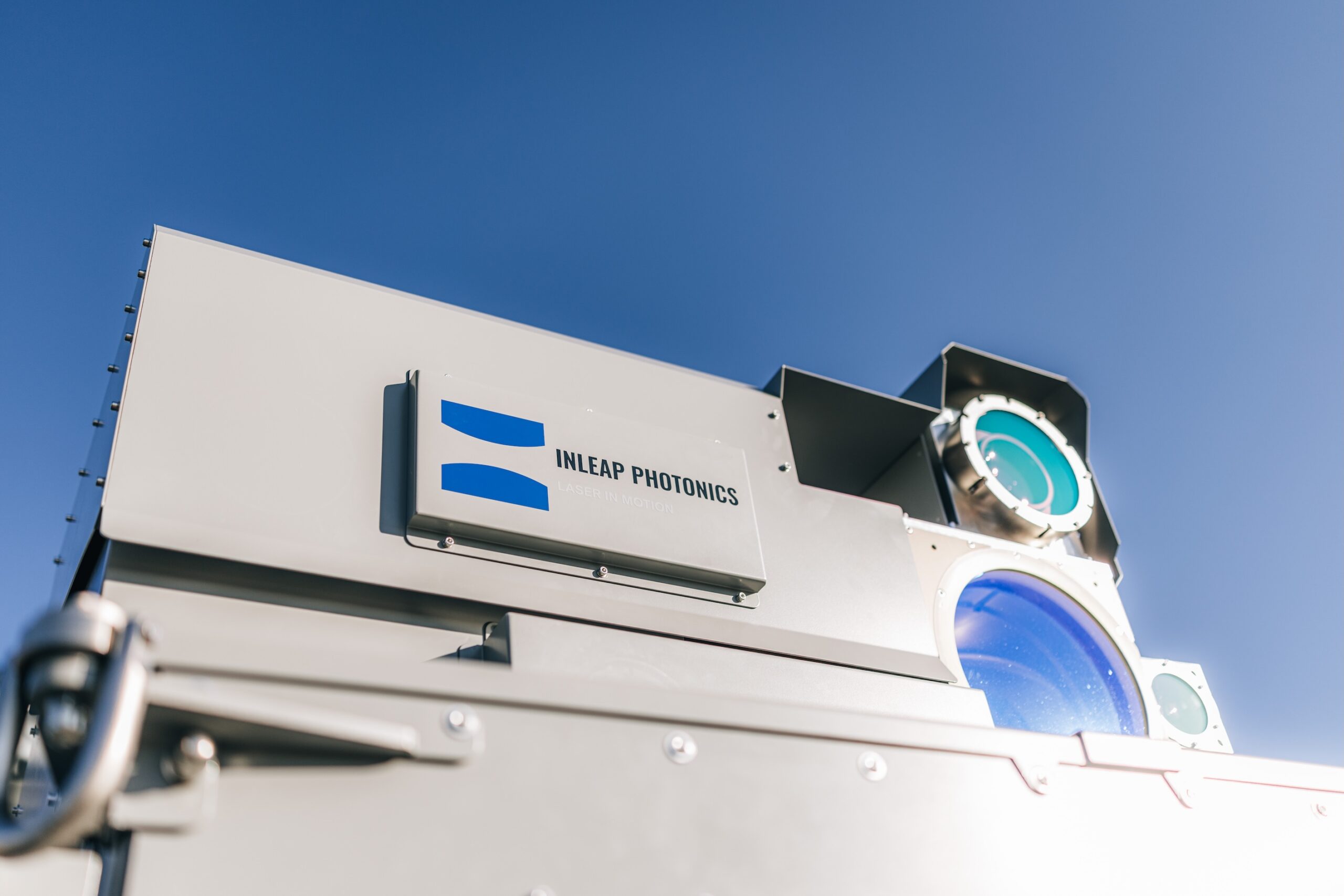
InLeap seems to have already hit some pretty significant milestones. It claims that its laser effectors have the capability to be used in urban environments with safety systems to help protect people’s eyes. It also says that its systems — currently with two models in the works, the InLeap Fastlight HELD and the InLeap Fastlight SHIELD — are capable of working at a distance of 3 kilometres and can target and incapacitate as many as 300 drones in a minute — potentially making them effective in counteracting swarms.
InLeap further says its laser beam steering works 2,500 times faster than other laser-based counter-drone solutions on the market.
This seed round was closed six months earlier than planned due to being ahead of time on development milestones, CEO and co-founder Marius Lammers told Resilience Media. All the same, he said that the first products are still in the testing phase and will not be on the ground until Q1 2027. First deployments, he added, would be in some key locations where there have been grey zone incursions, as well as in Western Ukraine.
The startup also has some important partnerships in place that could see it raising more money very soon. Specifically, it is already working with the German Federal Ministry of Defence (BMVg), the Bundeswehr Cyber Innovation Hub, and STARK — itself a key supplier to the Bundeswehr and the Ministry of Defence. InLeap said the funding will help it address what it describes as “strong market demand” at the moment.
“Our technology has reached the market and we are seeing strong order intake,” said Marius Lammers, InLeap’s CEO and founder, in a statement. “We are now investing in manufacturing, quality assurance, sales and service to meet demand and deliver our systems at greater scale.”
German investor UVC Partners is leading the round, with HTGF (also Germany), Balnord (Poland), Sentris (Estonia) and Scale Capital (Denmark) also participating. The list of backers speaks to the interest in good interceptor technology across the whole continent, and it will be worth watching how and if InLeap make the leap to working in other parts of Europe.
Interceptors in short supply
The attention and funding that InLeap and other interceptor companies like Cambridge Aerospace are commanding right now is coming at a critical moment.
Russia has been using swarms of drones to pummel Ukrainian civilians in areas previously outside the combat zone. Alongside that we have seeing an alarming number of “grey zone” drone incursions. Many believe these also to be spurred by Russians and their allies, testing the limits of what else might be launched at a later time.
While there are many companies building a wide array of drones and other air-based systems to retaliate, the situation is equally stoking a urgent demand for better defences.
This could not come sooner: one of the issues, seemingly, is that the availability and mere existence of effective interceptor solutions have not kept up with adversaries’ aggressiveness.
“Drone defence is no longer a purely military issue. Airports, energy facilities and data centres require the same level of protection as defence installations. INLEAP Photonics is the only team whose technology meets the requirements of both environments: eye-safe for civilian use and robust enough for deployment in conflict zones. For us, this dual-use capability is the key lever for scaling,” said Amanda Birkenholz, a partner at UVC Partners, in a statement.
Auterion CEO Lorenz Meier has spelled out how he believes that defence systems that can be installed across rooftops in urban areas are one of the best bets for protecting against fully autonomous drones that don’t need links to control centres to target and unleash their destruction. While some of those roof-based systems may themselves be kinetic, InLeap’s laser approach offers another route to defence.
The company was hatched and spun out from Laser Zentrum Hannover and laser effectors are at the core of its products. Getting these to work consistently is still something the company is working on.
“Moving into series production requires more than simply adding capacity,” said Felix Wellmann, the CTO and co-founder. “Every unit must be manufactured, tested and accepted under the same defined conditions. This is why we are investing in standardised assembly and testing processes, rigorous quality assurance and reliable supply chains.”
However, InLeap’s effectiveness is — quite literally — a leap in the market if they work, because to date a lot of other laser-based solutions are not usable in urban environments.