Wednesday 20 May, 2026
[email protected]
Resilience Media
  • News
    • Events
    • Interview
    • Startups
    • Venture
    • Weekly Digest
  • Resilience Conference
    • Resilience Conference Warsaw 2026
    • Resilience Conference Copenhagen 2026
    • Resilience Conference London 2026
  • About
  • Guest Posts
    • Author a Post
  • Subscribe
No Result
View All Result
  • News
    • Events
    • Interview
    • Startups
    • Venture
    • Weekly Digest
  • Resilience Conference
    • Resilience Conference Warsaw 2026
    • Resilience Conference Copenhagen 2026
    • Resilience Conference London 2026
  • About
  • Guest Posts
    • Author a Post
  • Subscribe
No Result
View All Result
Resilience Media
No Result
View All Result

The sea change in defence tech

A wave of maritime startups bet that the future of naval power looks nothing like the past

Paul SawersbyPaul Sawers
May 20, 2026
in Startups
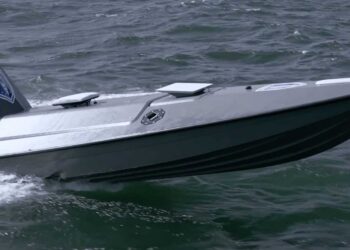
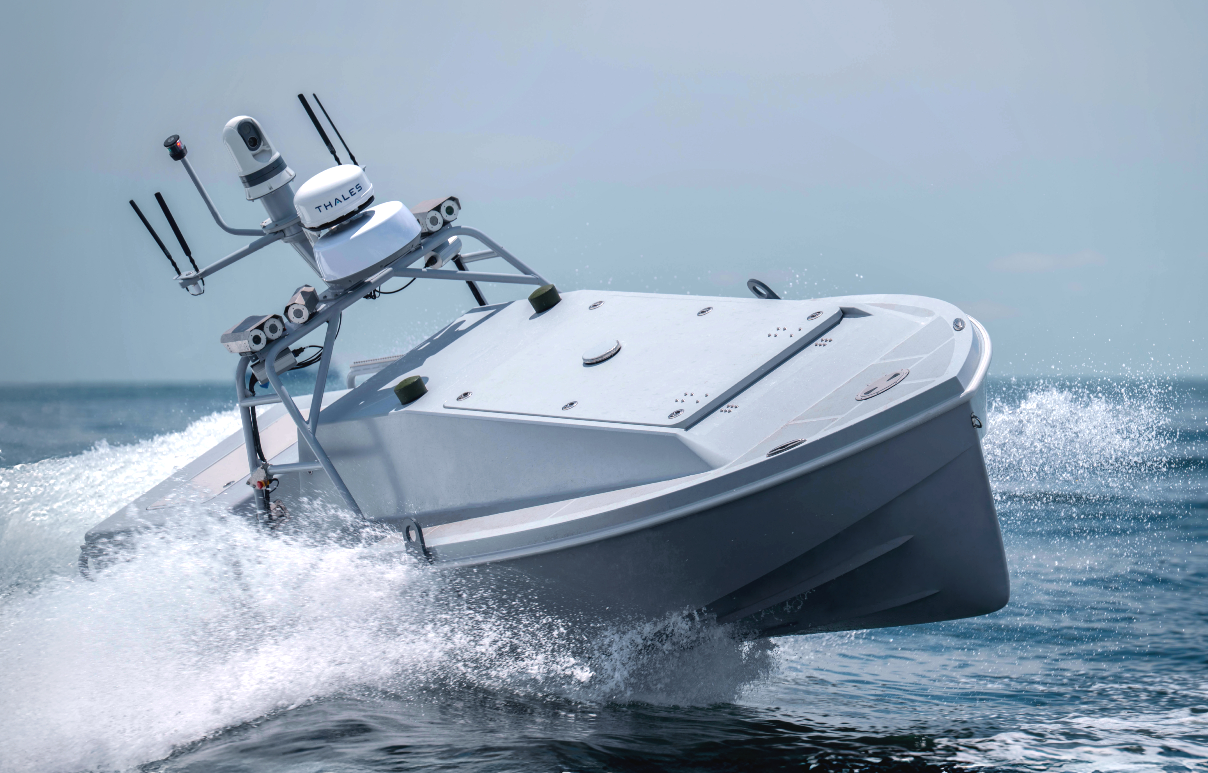
Corsair is a 24' Autonomous Surface Vessel capable of carrying up to 1,000 lbs over 1,000 NM.

Saronic's Corsair is a 24' Autonomous Surface Vessel capable of carrying up to 1,000 lbs over 1,000 NM. (Credit: Saronic)

Share on Linkedin

Warships are expensive, slow to build, and difficult to replace. At the same time, navies are being pushed to patrol larger areas, protect undersea infrastructure, and respond to the growing use of drones and autonomous systems at sea — especially given current geopolitical events in the Middle East and beyond.

You Might Also Like

Helsing, on the cusp of a $1.2B raise, forms space JV with OHB to build AI-based targeting systems

Fractile raises $220 million to build powerful AI chips

Multiverse raises $70M to help future-proof workforces in areas like AI

This is driving a wave of interest in maritime autonomy startups. Companies building autonomous boats, drones, underwater sensing systems and ocean surveillance platforms are all attracting fresh attention and money, from investors, defence contractors and governments alike — a trend that surfaces (heh) throughout Resilience Media’s 100 Startups to Watch in 2026.

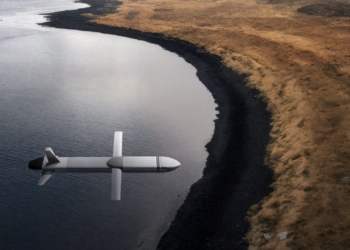
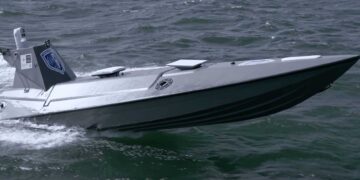
In March, Saronic Technologies, a US startup building autonomous surface vessels for the Navy, raised a whopping $1.75 billion round of funding at a reported $9.25 billion valuation. This followed roughly a year after the company had acquired a Louisiana shipyard to build and prototype larger autonomous vessels, including its flagship Marauder system.
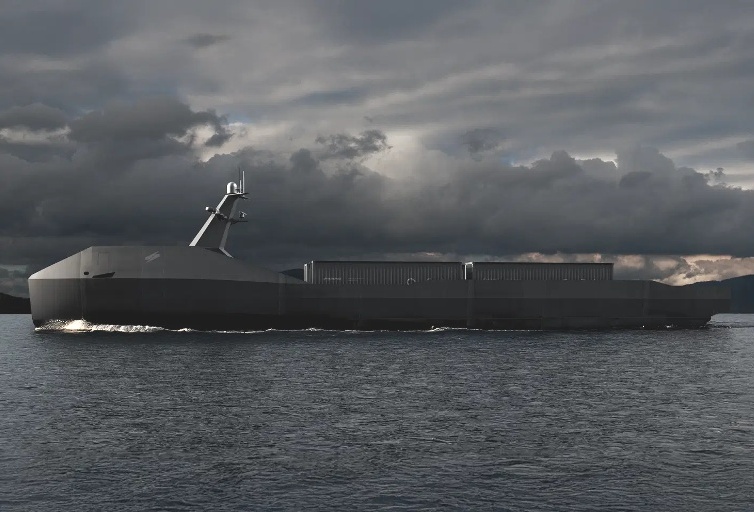
Marauder
Marauder

Since then, Saronic has announced a further $300 million investment into the shipyard to add new production lines, expanding the facility by more than 300,000 square feet to increase its output of autonomous ships.

Ilya Fushman, partner at storied Silicon Valley venture capital (VC) firm Kleiner Perkins, which led Saronic’s recent Series D round, said that maritime autonomy will depend on much more than the vessels themselves: it will depend on scale. Building autonomous fleets at meaningful volume will require shipyards, assembly lines and the wider industrial systems needed to produce and deploy them reliably.

“Maritime dominance isn’t just about technology — it requires the production capacity to field it at scale,” Fushman said in a statement at the time. “Those two things rarely come together. What makes Saronic special is that they’re building both: autonomous ships designed from day one to push the boundaries of what’s possible, and the manufacturing infrastructure to produce them consistently.”

Plenty of defence tech startups are partnering with prime contractors to build their hardware — even Saronic is teaming up with Vigor Marine Group to tap the latter groups vessel fabrication facilities and expertise.

Saronic building its own capabilities in that area, however, is an approach that mirrors, to some extent, how hyperscalers like Amazon, Google, and Microsoft have grown. These companies may have started in software, but eventually they also invested heavily in infrastructure like data centres, chips and subsea cables both to expand their own operations as well as to move into new business areas.

Saronic may be looking to get ahead that by tackling infrastructure now.

Filling the gap

A growing number of startups are focusing on the gaps that traditional naval systems struggle to fill. Persistent ocean surveillance, uncrewed patrols, underwater sensing, and lower-cost ways to monitor huge maritime areas without relying entirely on crewed ships are among those.

On Tuesday, Havoc, a US defence technology company building autonomous military systems, announced a $100 million Series A funding round. While the company works across multiple military domains, maritime systems is a major focal point, particularly around autonomous fleets and command-and-control systems.

The funding followed shortly after Havoc demonstrated a system built with defence contractor SAIC (which also invested in Havoc’s Series A) that connected autonomous maritime fleets with existing military command-and-control networks using Link 16, a widely used tactical communications system. The demonstration centred on autonomous systems receiving hostile target information and responding through existing battlefield infrastructure.

Havoc’s integration is significant because defence procurement tends to move slowly, and it is an example of how systems that plug into existing naval and command infrastructure may face fewer barriers to adoption.
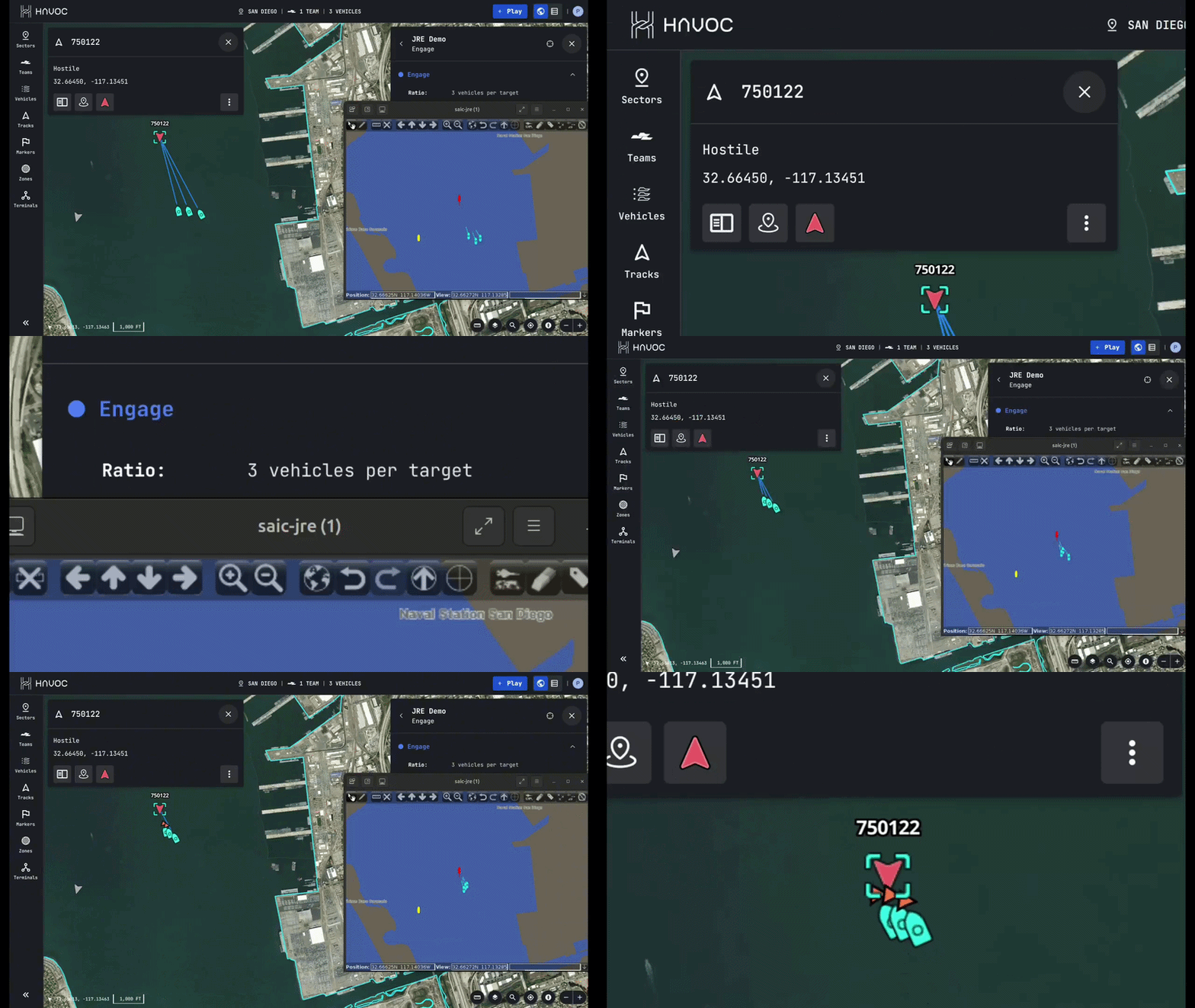
Havoc and SAIC in action

The UK has also been backing the sector more directly. In April, the government announced a £50 million deal for Plymouth and the South West aimed at expanding the region’s maritime autonomy industry, including new testing facilities, waterfront labs and support for surface and subsurface drone development.

With that in mind, UK startup Acua Ocean is already focused on autonomous uncrewed surface vessels, designed for long-duration maritime operations without onboard crews. And Kraken Robotics is building sonar and maritime autonomy systems, an area drawing growing attention as governments look to protect subsea infrastructure such as communication cables and pipelines.

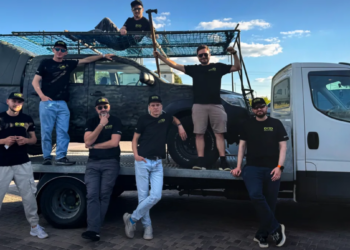
It’s not just about vessels, either. Waiv Robotics recently emerged from stealth with a system designed to solve one of the more difficult parts of operating drones at sea: landing them safely on moving vessels.
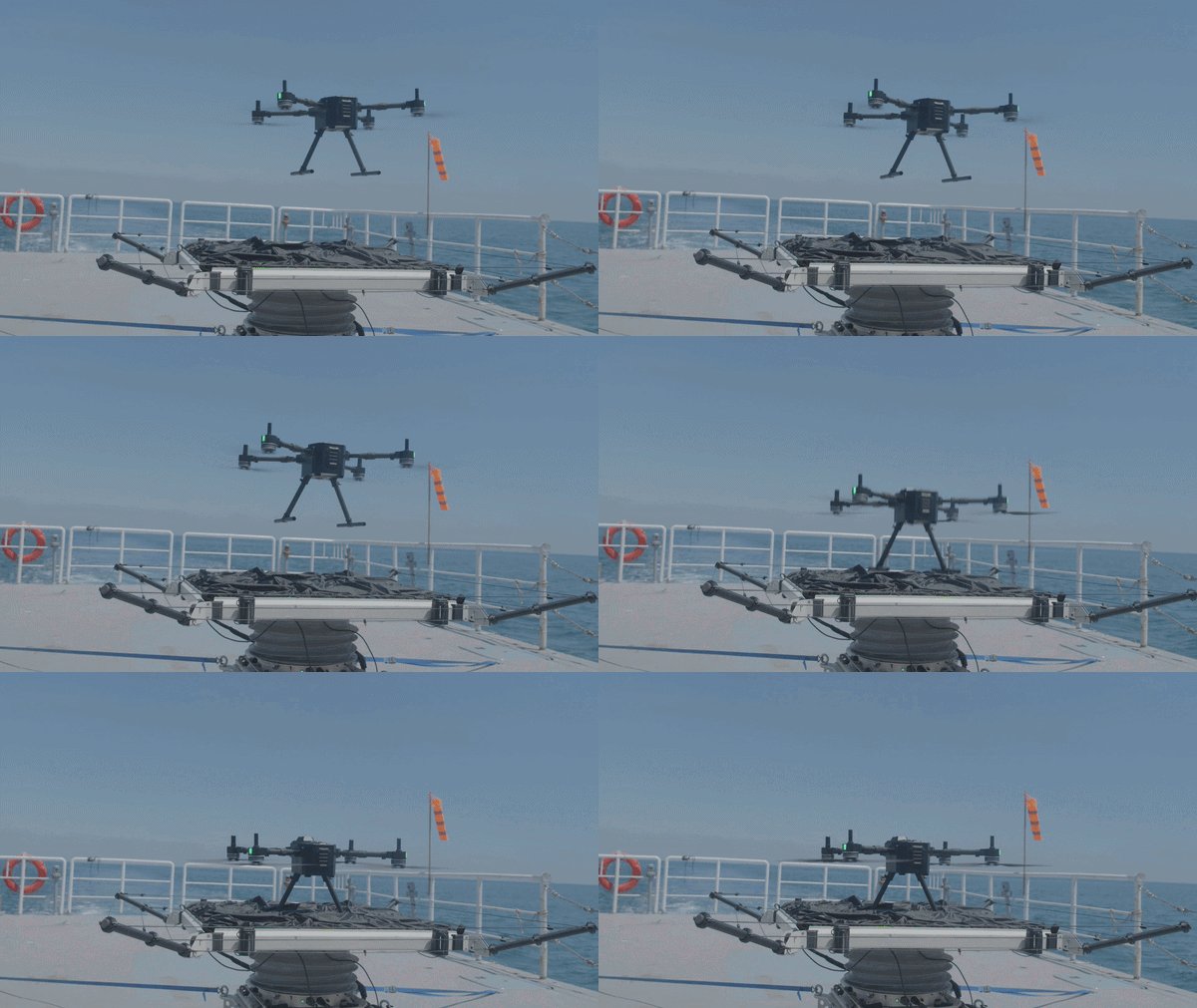
Landing a drone
Waiv’s landing pad

A quick look across the sector reveals companies tackling different parts of the problem, from all corners of the globe. Sweden’s Polar Mist is working on autonomous maritime robotics, while Seasats is building long-range ocean surveillance drones designed to stay at sea for extended periods, helping monitor large maritime areas without relying entirely on crewed patrol vessels.

A certain irony is not lost on naval strategists.

For decades, maritime dominance meant building bigger, more expensive, more capable ships — and accepting that you’d have fewer of them.

But these startups are showing the opposite logic. The future belongs to fleets of smaller, cheaper, expendable systems that can be everywhere at once. Will that bet pay off? That will depend on whether autonomous systems can prove themselves in contested waters.


Tags: 100 startupsDronesmaritimeUSV
Previous Post

UK awards 13 defence tech startups with £4M fast-track procurement deals

Paul Sawers

Paul Sawers

A seasoned technology journalist, most recently Senior Writer at TechCrunch where his work centered on European startups with a distinctly enterprise flavour. At Resilience Media, Paul focuses substantively on the worlds of open source and infrastructure, looking at technology that helps people and society live outside the sticky ecosystems of Big Tech.

Related News

Helsing, on the cusp of a $1.2B raise, forms space JV with OHB to build AI-based targeting systems

Helsing, on the cusp of a $1.2B raise, forms space JV with OHB to build AI-based targeting systems

byIngrid Lunden
May 19, 2026

Helsing, the European defence tech startup on the cusp of closing a $1.2 billion funding round at an $18 billion...

UK AI chip challenger Fractile secures $22.5M from NATO-backed venture fund

Fractile raises $220 million to build powerful AI chips

byJohn Biggs
May 16, 2026

UK AI hardware startup Fractile has raised $220 million in funding to build so-called "AI inference chips," specially designed chips...

person holding pencil near laptop computer

Multiverse raises $70M to help future-proof workforces in areas like AI

byIngrid Lunden
May 15, 2026

A UK company that has built a platform to help train people and organisations to future-proof them against technology evolutions...

SFC Energy AG contracted to supply field batteries to Ukraine

SFC Energy AG contracted to supply field batteries to Ukraine

byJohn Biggs
May 14, 2026

German fuel cell maker SFC Energy AG has received a €42.7 million order to supply “combat-proven” hybrid energy supply systems...

Noah Labs is bringing air gapped AI to militaries and governments

Noah Labs is bringing air gapped AI to militaries and governments

byJohn Biggs
May 12, 2026

Murat Işık, CEO and co-founder of Noah Labs, believes the next major cyberwar will not be fought with chatbots or...

Munich facility gives Spire a base for sovereign space capabilities

Munich facility gives Spire a base for sovereign space capabilities

byJohn Biggs
May 8, 2026

Spire Global has opened a satellite manufacturing facility in Munich as European governments push to expand sovereign space and intelligence...

ARX expands Ukraine presence as uncrewed ground robot demand surges

ARX expands Ukraine presence as uncrewed ground robot demand surges

byJohn Biggs
May 7, 2026

The robotic ground war is heating up in Ukraine with companies are sending hundreds of uncrewed ground vehicles (UGVs) to...

(L-to-R): James Palles-Dimmock (CEO) with co-founders Prof John Morton (CTO) and Prof Simon Benjamin (CSO)

Quantum Motion raises $160M for silicon-based quantum computers that fit in a server rack

byPaul Sawers
May 7, 2026

Large-scale quantum computers remain an elusive goal, but with multiple nations hustling to be the first to build and use...

Load More

Most viewed

InVeris announces fats Drone, an integrated, multi-party drone flight simulator

Uforce raises $50M at a $1B+ valuation to build defence tech for Ukraine

Auterion, the drone software startup, eyes raising $200M at a $1.2B+ valuation

Palantir and Ukraine’s Brave1 have built a new AI “Dataroom”

Twentyfour Industries emerges from stealth with $11.8M for mass-produced drones

Senai exits stealth to help governments harness online video intelligence

Resilience Media is an independent publication covering the future of defence, security, and resilience. Our reporting focuses on emerging technologies, strategic threats, and the growing role of startups and investors in the defence of democracy.

  • About
  • News
  • Resilence Conference
    • Resilience Conference Copenhagen 2026
    • Resilience Conference Warsaw 2026
    • Resilience Conference 2026
  • Guest Posts
  • Subscribe
  • Privacy Policy
  • Terms & Conditions

© 2026 Resilience Media

No Result
View All Result
  • Home
  • About
  • Subscribe
  • Events
  • Guest Posts
  • Interview
  • News
  • Resilience Conference London 2026
  • Resilience Conference Copenhagen 2026
  • Resilience Conference Warsaw 2026

© 2026 Resilience Media

This website uses cookies. By continuing to use this website you are giving consent to cookies being used. Visit our Privacy and Cookie Policy.