Friday 12 June, 2026
[email protected]
Resilience Media
  • News
    • Events
    • Interview
    • Startups
    • Venture
    • Weekly Digest
  • Resilience Conference
    • Resilience Conference Warsaw 2026
    • Resilience Conference Copenhagen 2026
    • Resilience Conference London 2026
  • About
  • Guest Posts
    • Author a Post
  • Subscribe
No Result
View All Result
  • News
    • Events
    • Interview
    • Startups
    • Venture
    • Weekly Digest
  • Resilience Conference
    • Resilience Conference Warsaw 2026
    • Resilience Conference Copenhagen 2026
    • Resilience Conference London 2026
  • About
  • Guest Posts
    • Author a Post
  • Subscribe
No Result
View All Result
Resilience Media
No Result
View All Result

Jarvis takes on MoD crisis as second minister resigns over defence spending

As Al Carns follows John Healey out of the Ministry of Defence, newly appointed Defence Secretary Dan Jarvis inherits a major funding row

Carly PageIngrid LundenbyCarly PageandIngrid Lunden
June 12, 2026
in News
Share on Linkedin

The chaos sweeping over the United Kingdom’s Ministry of Defence shows no signs of dying down.

You Might Also Like

NATO Innovation Fund appoints Nur Özdemir as its newest partner

France moves to boost its military budget with €36B

The primes and the upstarts: Counter-drone tech makes for fast friends at ILA Berlin

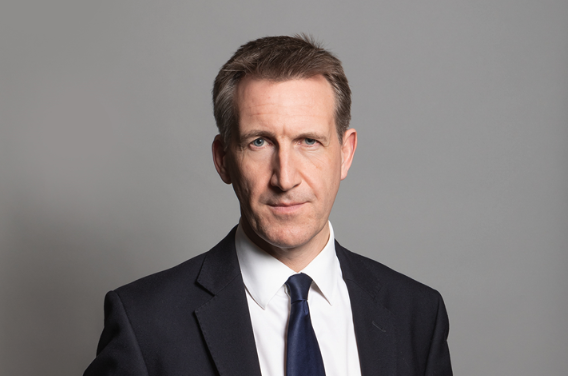
Just hours after John Healey stepped down as the Secretary of Defence on Thursday, one of his top deputies, Armed Forces Minister Al Carns, followed suit, leaving the government scrambling to fill senior posts. Late last night, on the heels of the two departures, Prime Minister Keir Starmer appointed Dan Jarvis as Healey’s replacement.

Jarvis comes from the Home Office, where he had been security minister overseeing areas like counter-terrorism. Now, he will be tasked with steering the MoD through one of its most turbulent periods in recent memory.

The storm brewing at the MoD centres on the very delayed launch of the UK’s Defence Investment Plan.

The MoD and experts in the field have estimated that the UK needs to budget £28 billion over the next five years to rearm and update the UK’s defence posture, a sum that would have included large provisions for major technology upgrades and next-generation equipment like drone-based systems.

But not only is the DIP still MIA, but — due to disputes between the MoD and the Treasury, the overall lack of money in the UK’s coffers, and the budgetary needs in others areas — the budget it is expected to fall far short of the amount that the MoD had expected. The DIP is expected to deliver a defence budget of as little as £13 billion, if reports are accurate.

“I would not be able to accept a DIP settlement that does not give our Forces the resources they need,” Healey noted in his resignation letter. He had reportedly been shown a preview of the DIP on Monday as the government continued to weigh up how to launch it without too much push-back.

Carns echoed Healey’s rejection in his own statement on his departure.

“The lesson is uncomfortable and it is unambiguous,” he wrote in his letter (in full here), describing what he has learned from his own time serving in the military and from speaking to people in Ukraine. “The character of conflict is changing faster than our procurement can keep up with.”

The DIP will essentially become the budgetary layout for how the MoD (and the UK’s defence sector) will operate for the next several years. The question now is whether Jarvis is a hasty placeholder — not least a consideration given Starmer himself may be fighting for his position soon — or someone who might stay on and figure out how to play whatever cards the DIP deals.

Like Carns, Jarvis is a military vet, and in his last role, he was responsible for counter-terrorism, state threats, and cybersecurity. These are areas adjacent to military defence and part of the larger scope of how a country maintains its defence profile. Indeed, while the appointment appears to have been made quickly following Healey’s departure, it places someone with a security background in charge of the MoD just as debates over cyber warfare, AI, and military technology move closer to the centre of defence policy.

Yet his appointment will do little to address the underlying dispute that brought down two senior ministers in as many days.

In his resignation letter, Carns argued that the Defence Investment Plan is “neither transformative enough nor sufficiently funded” to meet the challenges facing the UK. His departure lends further weight to Healey’s complaint that the government’s defence ambitions are not being matched by the resources required to deliver them.

The two resignations have also drawn renewed attention to the Defence Investment Plan itself. The document, intended to set out how Britain will modernise and rearm its armed forces over the coming years, has been repeatedly delayed amid reported disagreements between the Ministry of Defence, the Treasury and other departments and politicians over spending levels and priorities.

For the UK’s defence technology ecosystem, the continued absence of the Defence Investment Plan has left many companies struggling to understand what shape the industry will take in the country in the years ahead. For some, this is a very frustrating position.

Sir Richard Barrons, one of the authors of the Strategic Defence Review, which outlined the state of the defence landscape and was intended to inform how the DIP would be structured, believes the government not only is not taking defence seriously enough, but it is missing a key opportunity to be intelligent in figuring out how to fund it.

“The SDR was clear that preparing for war in the 21st century is not simply about filling long-standing gaps in equipment, personnel or capability. It is about transformation: changing the way the UK thinks about, funds, organises and delivers defence,” he wrote in a note to Resilience Media. “The UK public sector spends around £1.3 trillion a year. Finding additional funding for defence is therefore a matter of priority, not impossibility. If Government struggles to move money quickly within the public sector, it should also look beyond traditional funding routes. The City of London is sitting on billions of pounds of potential investment. Government should be having a serious conversation with private finance about how to support defence transformation, industrial capacity and national resilience.”

Carns’ resignation is likely to sharpen those concerns. Throughout his time in government, he became one of the most prominent advocates for incorporating lessons from Ukraine into British defence planning, repeatedly highlighting the growing importance of drones, autonomy, mass production, and rapid capability development.

His departure, coupled with Healey’s resignation, inevitably raises questions about how much of that thinking ultimately survives into the final investment plan — and whether the government might now be hustling to revise it again before finally launching it to the public.


Tags: al carnsdan jarvisJohn HealeyMoDuk government
Previous Post

France moves to boost its military budget with €36B

Next Post

NATO Innovation Fund appoints Nur Özdemir as its newest partner

Carly Page

Carly Page

Carly Page is a freelance journalist and copywriter with 10+ years of experience covering the technology industry, and was formerly a senior cybersecurity reporter at TechCrunch. Bylines include Forbes, IT Pro, LeadDev, The Register, TechCrunch, TechFinitive, TechRadar, TES, The Telegraph, TIME, Uswitch, WIRED, & more.

Ingrid Lunden

Ingrid Lunden

Ingrid is an editor and writer. Born in Moscow, brought up in the U.S. and now based out of London, from February 2012 to May 2025, she worked at leading technology publication TechCrunch, initially as a writer and eventually as one of TechCrunch’s managing editors, leading the company’s international editorial operation and working as part of TechCrunch’s senior leadership team. She speaks Russian, French and Spanish and takes a keen interest in the intersection of technology with geopolitics.

Related News

NATO Innovation Fund appoints Nur Özdemir as its newest partner

byIngrid Lunden
June 12, 2026

The NATO Innovation Fund, the $1 billion+ investment vehicle for NATO to back innovative startups in defence and resilience tech,...

Eiffel Tower, Paris France

France moves to boost its military budget with €36B

bystanislaw naklicki
June 12, 2026

The United Kingdom Ministry of Defence is in meltdown right now, with the secretary of defence, one of his top...

Tytan Technologies

The primes and the upstarts: Counter-drone tech makes for fast friends at ILA Berlin

byPaul Sawers
June 12, 2026

Mercedes-Benz is pushing deeper into defence technology, announcing this week a partnership with a Munich drone-defence startup to mount counter-drone...

Helsing expands CA-1 platform with AI-powered Electronic Attack drone

Helsing expands CA-1 platform with AI-powered Electronic Attack drone

byJohn Biggs
June 11, 2026

Helsing, a leading European AI-infused weapons manufacturer, has announced the launch of the CA-1 Electronic Attack or CA-1EA, an uncrewed,...

Breaking: John Healey resigns as UK Defence Secretary in protest over funding shortfall

Breaking: John Healey resigns as UK Defence Secretary in protest over funding shortfall

byIngrid Lundenand1 others
June 11, 2026

The United Kingdom's long-delayed Defence Investment Plan has yet to be published, but it has already claimed a very serious...

a close-up of a money bill

Ukraine gets down to AI business

byThomas Macaulay
June 11, 2026

Ukraine is celebrated as a bottom-up laboratory for military innovation. The popular narrative casts its defence-tech scene as a landscape...

Orqa unveils hybrid tactical drone for jammed battlefields

Orqa unveils hybrid tactical drone for jammed battlefields

byJohn Biggs
June 11, 2026

Croatian drone manufacturer Orqa has announced the launch of their latest tactical drone, the MRM2-10AI, a hybrid Unmanned Aerial Vehicle...

Quantum Systems

Quantum Systems expands into medium-altitude aviation with PULSE P19

byCarly Page
June 10, 2026

German defence technology firm Quantum Systems has unveiled a new optionally-piloted aircraft designed to tackle a problem increasingly confronting conventional...

Load More
Next Post

NATO Innovation Fund appoints Nur Özdemir as its newest partner

Most viewed

InVeris announces fats Drone, an integrated, multi-party drone flight simulator

Uforce raises $50M at a $1B+ valuation to build defence tech for Ukraine

Auterion, the drone software startup, eyes raising $200M at a $1.2B+ valuation

Palantir and Ukraine’s Brave1 have built a new AI “Dataroom”

Twentyfour Industries emerges from stealth with $11.8M for mass-produced drones

Senai exits stealth to help governments harness online video intelligence

Resilience Media is an independent publication covering the future of defence, security, and resilience. Our reporting focuses on emerging technologies, strategic threats, and the growing role of startups and investors in the defence of democracy.

  • About
  • News
  • Resilence Conference
    • Resilience Conference Copenhagen 2026
    • Resilience Conference Warsaw 2026
    • Resilience Conference 2026
  • Guest Posts
  • Subscribe
  • Privacy Policy
  • Terms & Conditions
  • Mission Statement & Code of Practice
  • Press

© 2026 Resilience Media

No Result
View All Result
  • Home
  • About
  • Subscribe
  • Events
  • Guest Posts
  • Interview
  • News
  • Resilience Conference London 2026
  • Resilience Conference Copenhagen 2026
  • Resilience Conference Warsaw 2026

© 2026 Resilience Media

This website uses cookies. By continuing to use this website you are giving consent to cookies being used. Visit our Privacy and Cookie Policy.