
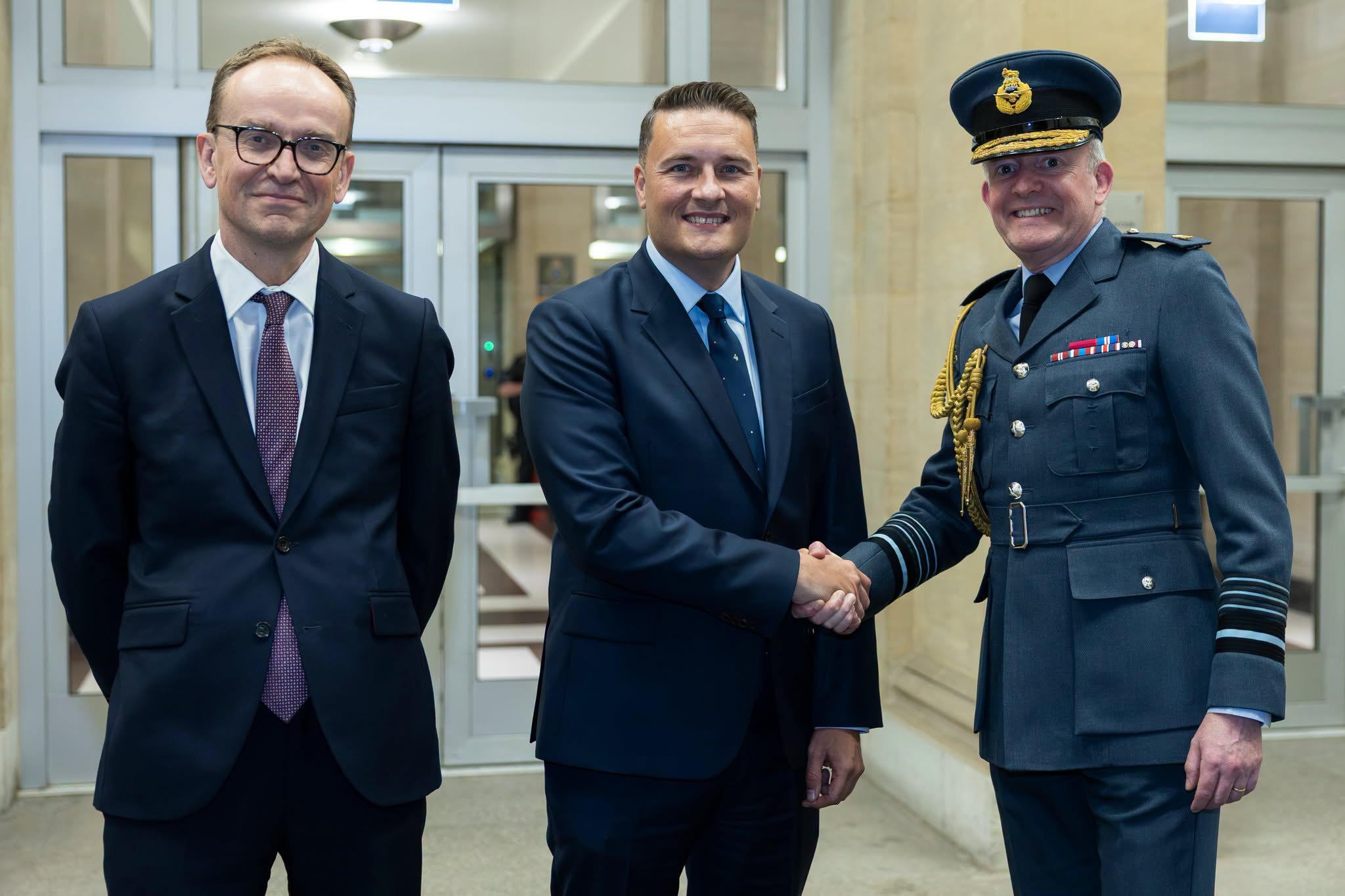
One of Whitehall’s biggest jobs has landed with a former defence secretary, while a new face is now leading the Ministry of Defence. Newly-minted Prime Minister Andy Burnham appointed the former Secretary of State for Health Wes Streeting as Secretary of State for Defence late on Monday. And in a surprising turn of events, John Healey — the defence secretary who resigned in June over serious disagreements with the Treasury over funding — returns to government, now holding those very purse strings himself, as Chancellor of the Exchequer.
Streeting is taking over at a busy but tumultuous time for the Ministry of Defence.
As wars continue to rage on in Ukraine and the Middle East and countries across Europe look for more resilient defence postures, the UK government has committed itself to rearmament, procurement reform, and expanding the UK’s defence industrial base. But it is doing so under a budget that is less than half the size of the one it said it needed after a government-funded review — a situation that prompted the resignation of defence secretary John Healey and minister Al Carns in June.
The budget also falls short of a defence spend minimum of 3.5% of GDP that NATO member states agreed in June 2026. Nonetheless, industry is now looking for delivery rather than another round of announcements, and the latest reshuffle will inevitably raise questions about whether that momentum can be maintained.
Unlike Streeting’s immediate predecessor Dan Jarvis, Streeting comes to Defence with no military or MoD experience. To be fair, the new chancellor, John Healey (who preceded Jarvis), also had no military background, although he served as shadow defence secretary for years before taking on the formal role when Labour took over government in 2024. Streeting’s lack of track record is damning detail for some critics.
Baron Richard Dannatt, a retired head of the British army and member of the House of Lords, described Streeting as knowing “the square root of nothing on defence” in an interview with English radio station LBC. It’s a bold move in another sense, too: Streeting is openly gay, and his appointment will require him to interface with secretaries from other nations, including US Defense Secretary Pete Hegseth, who has openly opposed gay people in the military (and this is to say nothing about many comments on social media that might threaten to overrun conversation about actual policy).
Streeting also inherits a department still feeling the effects of months of wider political upheaval. He is the third Defence Secretary in the span of five weeks. (After Healey resigned in June, Dan Jarvis stepped into the role for the final days of the Kier Starmer-led government.)
Within hours of his appointment, the new Defence Secretary sought to reassure allies and industry alike.
“Keeping our country safe is the first duty of government,” Streeting wrote on X. “We’ll ensure our armed forces have the resources they need and stand steadfast alongside our international allies, especially Ukraine.”
Healey the healer?
Just about all of the MoD’s existing policy, including what Streeting is picking up to run going forward, was formed and communicated under the leadership of one person in particular: John Healey. While he is now no longer directly connected to MoD, Healey will play a critical role as chancellor in helping shape how all of that can be executed, by way of being the person who ultimately distributes funding for the MoD.
In that regard, Healey could prove just as significant for the sector. He spent two years pressing the case for higher defence spending and not getting it, not because the UK didn’t identify the need for a stronger defence and resilience posture, but mainly because the UK is, essentially, very tight on money and there are many departments that need it. (“There’s just no money,” is a phrase we have heard more than once from people in government, as well as from defence industry people outside it who are would-be suppliers.)
Now, Healey will have to face that challenge from the other side of the table, where he will have the responsibility of balancing all of the MoD needs against those from other departments.
Will Healey have a preferred child because of his history? Or will he get a chance to explore — as he said in his defence secretary resignation letter to Kier Starmer in June 2026 — some of the “credible ways of meeting the mid-term funding challenges, working multinationally as other European nations are doing”?
“Credible” was perhaps a very carefully chosen word in Healey’s letter. There is new defence bank being created led by Canada (the UK has yet to sign up). And there are other financing alternatives that have been raised that tap the vast resources of defence company investors. However, all of these imply more borrowing, and more credit arrangements, and the UK has shied away from that up to now.
Whether all of this translates into more money for defence in the UK is far from certain, but few recent chancellors have arrived with such a detailed understanding of the department’s funding pressures.
For defence companies, the immediate question is whether anything changes. Healey spent much of his time in Defence arguing that procurement had to move faster, production had to increase and industry needed greater certainty over long-term investment.
The Strategic Defence Review published last year had already laid out the government’s priorities and suggestions for achieving them. Suppliers have been making investment decisions on that basis. The challenge for the new Defence Secretary will be keeping procurement moving and giving industry confidence that political change will not derail programmes already under way.
Streeting comes to the Ministry of Defence from the Department of Health and Social Care, where he built a reputation as one of Labour’s most prominent communicators while leading efforts to reform the NHS. He broke with Kier Starmer’s government and even considered a bid to run for leadership before stepping back to let Burnham rise uncontested.
Defence, however, is a very different brief to health and social care. He inherits responsibility for delivering the Strategic Defence Review while tackling recruitment shortfalls, rebuilding depleted stockpiles, strengthening the UK’s defence industrial base, and maintaining support for Ukraine.
For investors, suppliers and defence primes, how those are held as priorities will matter more than two new government appointments.